Choosing the right thermic lance comes down to four practical checks: match the rod diameter and length to the thickness of the target material, select the internal core design that suits the job, choose a connection type that limits downtime, and verify the manufacturer's quality and safety certifications. Getting these four decisions right controls oxygen consumption, cutting speed, and operator safety at the same time.
This buyer's guide gives procurement teams in metal recycling yards, chemical processing plants, and smelting facilities a structured framework for that evaluation. It covers standard engineering parameters, typical steel mill applications, and the factory quality controls that separate certified manufacturers from unverified trading houses.
Key Factors When Choosing a Thermic Lance for Industrial Operations
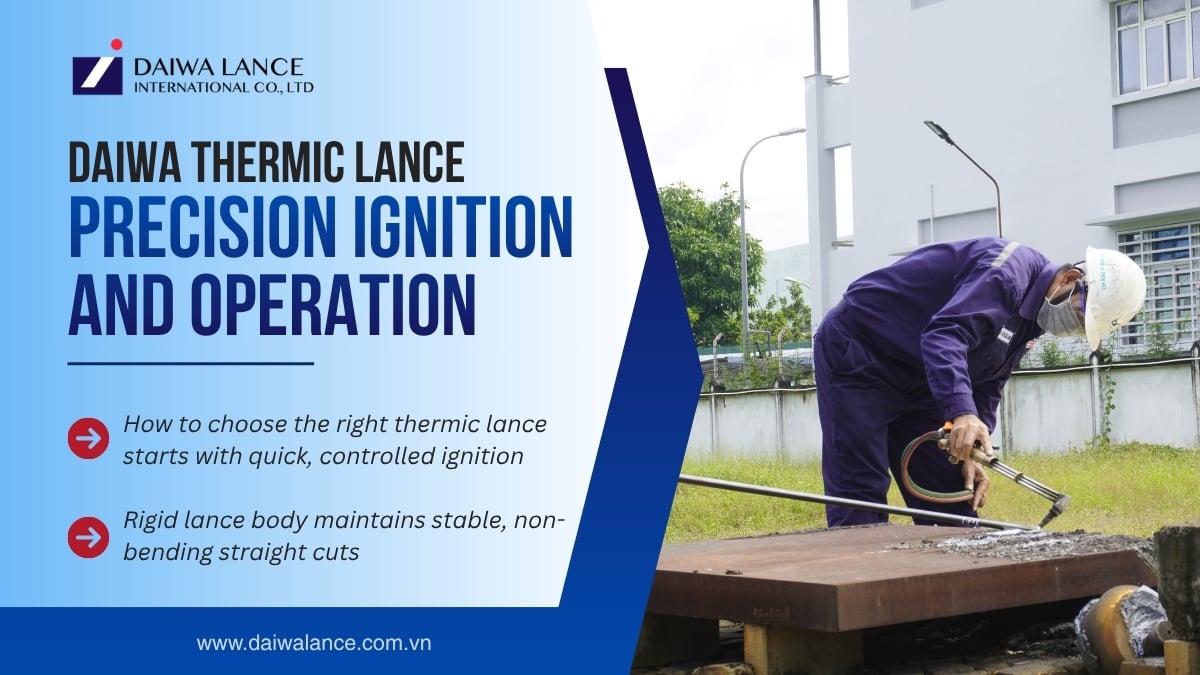
The starting point for any thermic lance purchase is the application, not the price list. A thermic lance generates working temperatures of 3,000-3,600°C, so the tool must be matched to the target material's thickness, geometry, and operating environment before unit costs are compared.
Sourcing managers should document the target materials, the required piercing depth, and the site conditions first. Application-specific demands - not upfront unit costs - should drive the specification.
Matching Rod Diameters with Target Material Thickness
Selecting the correct burning bar size keeps oxygen flow and rod consumption in balance. A rod with a small outer diameter (OD) used on a massive steel casting skull burns away too quickly, forcing frequent changeouts and wasting material.
Conversely, an oversized rod on thin structural sections delivers more heat than the cut requires, widening the kerf and wasting oxygen. Matching OD and length to material thickness is the single most effective way to control consumable cost per cut.
Blast Furnace Tap Hole Cleaning and Refractory Maintenance
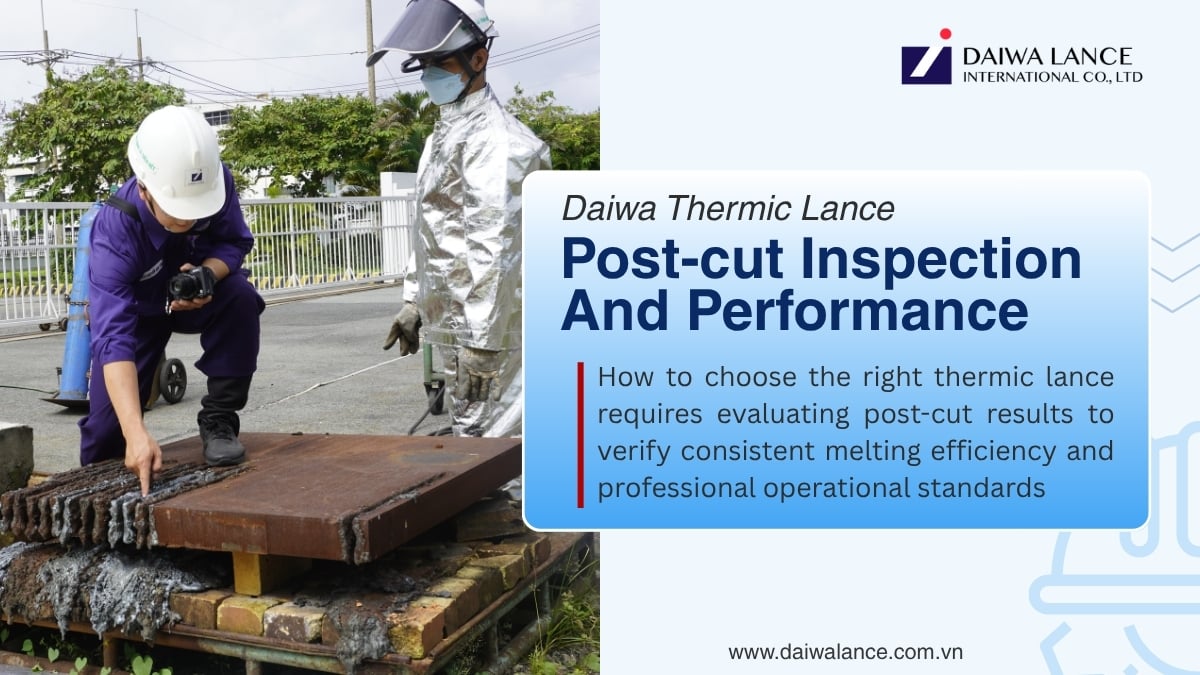
In integrated smelting facilities, the operating environment dictates specific rod performance criteria. Blast furnace tap hole cleaning requires stable, localized energy that pierces hardened clay plugs and tough iron crusts quickly, without damaging the water-cooled copper faceplates behind them.
Routine maintenance schedules also rely on thermic lances to clear residual slag accumulation from slag lips, mixing ladles, and tundish nozzles. The tool must melt these complex oxide layers away without introducing the mechanical shock or vibration that can crack delicate refractory brick linings.
Understanding Thermic Lance Specifications
Two specification decisions matter most on the catalog page: the internal core design and the end connection type. Both directly affect heat output, burn rate, and how much time operators spend changing rods during a shift.
Evaluating Core Packing Materials - Wires vs. Inner Tubes
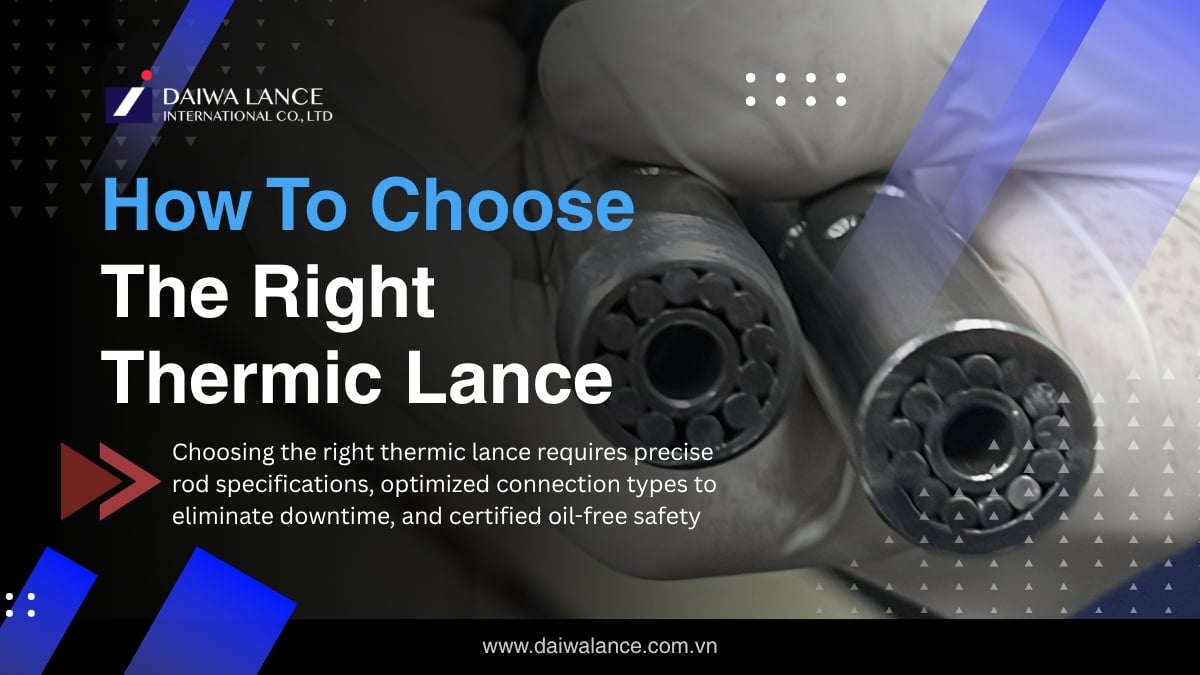
The internal structure of an exothermic rod determines its total heat output, consumption curve, and flame stability. Procurement teams choose between two main internal designs based on their application requirements:
- Internal core wire packing - tightly bundled, high-purity steel wires inserted into the outer tube jacket. This design delivers a flexible, concentrated thermal flame suited to cutting complex profiles and executing deep vertical pierces. Controlled wire packing density ensures an even, predictable burn rate along the entire shaft.
- Concentric inner tube configurations - one or more internal steel tubes in place of loose core wires. This construction provides structural rigidity, prevents the rod from bending under intense heat, and produces a wider flame path well suited to bulk slag washing and melting heavy surface build-ups across large target areas.
Selecting Thermic Lance Connection Types for Less Downtime
The connection type decides how quickly operators can continue a cut once a rod is consumed. Three styles are common in industrial cutting operations:
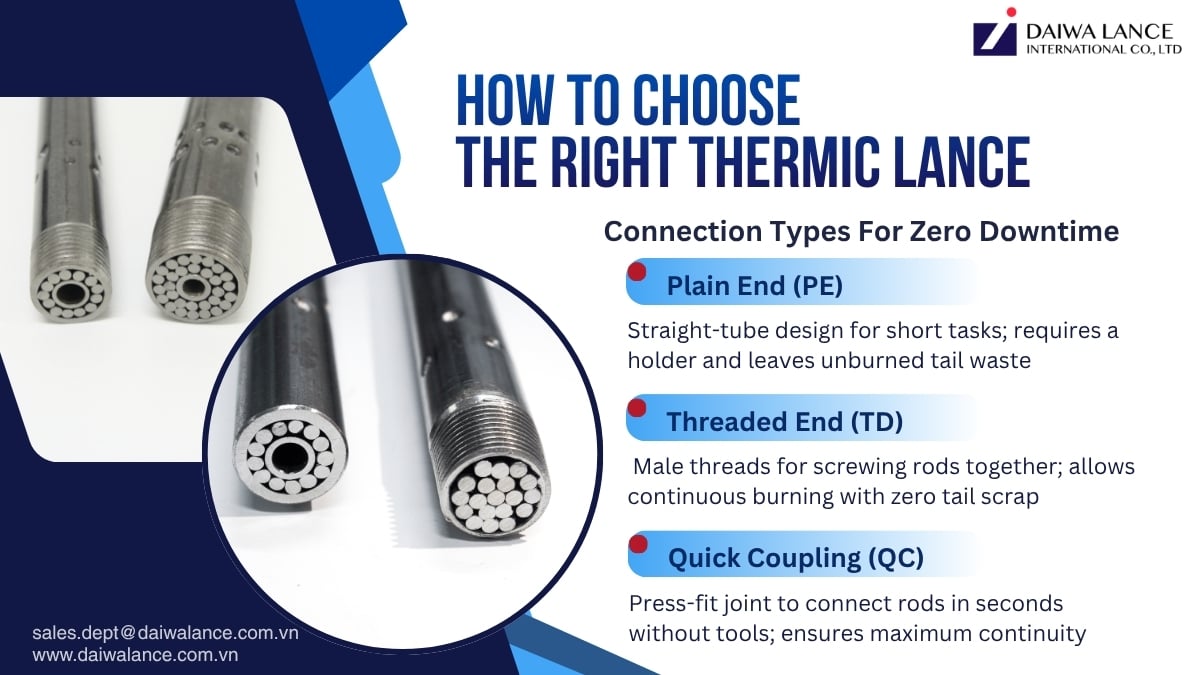
- Plain End (PE) style - a basic straight-tube configuration held in a universal mechanical chuck holder. Cost-effective for short cutting tasks, but it leaves short unburned tail ends, which increases material waste.
- Threaded End with Coupling (TD) style - male threads on both ends of the tube allow operators to screw a fresh rod directly into the tail of the burning lance. This enables continuous consumption and eliminates tail-end scrap.
- Quick Coupling End (QC) style - an engineered socket-and-spigot friction joint that lets operators press-fit a new rod onto the burning line in seconds, without hand tools, for maximum process continuity.
Supply Chain Optimization - Steel Mill Consumable Sourcing
Modern procurement strategies look beyond simple per-unit costs to Total Cost of Ownership (TCO) and supply chain resilience. Efficient steel mill consumable sourcing balances upfront purchase prices, delivery reliability, and on-site operational efficiency.
Mitigating Volatility via Wholesale Burning Bar Procurement
Uncertified, low-cost thermal cutting rods often carry high hidden costs, including uneven burn rates, splitting weld seams, and frequent flame blowouts that damage torch handles. Establishing a long-term contract for wholesale burning bar procurement with an accredited factory manufacturer secures stable pricing and predictable delivery schedules.
That supply reliability protects heavy industrial yards from sudden market material shortages and localized logistics delays - a benefit that is often worth more than a marginal discount per pipe.
Streamlining Industrial Cutting Lance Procurement
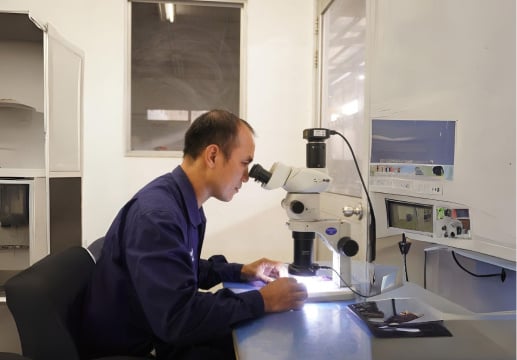
Integrating structured quality audits into the procurement framework simplifies vendor evaluation. Requiring documented material certificates, mill test reports, and third-party quality system audits for every production batch quickly separates reliable manufacturers from unverified trading houses.
Safety and Quality Standards in Lance Pipe Manufacturing
Operator safety is decided at the factory, long before the lance reaches the shop floor. Introducing high-pressure oxygen into a tube that contains oil and grease can cause serious operator injury. Five manufacturing controls matter most:
- Sound weld seams - a continuous, defect-free longitudinal weld prevents gas leaks and lateral burn-through during operation.
- Oil-free, grease-free surfaces - chemically cleaned tube interiors remove the fuel source for oxygen flashbacks.
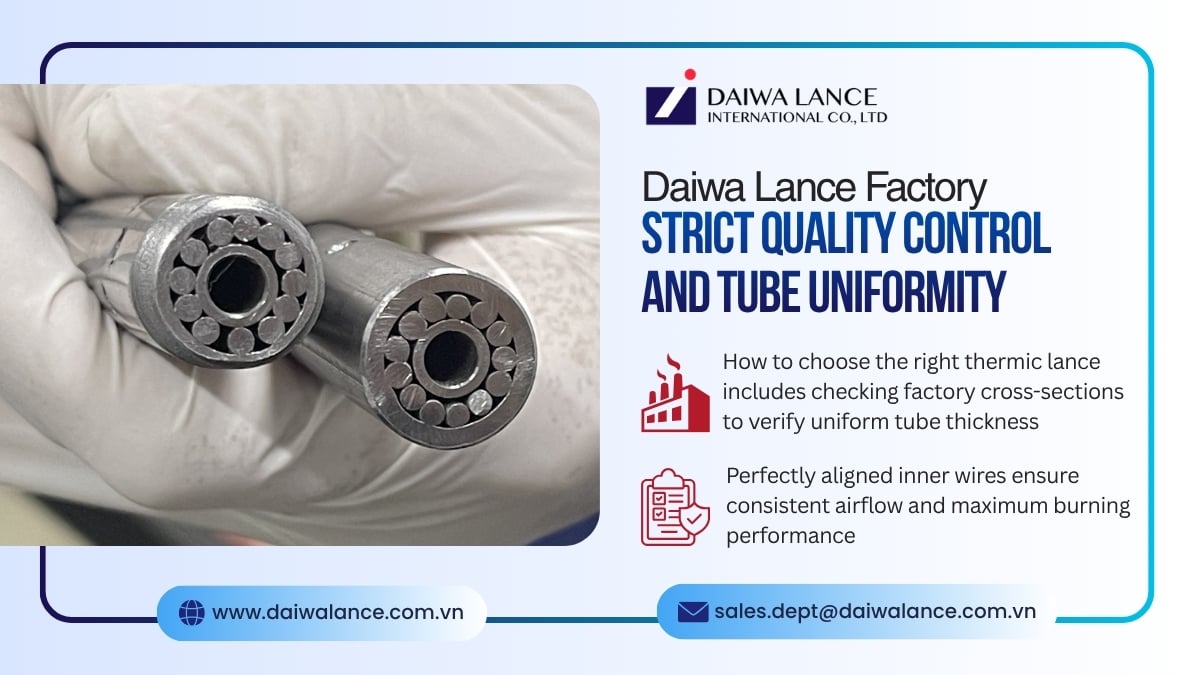
- Uniform wall thickness and straightness - consistent walls and straight tubes prevent warping, bending, or breaking mid-cut.
- Strict quality control - batch-level inspection and traceability managed under an ISO 9001 quality management system.
- Verified certifications - documented ISO 9001, ISO 14001, and JIS compliance that procurement teams can audit.
The Critical Importance of Oil-Free Surface Treatment
During standard tube drawing and forming, manufacturing machinery uses heavy industrial oils and lubricants to shape the steel. If these petroleum residues remain inside the finished pipe, high-purity oxygen flowing past them under pressure can trigger spontaneous ignition inside the tube.
That reaction can flash back toward the torch holder, bypassing safety check valves and endangering the operator. A certified lance pipe factory prevents this with a dedicated multi-stage chemical washing and degreasing process, leaving the pipe interior completely clean for high-pressure oxygen service.
Verifying Longitudinal Weld Seams and Structural Rigidity
The structural integrity of the tube's outer shell is equally critical. Microscopic internal voids, air pockets, or thin seam inclusions will fail under the thermal stress of a 3,000-3,600°C reaction, and a failed seam can vent high-pressure oxygen and molten slag sideways toward the operator's hands and face.
Uniform wall thickness also ensures a predictable, linear consumption rate. Variations cause uneven heat distribution, which makes the rod warp, bend, or split mid-cut. Rods with a uniform wall profile and certified weld integrity stay straight and rigid under load, letting operators execute deep pierces from a safe working distance.
Conclusion Checklist - How to Choose the Right Thermic Lance
Before approving the next material order, procurement teams can run this quick evaluation checklist:
- Application verified - is the rod diameter matched to the target material thickness to optimize oxygen usage?
- Connection optimized - has the correct coupling style (Plain, Threaded, or Quick Coupling) been selected to minimize downtime?
- Safety confirmed - is the tube interior certified oil-free to eliminate flashback risks?
- Structure checked - do the rods feature uniform wall thickness and a defect-free weld seam to prevent lateral burn-through?
- Vendor audited - does the manufacturer hold ISO 9001, ISO 14001, and JIS certifications?
Daiwa Thermic Lance is engineered to meet each point on this checklist. It is manufactured directly at Daiwa Lance International's factory in Vietnam—inheriting Japanese technology and using high-quality materials from Japan. Every batch is produced under ISO 9001 and ISO 14001 management systems to JIS standards and shipped through an established global logistics network serving customers in more than 52 countries.
Key Takeaway
If you are short on time, these five points summarize how to choose the right thermic lance for high-temperature industrial applications:
- Match rod specifications to your target material - the outer diameter should fit the thickness of the metal or slag build-up to balance oxygen consumption and reduce waste.
- Optimize connection types - Threaded or Quick Coupling ends allow continuous burning and eliminate unburned tail-end scrap.
- Insist on certified oil-free treatment - only source from suppliers that document interior degreasing, removing the risk of oxygen flashbacks during high-pressure oxygen delivery.
- Verify weld seams and wall uniformity - straight, uniform tubes such as the Daiwa Thermic Lance resist lateral burn-through and stay rigid at 3,000-3,600°C.
- Audit your vendor - ISO 9001, ISO 14001, and JIS certification plus proven export logistics protect both delivery schedules and workplace safety.
FAQ About How to Choose the Right Thermic Lance
What temperature does a thermic lance reach?
A thermic lance generates working temperatures of 3,000-3,600°C. This is hot enough to melt steel, cast iron, slag, and refractory build-ups, which is why rod quality and wall uniformity are critical for safe operation.
Which connection type reduces downtime the most?
Quick Coupling (QC) ends reduce downtime the most. Operators press-fit a fresh rod onto the burning line in seconds without hand tools. Threaded (TD) ends also allow continuous consumption, while Plain Ends require chuck changes and leave tail-end scrap.
Why must the lance pipe interior be oil-free?
Because high-pressure oxygen flowing past oil or grease residues can ignite spontaneously inside the tube and flash back toward the operator. Certified manufacturers apply multi-stage chemical washing and degreasing before shipment.
What certifications should a thermic lance manufacturer hold?
Look for ISO 9001 quality management, ISO 14001 environmental management, and JIS-compliant production. These certifications confirm batch-level quality control and give procurement teams auditable documentation, such as material certificates and mill test reports.
Get Expert Support for Your Next Order
Ready to specify the right thermic lance for your operation? Request a Quote for your required dimensions and volumes, Download Catalogue for full technical specifications, or Contact Us to discuss custom requirements and free samples with our technical team.
- Request a Quote: https://www.daiwalance.com.vn/contact
- Download Catalogue: https://www.daiwalance.com.vn/catalogue
- Contact Us: https://www.daiwalance.com.vn/contact
Related Blogs & Pages
-
Daiwa Thermic Lance product page: https://www.daiwalance.com.vn/products/daiwa-thermic-lance
-
Catalogue page: https://www.daiwalance.com.vn/catalogue
-
Company overview: https://www.daiwalance.com.vn/company-overview
-
Thermic Lance glossary: https://www.daiwalance.com.vn/glossary/thermic-lance
-
Contact page: https://www.daiwalance.com.vn/contact
About Daiwa Lance
Established since 1997, Daiwa Lance has positioned ourselves as a pioneer in thermic cutting and oxygen lancing technology. Based in Ho Chi Minh City, Vietnam, we have been providing quality customer service and products with advanced Japanese technology.
We maintain the highest quality standards with ISO 9001:2015, ISO 14001:2015, and JIS G standards certifications. We have also expanded our reach globally, exporting to over 55 countries worldwide.
Visit us through our contact channels today: Email, WhatsApp, Contact Us form, or connect with us on Youtube, LinkedIn and Facebook.