Calorized lance pipe and mild steel lance pipe may look similar at a glance, but they are not built for the same level of thermal resistance. If you are comparing these two options, the reason is usually practical: your current pipe is being consumed too fast, oxidation is severe, or replacement frequency is pushing up total operating cost. The question is whether a calorized lance pipe is justified for your process or whether mild steel still makes commercial sense.
At Daiwa Lance, we recommend comparing these two products by actual service conditions, not by price alone. The right choice depends on the furnace, the process role, the severity of heat exposure, and the real cost structure of your operation. Even so, there are clear structural and performance differences that can help you make a grounded decision.
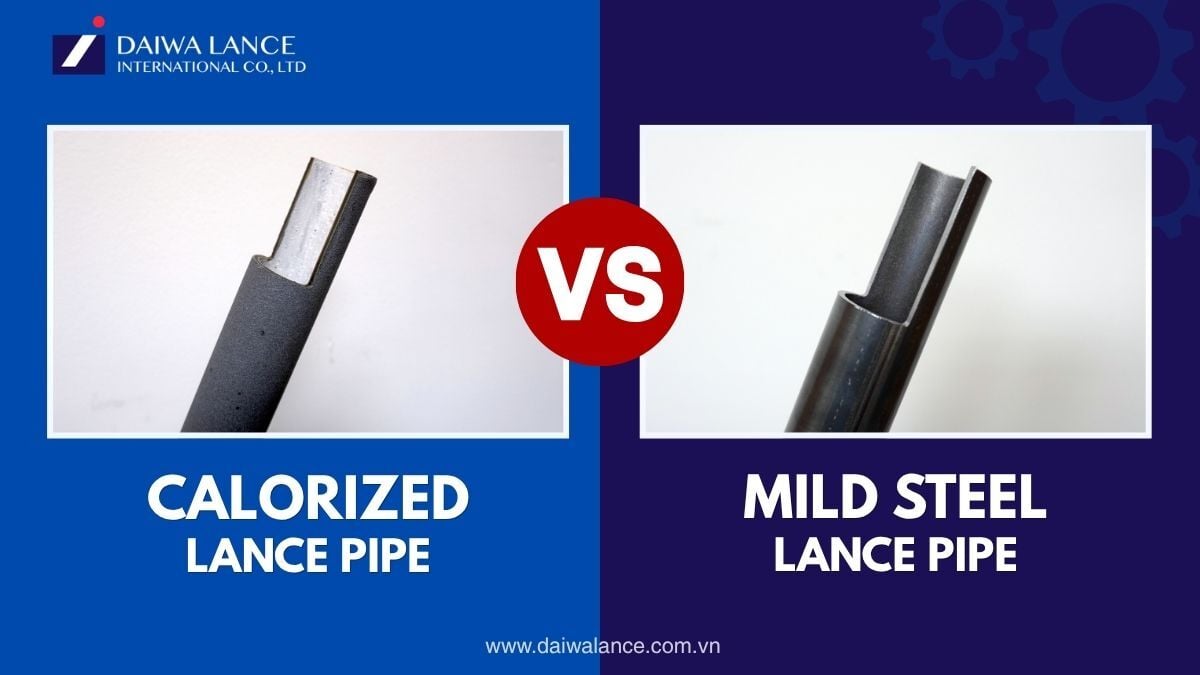
The First Difference Is Structure
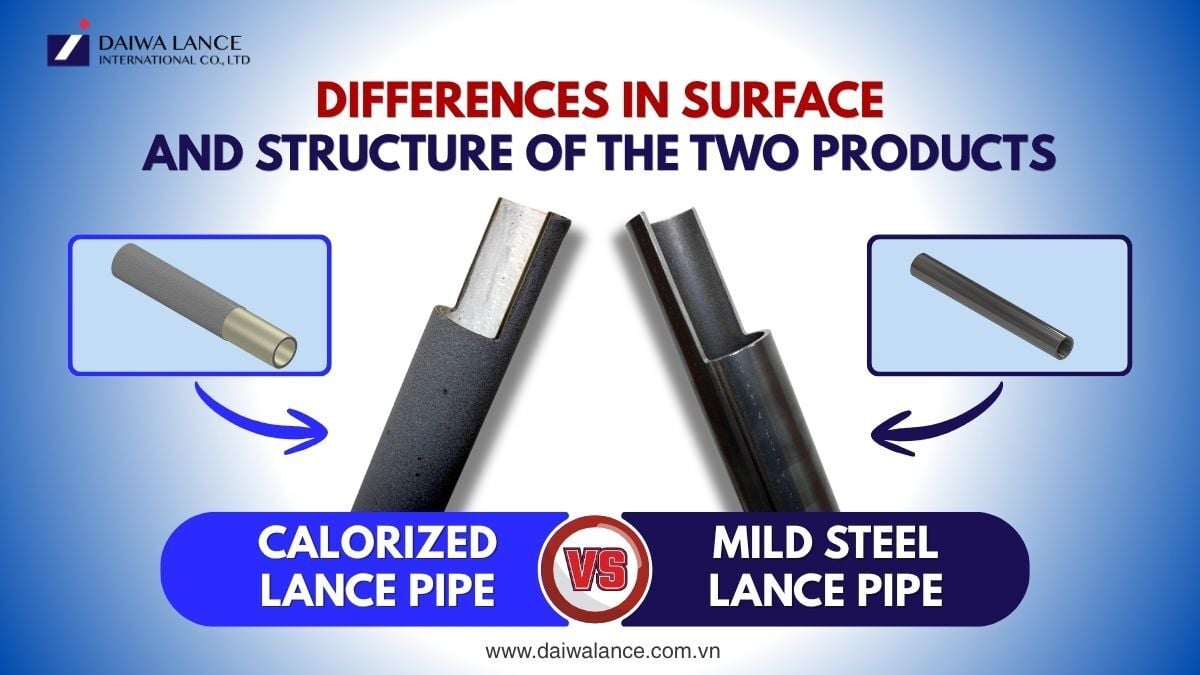
A mild steel lance pipe is essentially an untreated low-carbon bare mild steel pipe used for lancing-related work. By contrast, Daiwa CA Lance starts with mild steel, then adds a heat-resistant calorized layer on the interior and exterior surfaces and a refractory ceramic coating on the interior and exterior surfaces as well.
That difference matters because furnace-side failure rarely comes from one direction only. Internal oxygen flow, external radiant heat, oxidation, and aggressive atmosphere all influence service life. If you compare Daiwa CA Lance with mild steel pipe only by nominal size or unit price, you are missing the main engineering difference from the start.
Why Calorized Lance Pipe Usually Lasts Longer
At Daiwa Lance, we explain the durability difference through the behavior of the calorized surface at high temperature. As the pipe is exposed to heat, the surface forms a heat-resistant aluminum oxide film, or alumina film, which helps protect the steel from severe oxidation. Daiwa CA Lance can last 3 to 10 times longer than mild steel lances, although actual consumption still varies with use conditions.
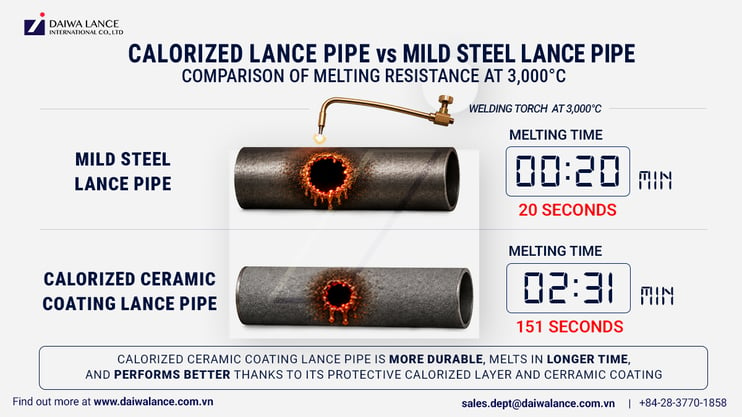
High-heat comparison testing shows why this matters. After exposure to 3,000°C for just 20 seconds, a mild steel pipe melts. Under the same conditions, Daiwa CA Lance takes 151 seconds to melt, delivering 7.55 times higher melt resistance in this comparison. That performance gap is driven by surface engineering: at high temperature, a protective alumina (aluminum oxide) film forms on the Daiwa CA lance surface. With a melting point of 2,050°C, this film helps shield the steel from direct heat attack and extends service life.
These points do not mean every plant will get the same result, but they do show why service life should be discussed in connection with surface engineering and operating conditions, not only with wall thickness.
Heat Resistance, Oxidation Resistance, and Sulfuration Resistance
Heat resistance is the headline difference, but it is not the only one. Daiwa CA Lance is suitable for work that requires stronger resistance against heat, oxidation, sulfuration, and even vanadium attack in some applications. This matters because many furnace-side failures are driven by combined thermal and atmospheric attack, not temperature alone.
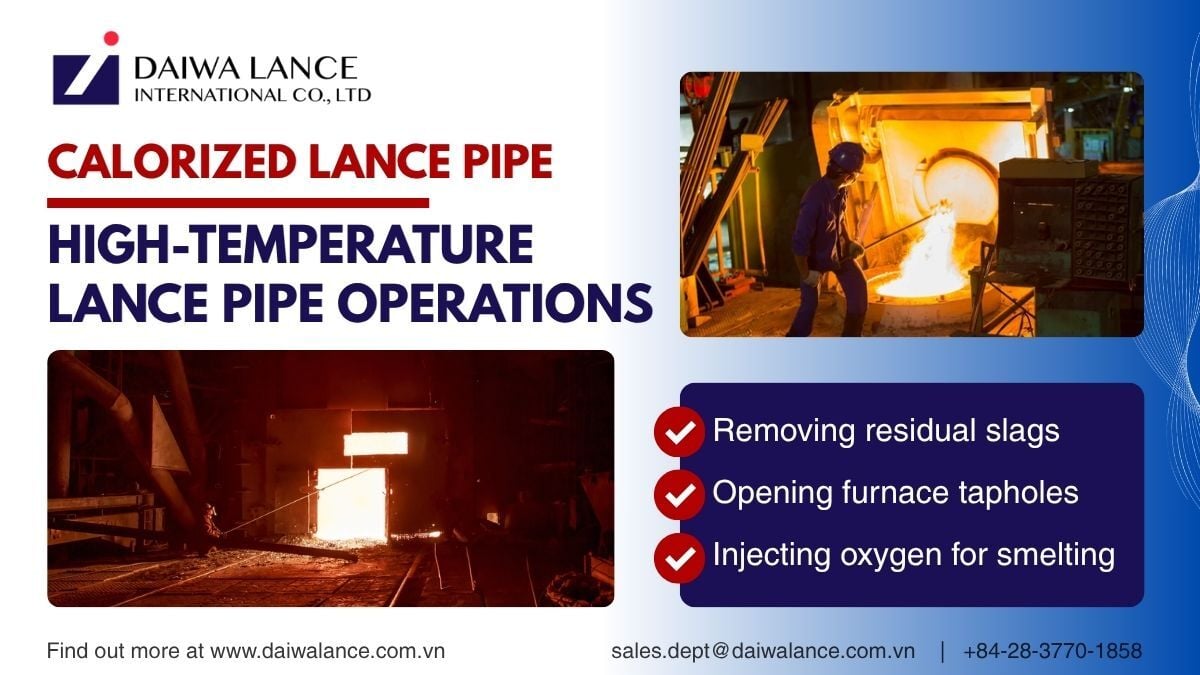
If your plant is dealing with rapid oxidation, short service life under repeated heat cycles, or aggressive exposure that bare mild steel cannot tolerate well, Daiwa CA Lance is more likely to be worth evaluating. If those conditions are limited, mild steel may still remain commercially reasonable.
Service Life and Consumption in Real Purchasing Terms
Longer service life matters because it changes total operating cost. A lance pipe with a higher unit price can still be the more economical choice if it reduces replacement frequency, handling time, interruption risk, and unstable furnace-side operation. That is why we connect Daiwa CA Lance not only to long life but also to minimum consumption and cost reduction.
At the same time, you should stay realistic. Longer life is not a fixed number that can be copied from one site to another. Actual performance changes with temperature, oxidation severity, oxygen setup, operator method, and the exact configuration being used. If you want a reliable comparison, those operating conditions need to be part of the discussion from the beginning.
When Mild Steel Lance Pipe May Still Be Suitable
This comparison should not be read as if mild steel never makes sense. Mild steel lance pipe may still be suitable when duty is lighter, exposure is less severe, the pipe is expected to be consumed quickly, or the process economics do not justify a more advanced heat-resistant pipe. Some plants continue using mild steel because the replacement rate is already accepted as part of normal operation and the commercial trade-off still works.
So the better question is not which product is better in general. The better question is which product is better for your exact process, your replacement pattern, and your cost structure
Technical Reference Points You Should Compare
When you review Daiwa CA Lance against mild steel lance pipe, it helps to confirm more than the product name. A useful comparison should include the structure being quoted, whether the heat-resistant calorized layer is provided inside and outside, whether refractory ceramic coating is included, what outside diameter and thickness are being proposed, what standard length is supplied, and what end type or coupling arrangement is included.
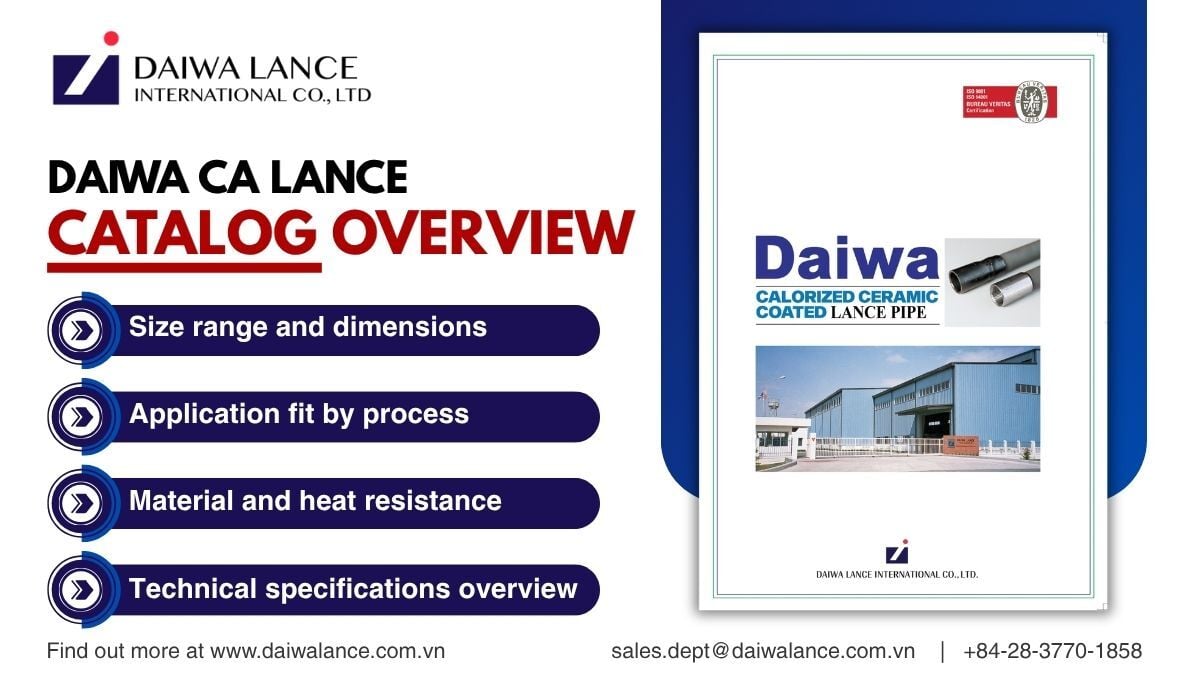
Daiwa CA Lance standard outside diameters range from 1/4" to 2" and standard lengths are 2,750 mm or 5,500 mm depending on size. It is also reasonable to request the catalogue, specification sheet, and mill test certificate when your project requires technical verification. If the comparison is still not clear after that, you can contact Daiwa Lance and ask our technical engineers to review the application with you.
A Practical Decision Rule for You
Choose calorized lance pipe when your operation is repeatedly losing money through heat-driven consumption, oxidation, unstable service life, or excessive replacement frequency.
Choose mild steel lance pipe when the process does not require stronger resistance and the simpler option remains commercially efficient. If the answer is still not clear, the safest decision is to compare the options against your actual plant conditions and discuss them with Daiwa Lance before you finalize the order.
That is the most useful way to read this comparison. You are not only deciding between a higher-priced pipe and a lower-priced pipe. You are deciding between two different cost structures under two different levels of process severity.
FAQ About Calorized Lance Pipe vs Mild Steel Lance Pipe
1. What is the main difference between calorized lance pipe and mild steel lance pipe?
The main difference is structure. Daiwa CA Lance uses a heat-resistant calorized layer and refractory ceramic coating on the interior and exterior surfaces, while mild steel lance pipe does not.
2. Why does calorized lance pipe usually last longer?
Because the treated surface forms a protective alumina film at high temperature, and the combined heat-resistant calorized layer and refractory ceramic coating improve heat and oxidation resistance beyond bare mild steel.
3. How much longer can Daiwa CA Lance last?
Daiwa CA Lance can last 3 to 10 times longer than mild steel lances, but actual consumption still varies widely with use conditions.
4. Can mild steel lance pipe still be the right choice?
Yes. In lighter-duty or more consumable applications, mild steel may still be commercially suitable.
5. What should you request during comparison?
At minimum, you should request catalogue information, product specification details, size and connection information, and any mill test certificate or company-level quality documents needed for evaluation.
Related Blogs & Pages
-
Daiwa CA Lance product page: https://www.daiwalance.com.vn/products/daiwa-ca-lance
-
3 Key Features of Daiwa Calorized Lance Pipe: https://www.daiwalance.com.vn/blog/3-key-features-of-daiwa-calorized-lance-pipe
-
Daiwa Calorized Lance Pipe - Calorizing Process: https://www.daiwalance.com.vn/blog/daiwa-calorized-lance-pipe-calorizing-process-final
-
The Complete Buyer's Guide to Daiwa Lance Products: https://www.daiwalance.com.vn/blog/the-complete-buyers-guide-to-daiwa-lance-products
-
Catalogue page: https://www.daiwalance.com.vn/catalogue
-
Contact page: https://www.daiwalance.com.vn/contact
Conclusion
For quotation review, please share the current operating problem, the furnace environment, the present lance specification, and the document requirements you need for approval. Based on that information, we can recommend whether Daiwa CA Lance or another lance pipe option is more suitable for your application.

About Daiwa Lance
Established since 1997, Daiwa Lance has positioned ourselves as a pioneer in thermic cutting and oxygen lancing technology. Based in Ho Chi Minh City, Vietnam, we have been providing quality customer service and products with advanced Japanese technology.
We maintain the highest quality standards with ISO 9001:2015, ISO 14001:2015, and JIS G standards certifications. We have also expanded our reach globally, exporting to over 55 countries worldwide.
Visit us through our contact channels today: Email, WhatsApp, Contact Us form, or connect with us on Youtube, LinkedIn and Facebook.
%20size%20CTA%20theo%20Nh%E1%BA%ADt%20%20(1)-2.png?width=1200&height=510&name=(400%20x%20170%20)%20size%20CTA%20theo%20Nh%E1%BA%ADt%20%20(1)-2.png)