Daiwa Lance Products
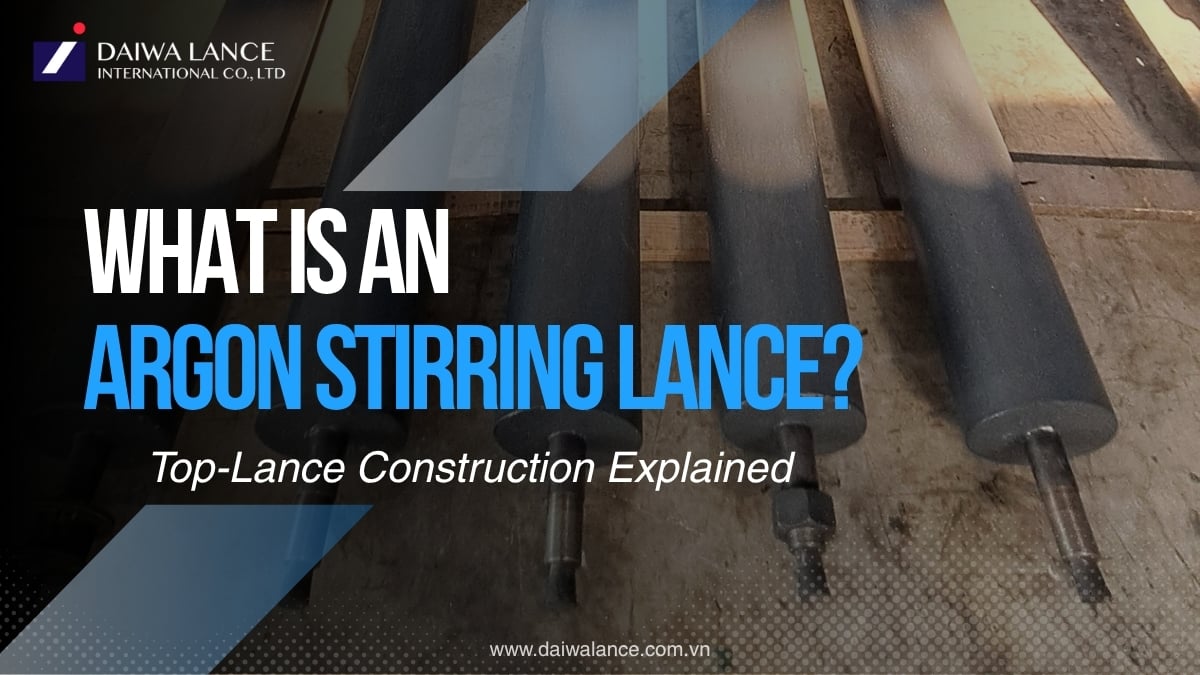
What Is an Argon Stirring Lance? Top-Lance Construction Explained
Continue Reading 

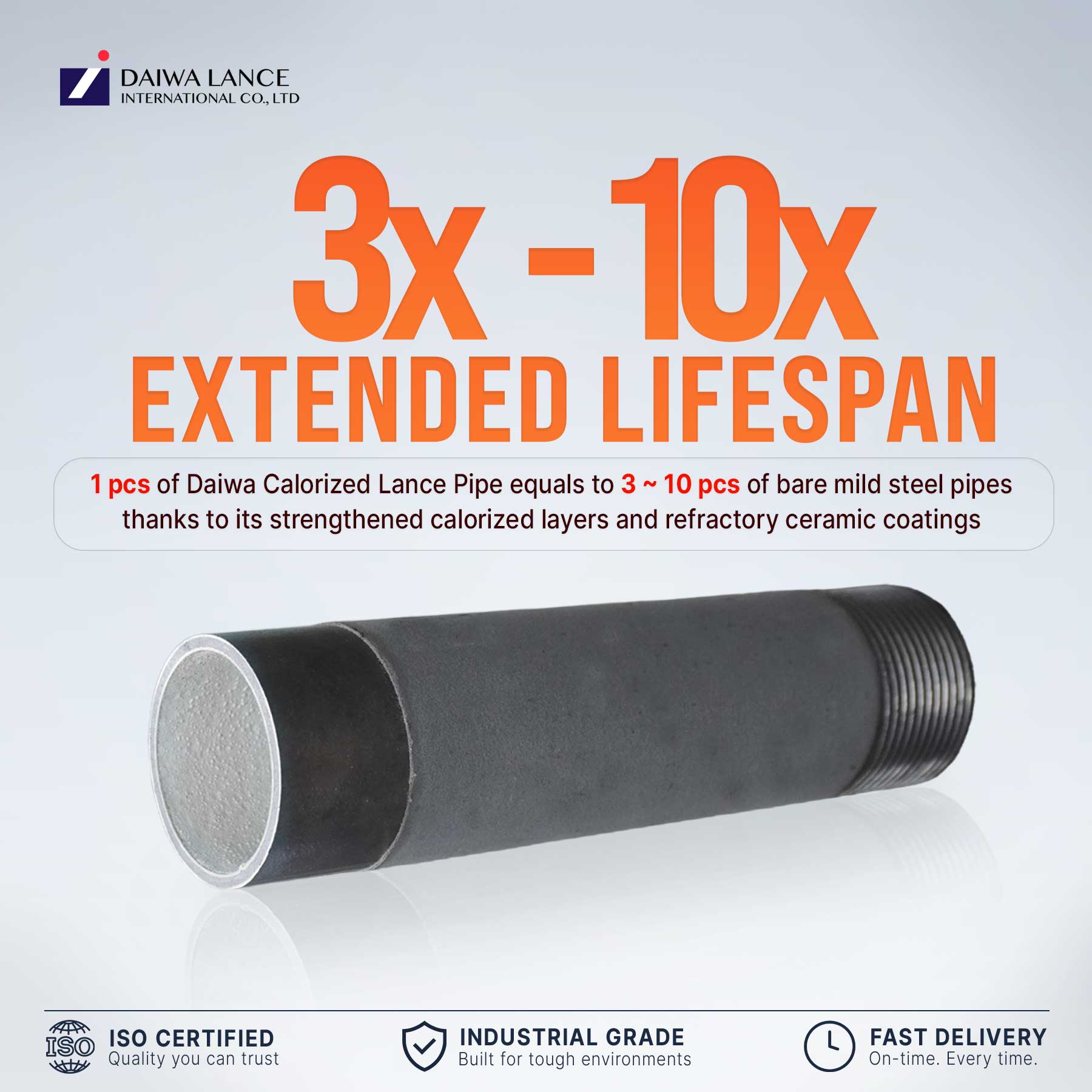
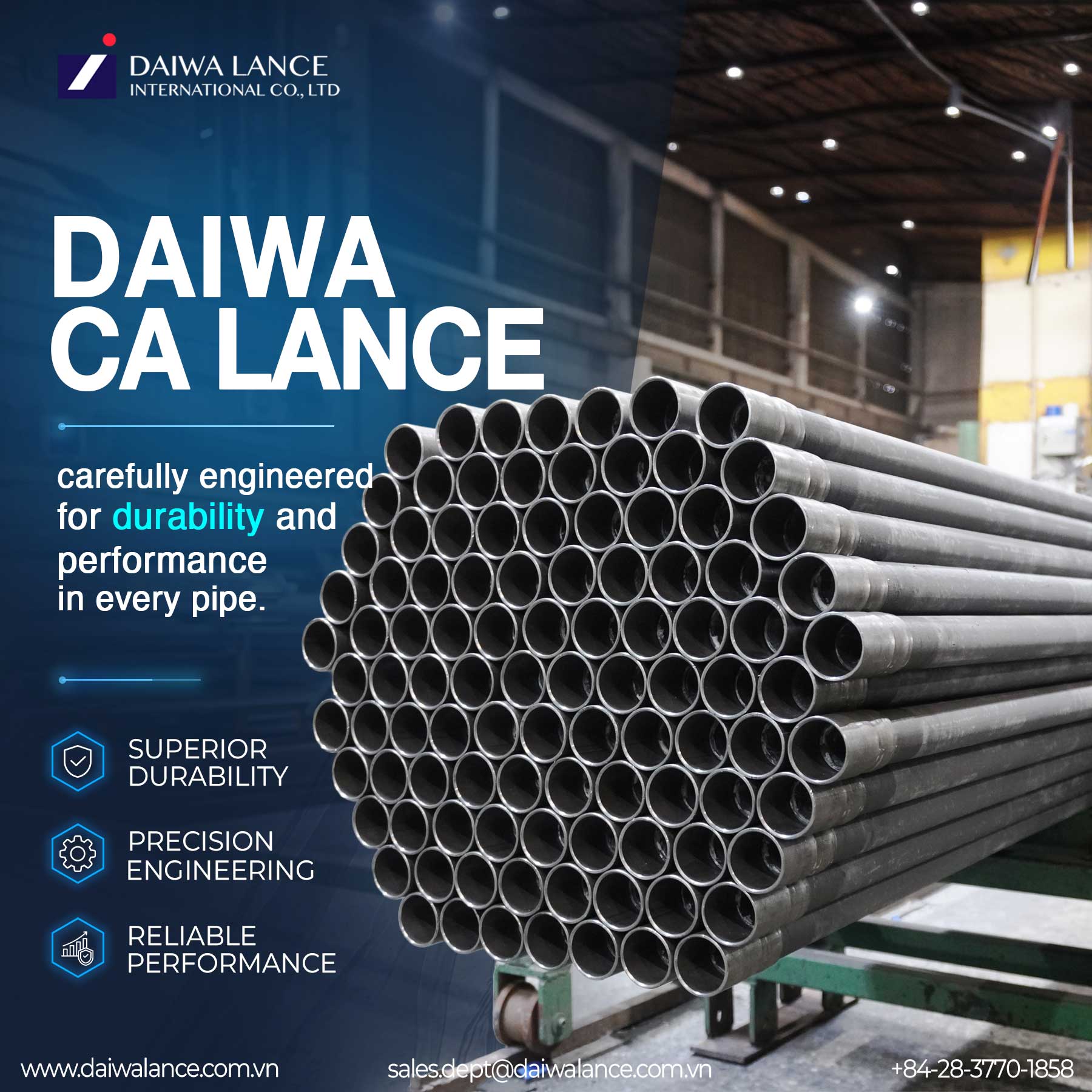
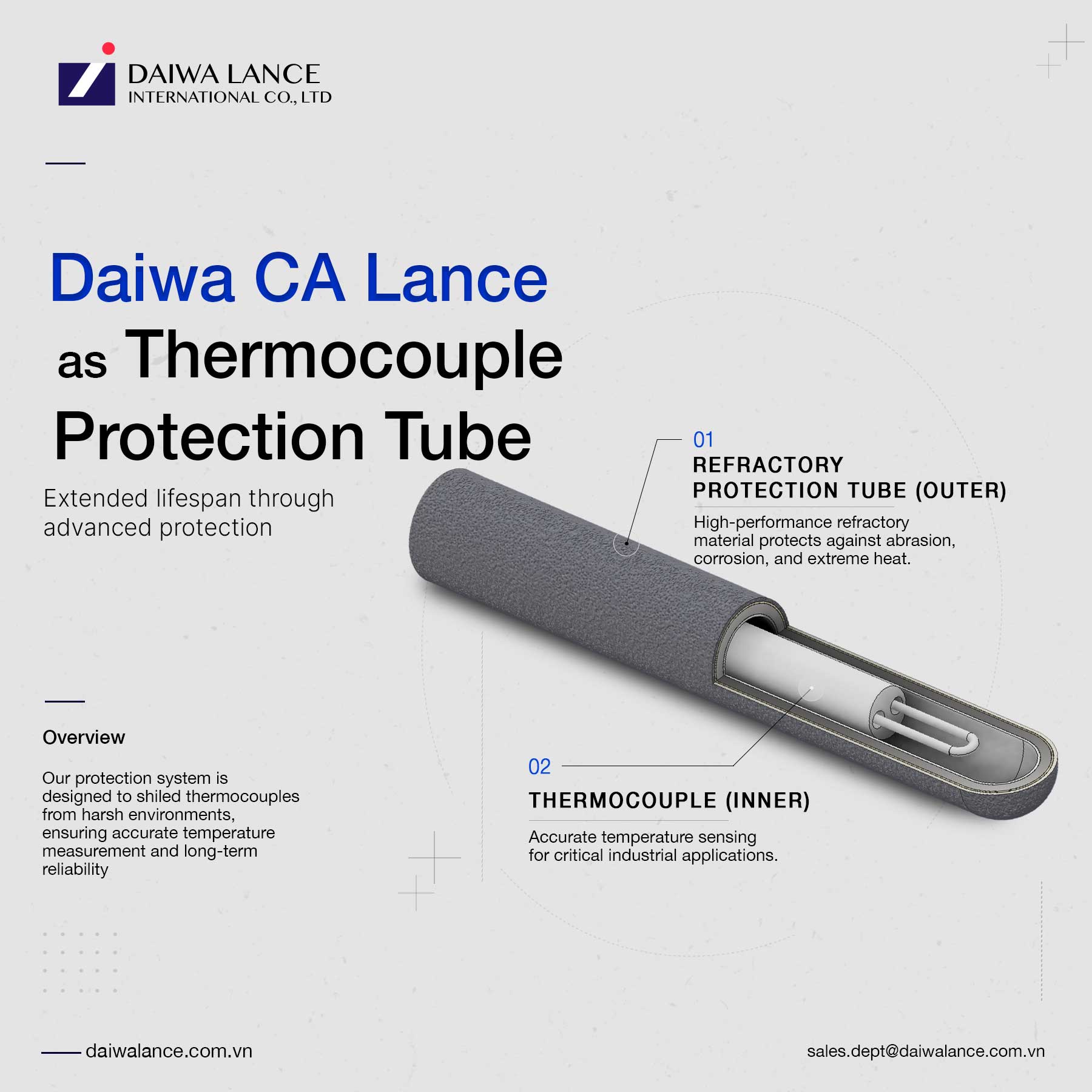
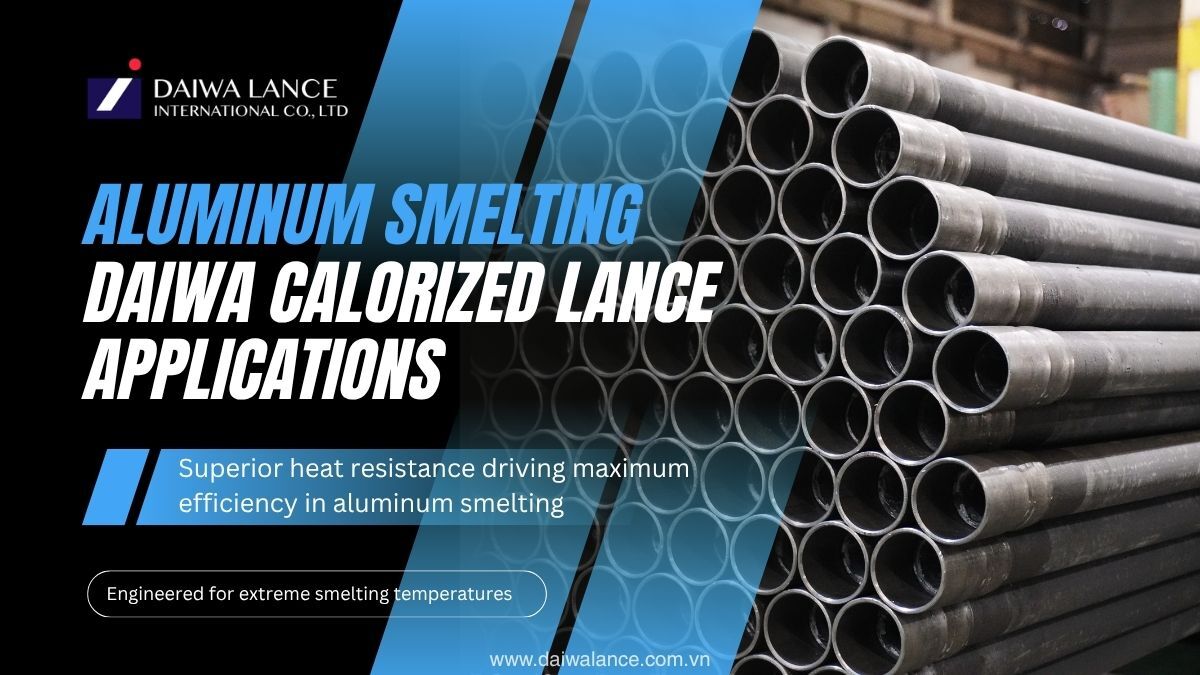
Daiwa CA Lance is a calorized lance pipe — a heat-resistant oxygen lance pipe engineered for steelmaking and other high-temperature furnace-side work.
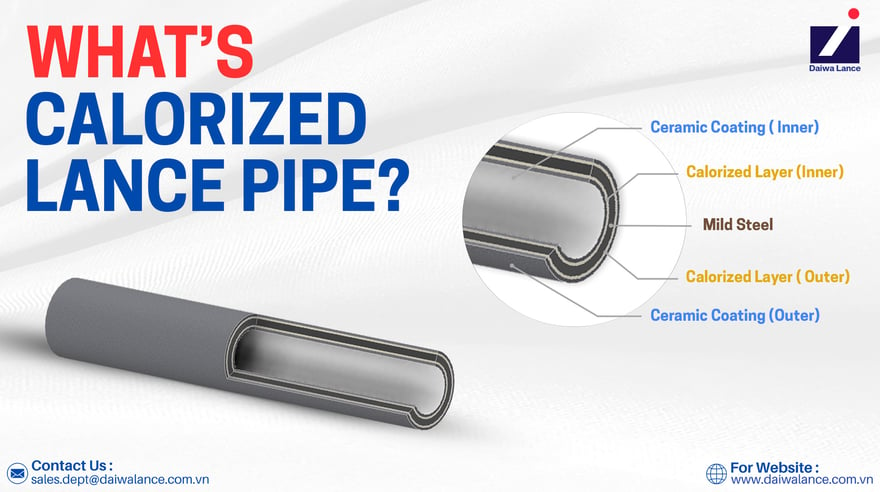
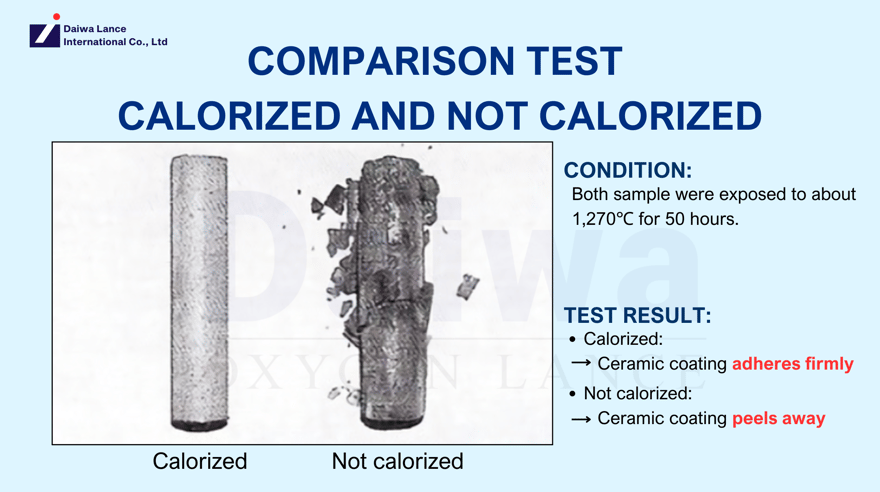
At Daiwa Lance, Daiwa CA Lance is manufactured with a calorizing surface modification and reinforced with a protective ceramic coating on the inner and outer surfaces. This dual-layer protection is designed to improve service life, enhance heat and oxidation resistance, and help achieve lower pipe consumption in demanding operations.
Using advanced calorizing technology, Daiwa CA Lance can deliver up to 3x-10x higher strength for blowing and injecting oxygen into liquid or molten steel, depending on operating conditions.
*Note: The calorized layer and ceramic coating can be applied in different thicknesses to match each customer’s furnace environment, process severity, and performance requirements.
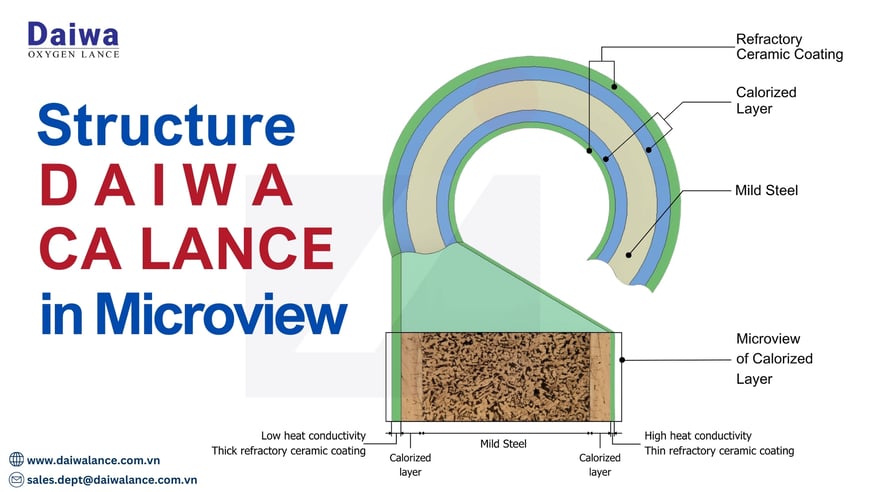
Daiwa CA Lance has a 3-layer design for stronger heat and oxidation resistance.
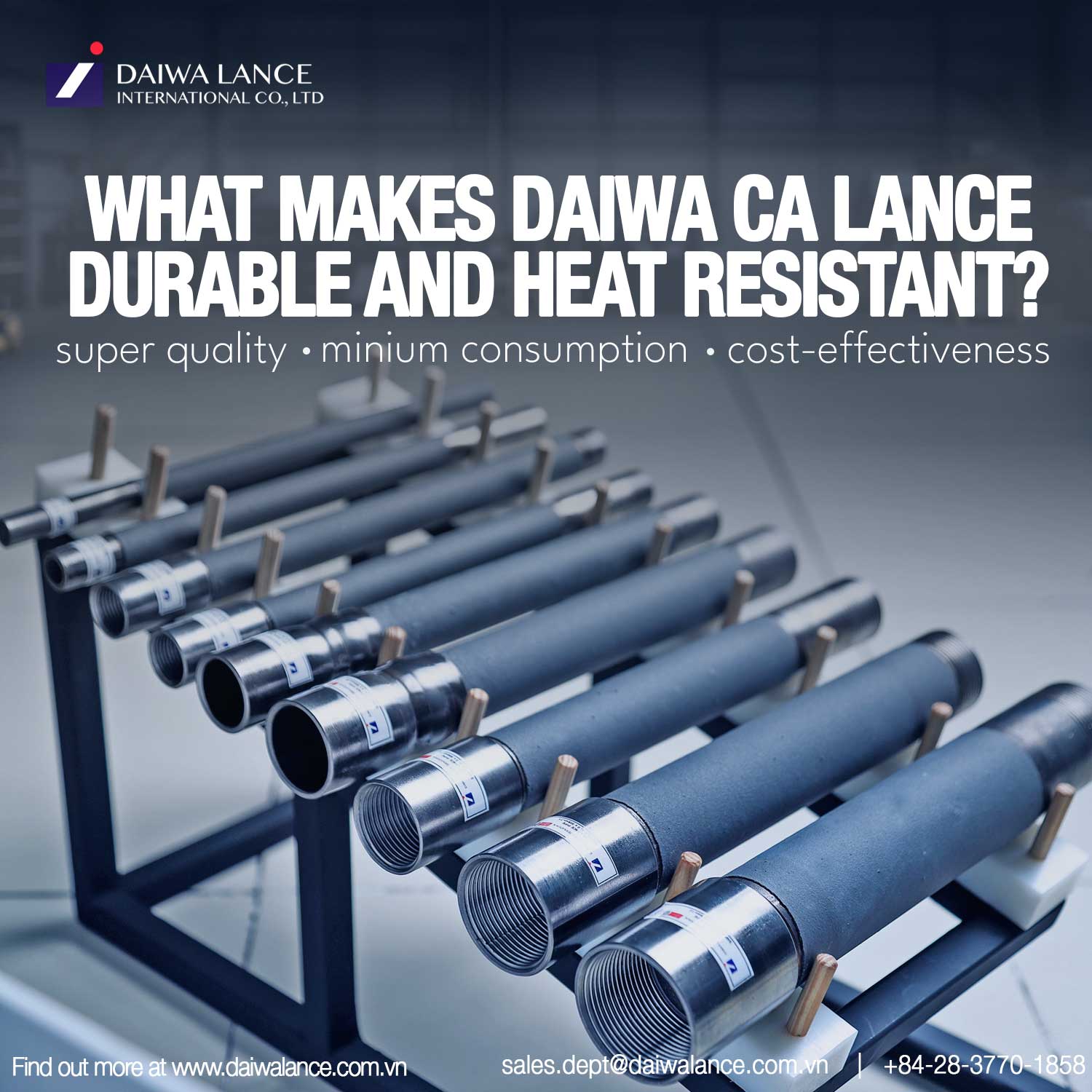
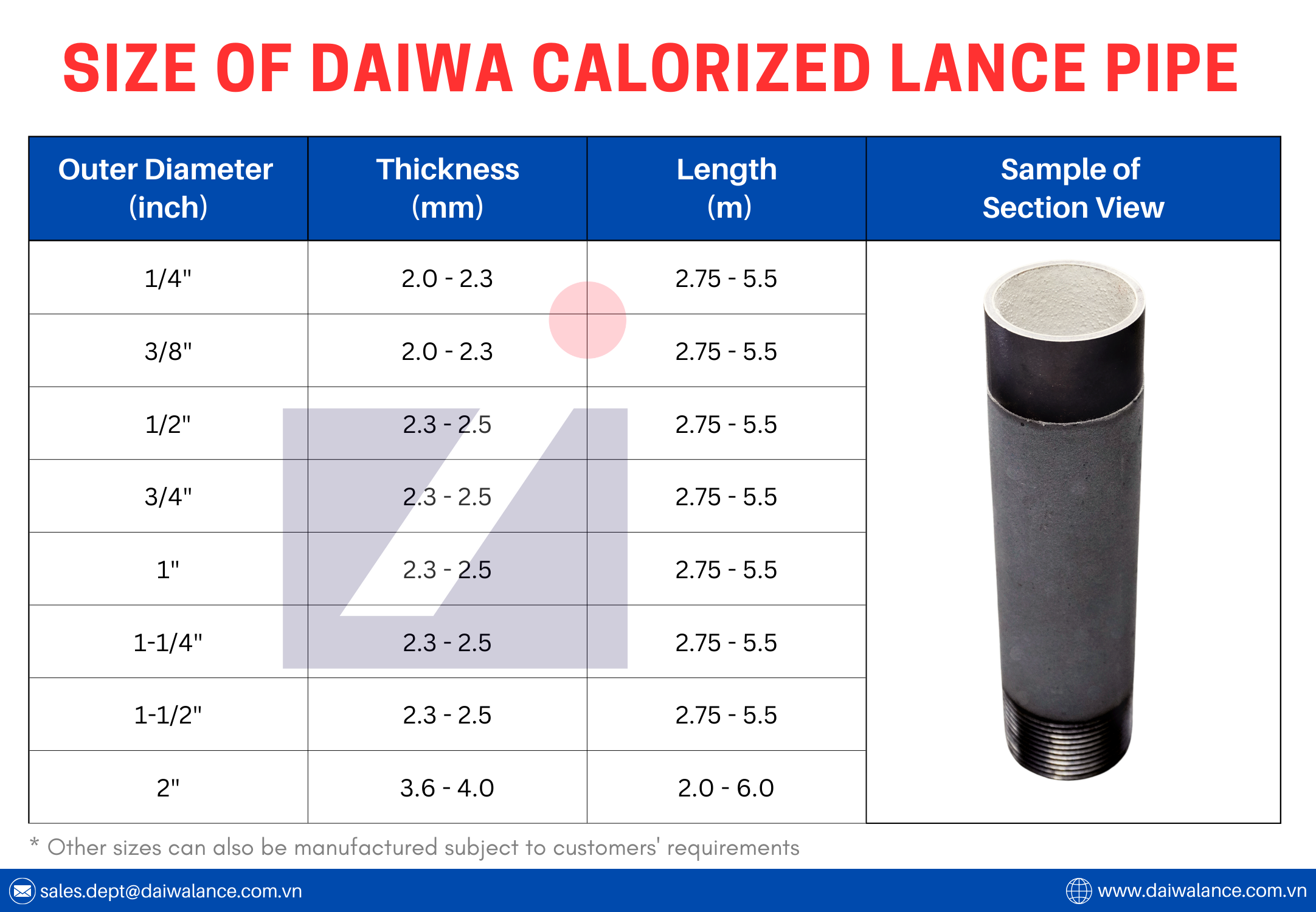
Daiwa CA Lance is available in a wide range of standard sizes to fit different furnace setups and injection needs. Typical outside diameters (OD) range from 1/4” to 2”, with wall thickness commonly around 2.0–4.0 mm depending on the diameter.
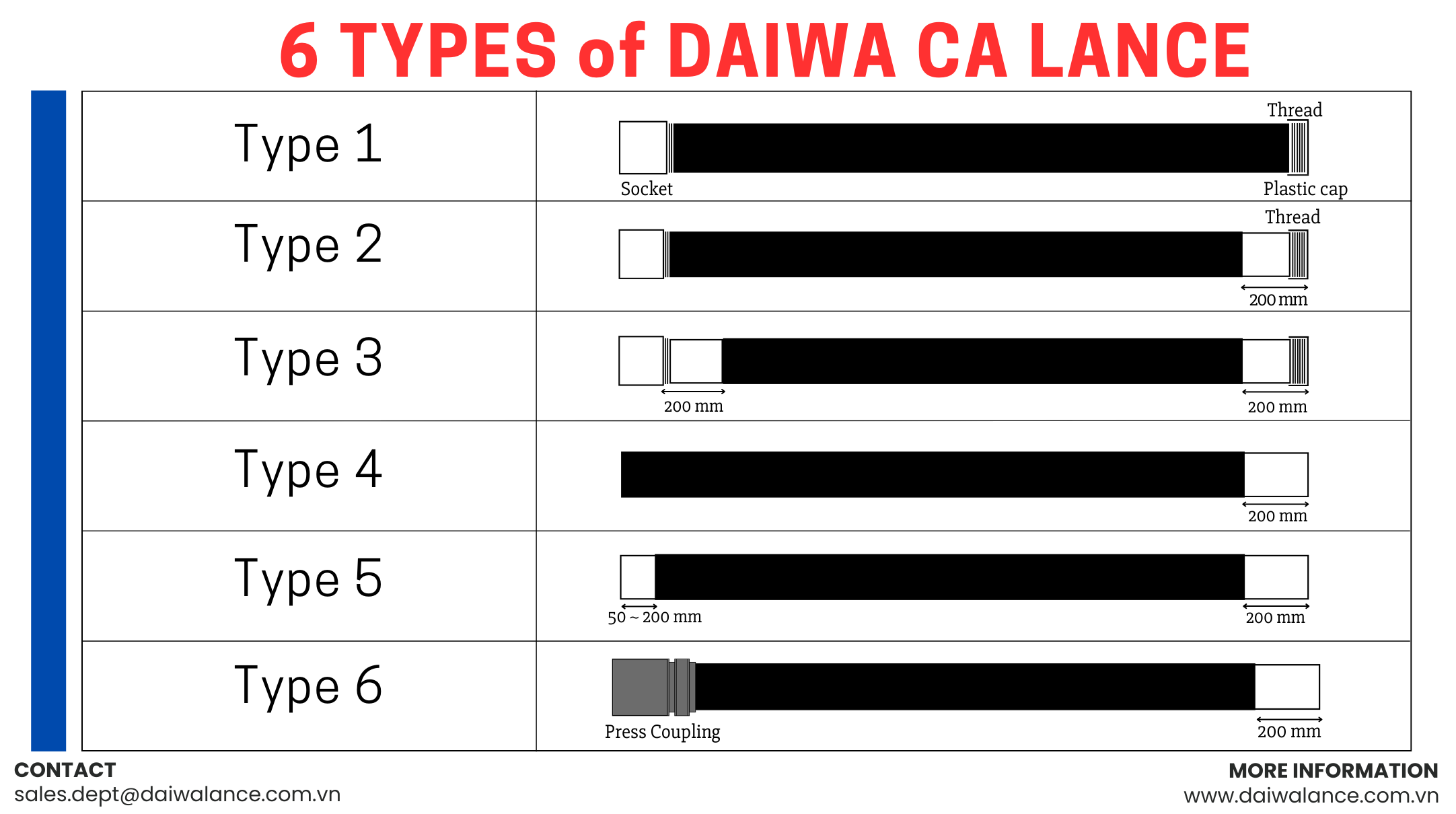
To match different furnace setups and operating methods, Daiwa CA Lance is available in multiple types / end configurations.
Common connection options are grouped into two categories: threaded and non-threaded. Within the non-threaded category, the typical choices are plain end and press-coupling end. The practical goal is simple—select the connection style that best fits your lance holder, your handling method, and the way your team replaces pipes on site.
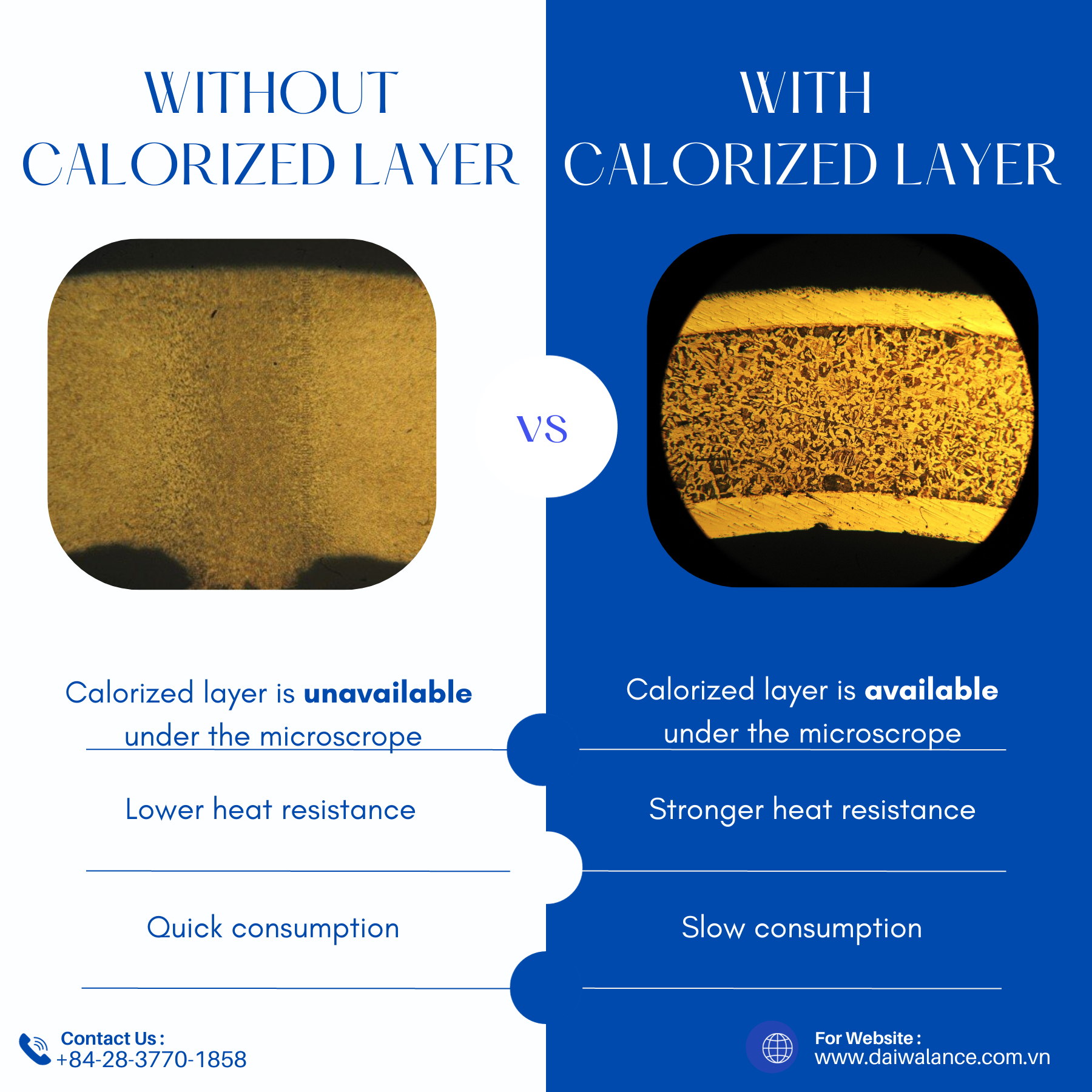
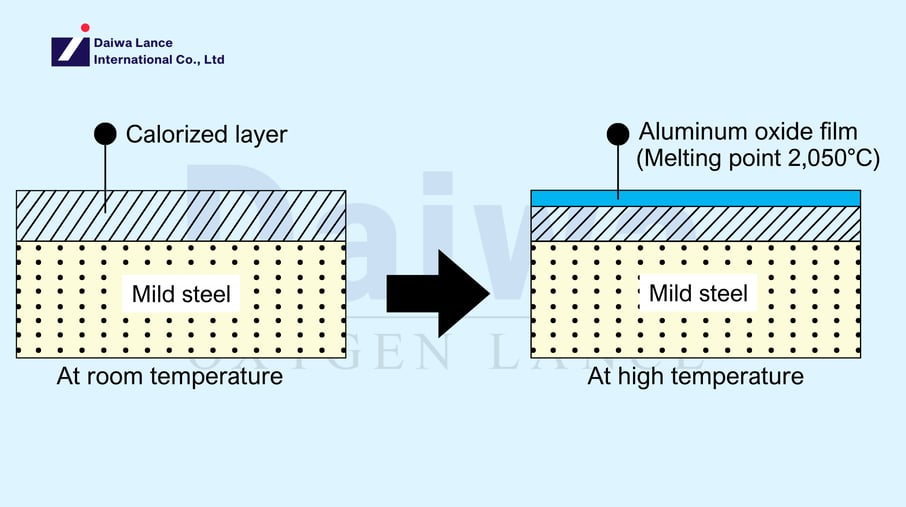
The key principle of Daiwa CA Lance’s heat resistance and durability lies in the calorized layer: during the calorizing process, aluminum diffuses into the steel surface and forms an aluminum–iron alloy layer that becomes the foundation of high-temperature protection.
When the pipe is exposed to furnace heat, this surface reacts to form a heat-resistant aluminum oxide film (alumina film). This alumina film works like a protective barrier that slows severe oxidation and helps the mild steel base maintain integrity longer in aggressive furnace atmospheres.
In Daiwa CA Lance, the calorized protection is further supported by a refractory ceramic coating, creating a dual-layer system designed to improve service life and reduce replacement frequency in oxygen blowing and injection-related operations.
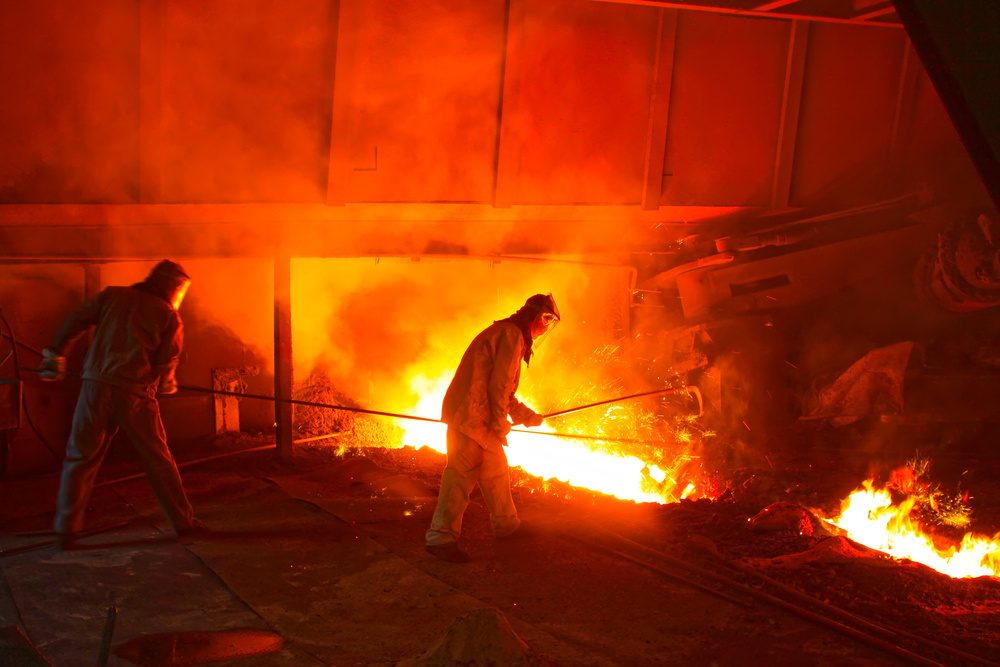
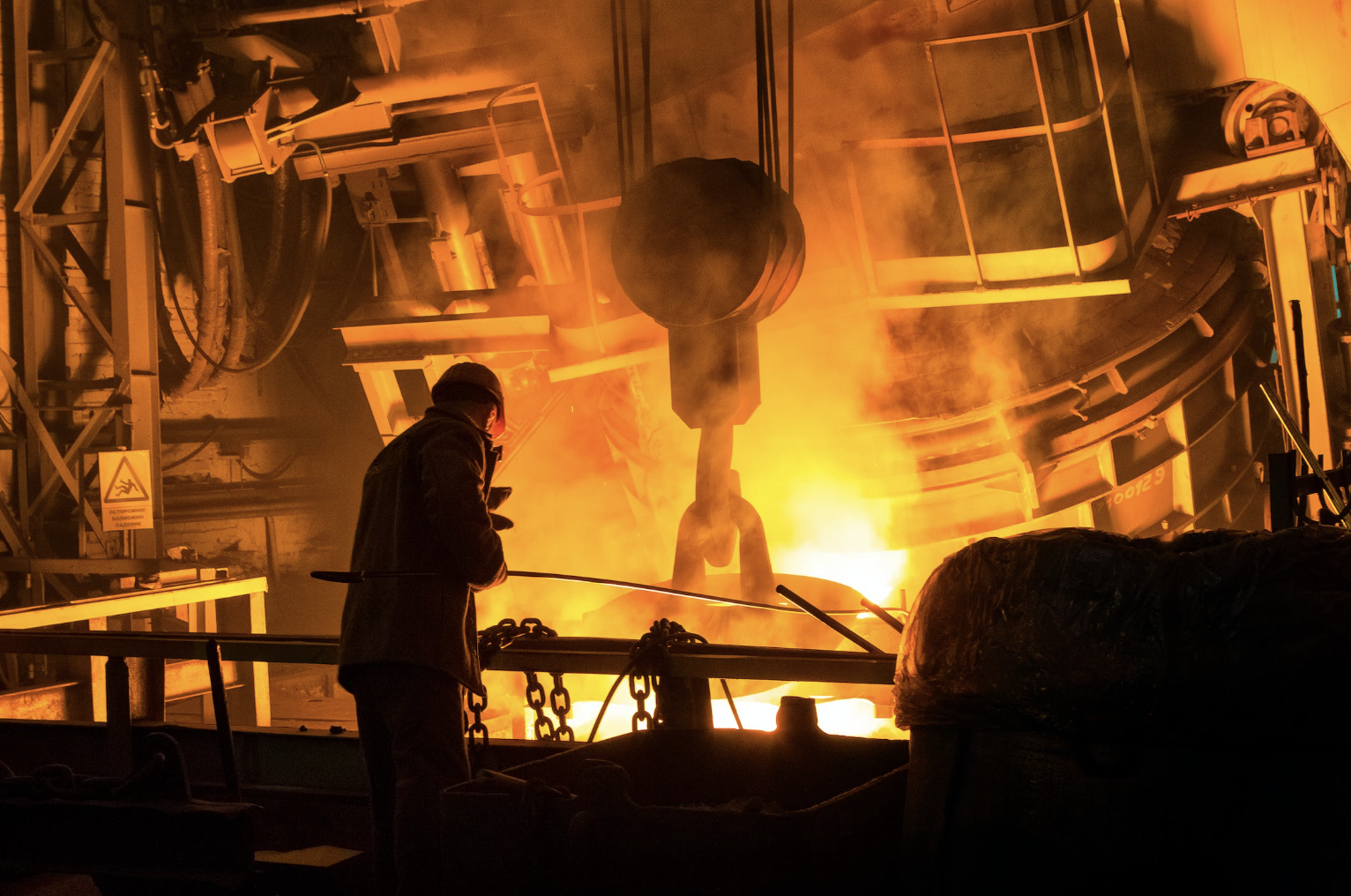
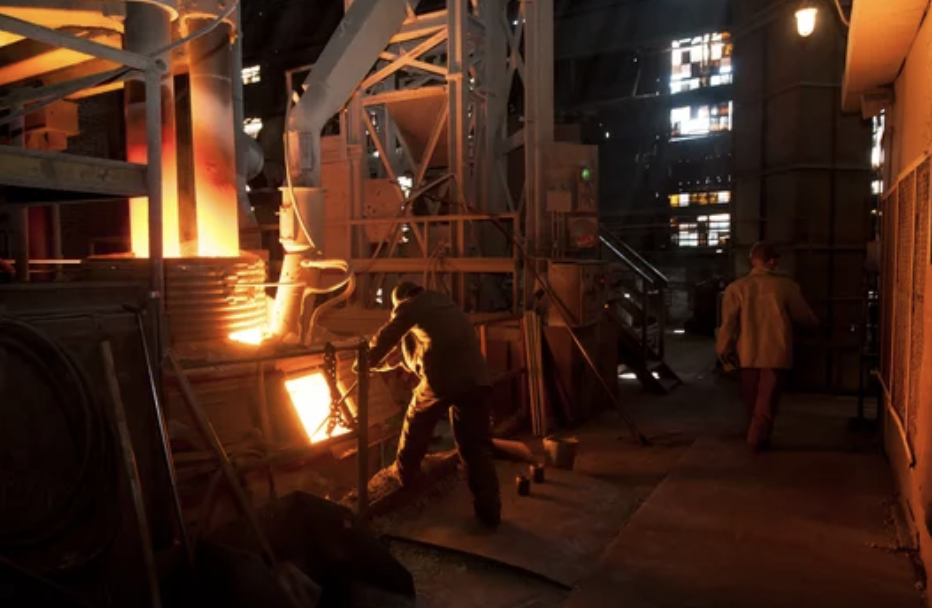

Daiwa CA Lance helps reduce lance consumption in high-heat operations by combining a calorized aluminum-alloy layer with a refractory ceramic coating for stronger heat and oxidation resistance.

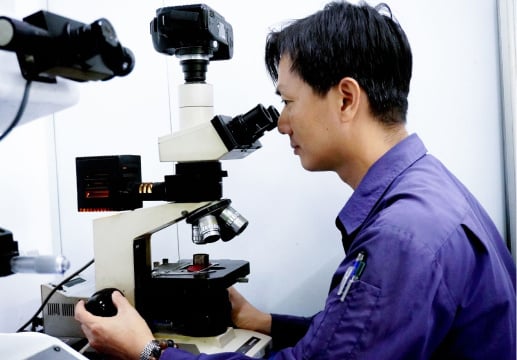
Daiwa Lance uses high-quality raw materials and maintains strict quality control throughout production to deliver consistent calorized lance pipe performance.

Since 1955, Daiwa Lance has kept pricing competitive through large-scale manufacturing, supplying lance products to customers in 55+ countries worldwide.
Learn more about our product materials here!

Comprehensive catalog on the heat-resistant Daiwa CA Lance for blowing oxygen
Step-by-step instructions to connect Daiwa CA Lance with Daiwa Press Machine
Certificate on ISO 9001:2015 Quality Management System of Daiwa Lance