In South African mining and metallurgy, the thermic lance (also called a thermal lance or burning bar) is a consumable steel pipe packed with steel wires. Fed with pressurized oxygen, it sustains an iron-oxidation reaction (4Fe + 3O₂ → 2Fe₂O₃ + heat) that produces a flame of 3,000–3,600°C, cutting high-hardness materials quickly without noise or vibration. Because it is consumed as it cuts, mines treat it as a recurring consumable with its own supply plan.
This guide covers the main mining and smelting applications in South Africa, the specifications to check before ordering, how to source reliably from overseas manufacturers, and the product-quality factors that determine operator safety.
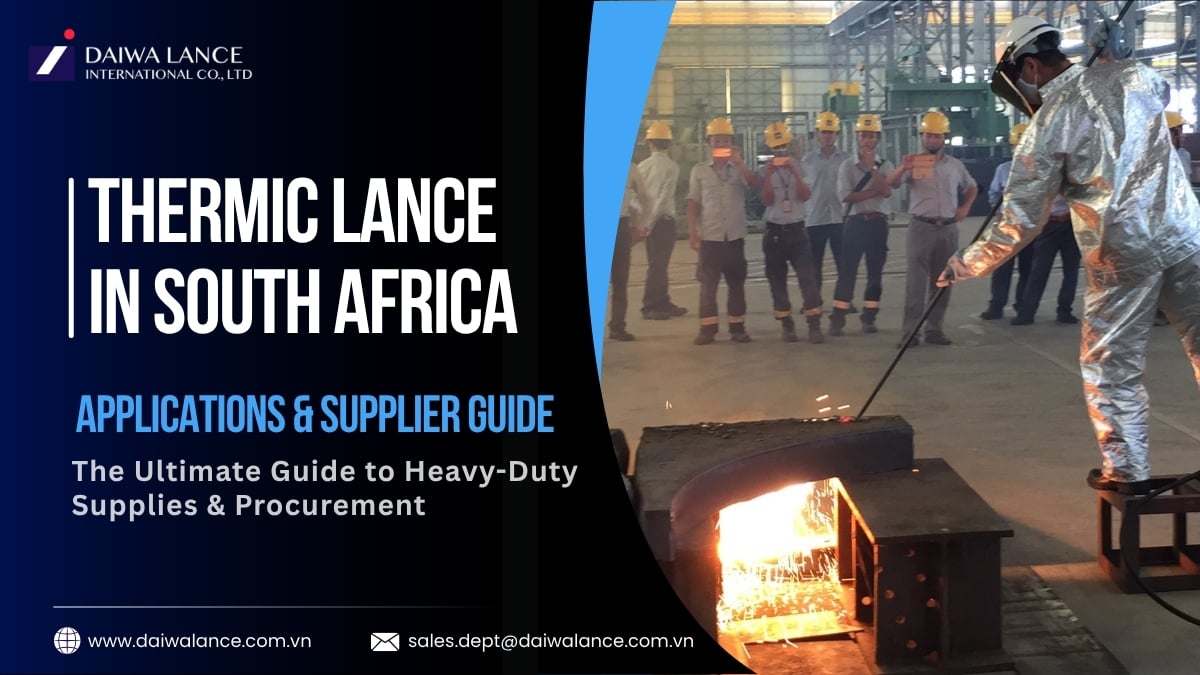
Core Applications of the Thermic Lance in South African Mining
In mining, the thermic lance is used mainly for heavy equipment maintenance and for clearing high-hardness obstructions that mechanical saws and standard torches cannot handle. Because the reaction produces no noise or mechanical vibration, the lance can also be used near structures and equipment that percussive tools would damage.
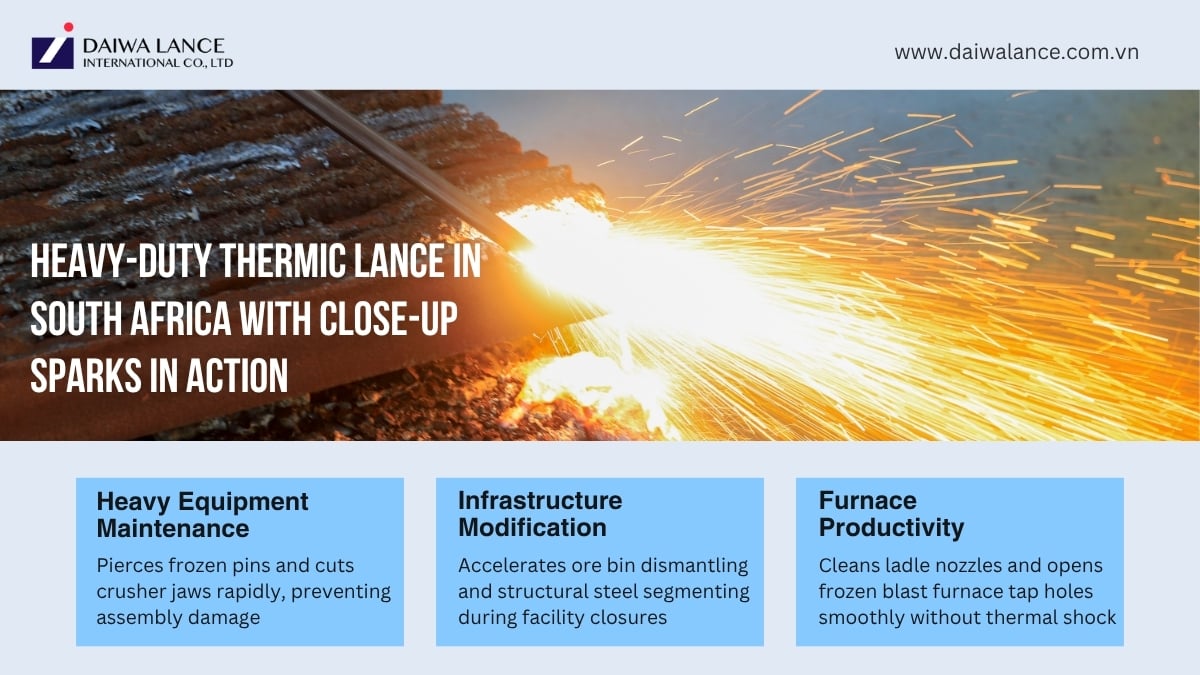
- Equipment maintenance – cutting worn crusher jaws and piercing seized pins on heavy mining equipment, so components can be removed without damaging the surrounding assembly.
- Infrastructure work – dismantling ore bins and heavy structural steel during facility upgrades or mine closures.
- Rock and concrete – drilling and breaking natural stone, fire bricks, and reinforced concrete where rebar and hard aggregate blunt mechanical diamond saws.
Downstream, smelting operations for platinum, iron, and chromium rely on the lance to keep furnaces running: opening iron notches and tap holes of blast furnaces, electric furnaces, and cupola furnaces, and cleaning ladle and tundish nozzles in continuous casting so molten metal flows freely. Opening a tap hole with a lance avoids the thermal shock and refractory damage associated with mechanical drilling.
Slag Removal in Smelting Plants with Thermic Lance
Clearing solidified slag is one of the most common tasks for thermic lances in South African smelters. When molten waste cools on plant decks, casting channels, and ladle walls, it forms a hard matrix of oxides and silicates that resists pneumatic chisels.
The lance's flame liquefies these deposits quickly and without heavy mechanical vibration, protecting sensitive refractory brickwork while restoring operating capacity. Operators also use it to drill furnace refractory walls during maintenance campaigns. In high-throughput smelters, scheduled lancing of ladle lips and casting channels between campaigns keeps buildup manageable and avoids emergency stoppages.
Specifications: Type T, Type W, Sizes, and Connections of Thermic Lance
Choosing the right internal structure and connection end determines cutting performance and consumable waste. Daiwa Thermic Lance is manufactured in two internal structures:
- Type T – partially packed with steel wires around an inner pipe core; provides regulated oxygen flow for precision cutting and controlled material removal.
- Type W – fully packed with steel wires; designed for maximum cutting power in heavy-duty demolition and bulk melting.
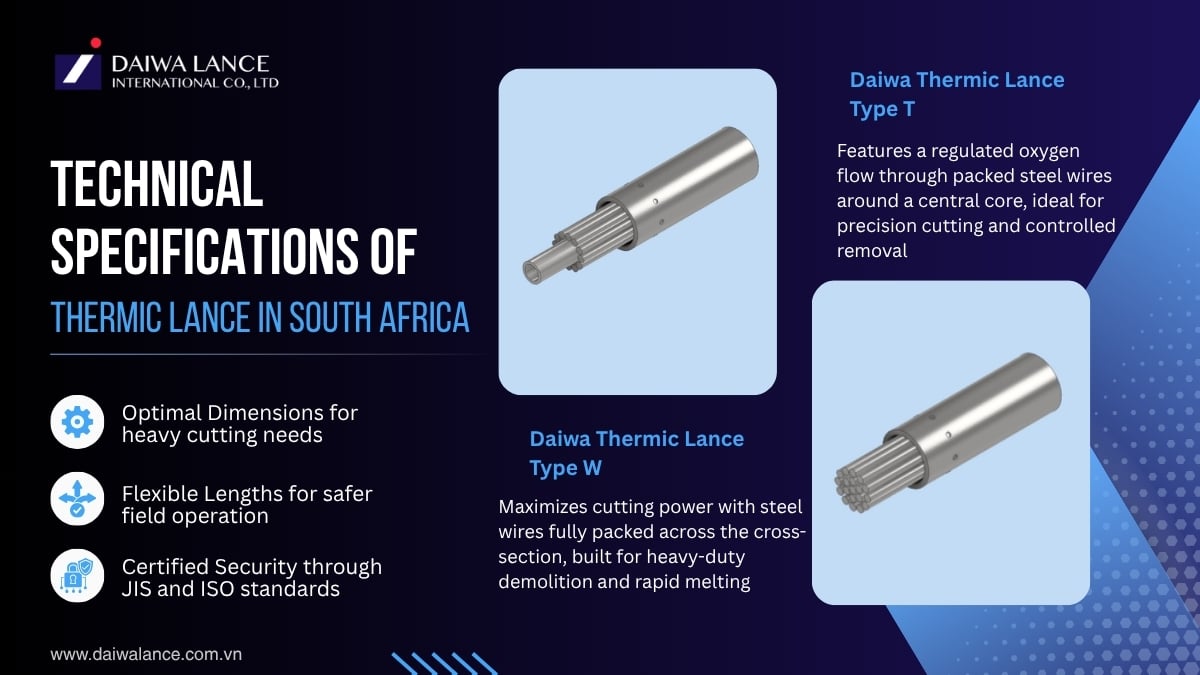
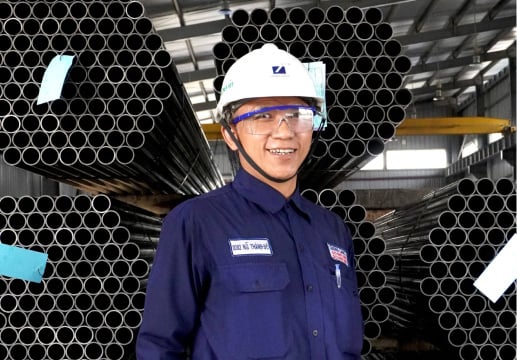
Standard outer diameters run from 10.0 mm to 27.2 mm with lengths of 2.0–5.5 m; extended roll formats up to 30 m support continuous cutting without joint interruptions. Four connection ends - Plain End (PE), Threaded End (TD) with protective socket, Pressed Quick Coupling (PC), and Quick Coupling (QC) - allow fast rod extension and minimize unusable tail ends. As a rule of thumb, specify Type T where control matters more than speed - cutting near refractory or dismantling components for reuse - and Type W where raw output matters, such as thick slag and solid sections.
Sourcing: Does Your Thermic Lance Supplier Need to Be in South Africa?
No. For South African buyers, sourcing thermic lances does not always mean choosing a manufacturer located inside the country. In many cases, mining houses and smelters work with overseas manufacturers that can provide consistent product quality, technical documentation, export support, and reliable shipment planning. The key is to confirm whether the supplier understands the logistics requirements of delivering industrial consumables to South Africa.
Daiwa Thermic Lance is manufactured directly at Daiwa Lance International's factory in Vietnam—inheriting Japanese technology and using high-quality materials from Japan—and is sold to more than 52 export countries. Production is certified to ISO 9001 and ISO 14001 and complies with JIS standards, and the company exports to more than 52 countries. Ask prospective suppliers for references from mining or smelting customers in comparable markets, and confirm who is responsible for documentation errors or transit damage before the first order.
Bulk Ordering and Logistics Planning for Thermic Lance
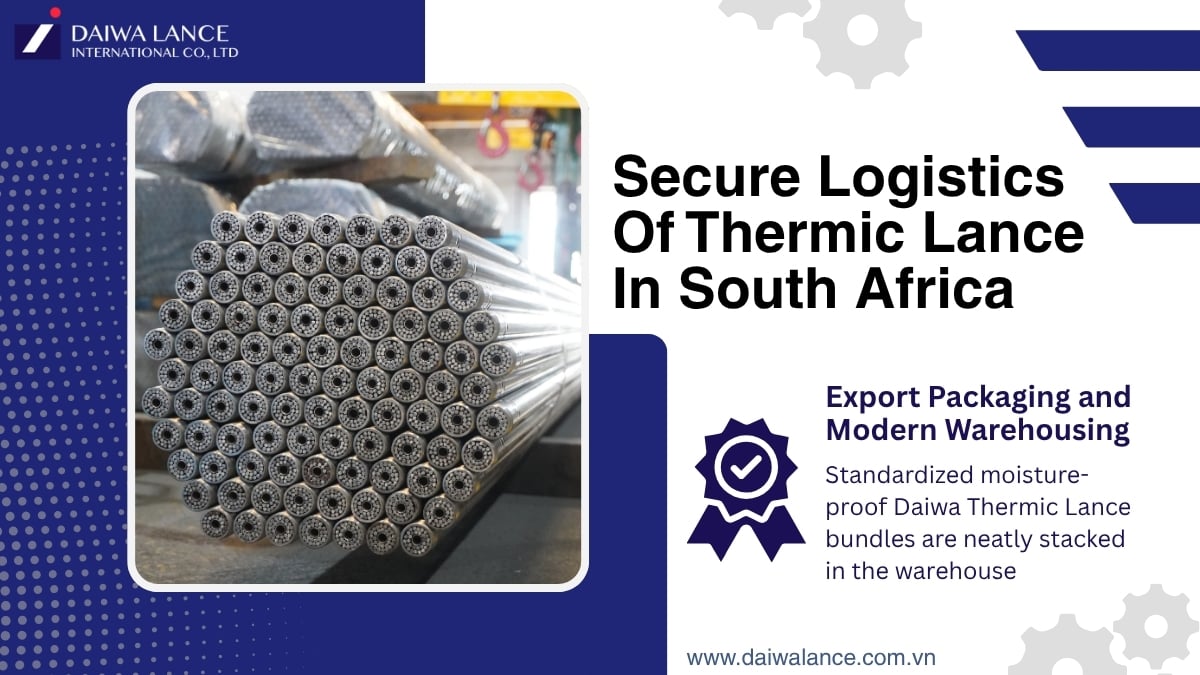
Stable supply for mining corridors such as North West, Limpopo, and Mpumalanga depends on shipment planning rather than local warehousing. Key points to agree with your supplier: The goal is that a delayed vessel never halts furnace maintenance.
- Restocking plan – confirmed lead times and safety stock at your site sized to monthly consumption, so urgent furnace maintenance never waits on a shipment.
- Packaging – moisture-resistant bundling and protective end caps; trapped moisture and dust degrade the reaction and can cause pressure problems at ignition, so lances must also be stored dry on site.
- Documentation – certificate of origin, fumigation certificate, packing list, and mill test reports prepared by the supplier for smooth customs clearance.
- Shipping mode – full container loads reduce handling damage; for trial orders, confirm how cargo is consolidated and protected during transshipment.
- Custom dimensions – non-standard lengths and wire structures matched to furnace depth; the minimum order quantity is 50 pipes, with free samples available for testing.
Safety Depends on Product Quality for Thermic Lance
In smelting environments, thermic lance safety is determined largely by how the pipe was manufactured. Verify these five factors with any supplier:
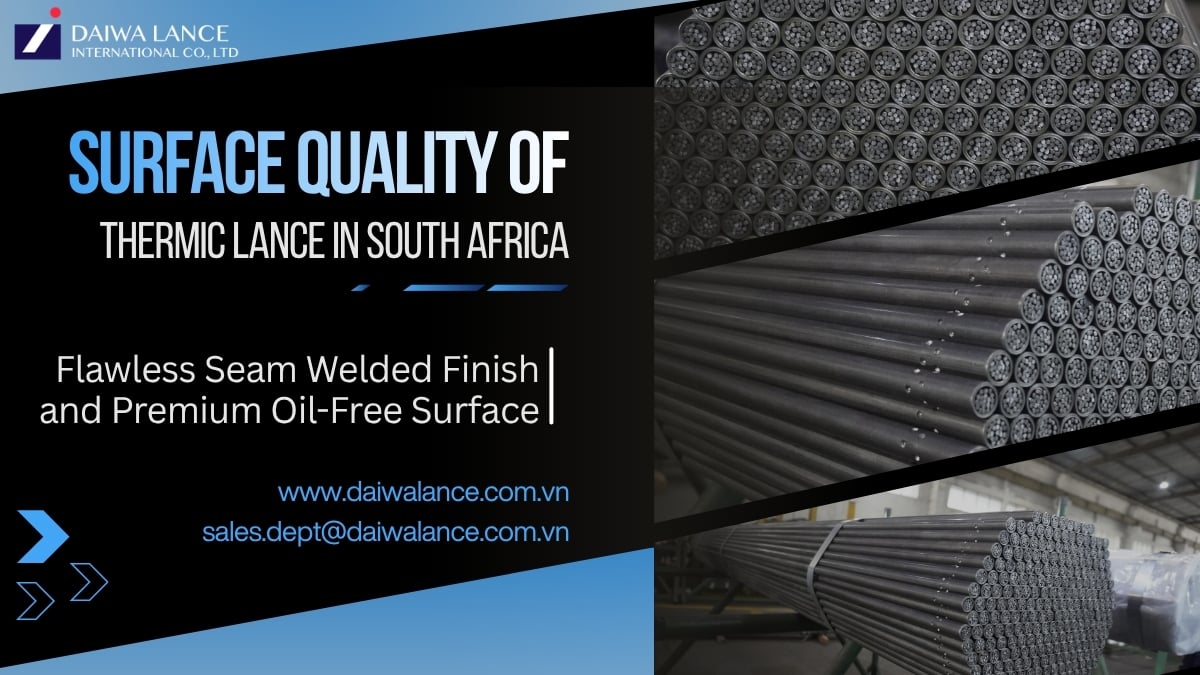
- Weld seam integrity – defect-free longitudinal welds withstand internal backpressure without splitting open during slag removal or furnace tapping.
- Oil-free surfaces – inner and outer surfaces must be free of oil and grease; because the oil residue in an oxygen-rich environment can trigger flashbacks toward the operator.
- Uniform wall thickness and straightness – prevents buckling, gas leaks, and breakage when the lance is extended toward a furnace face.
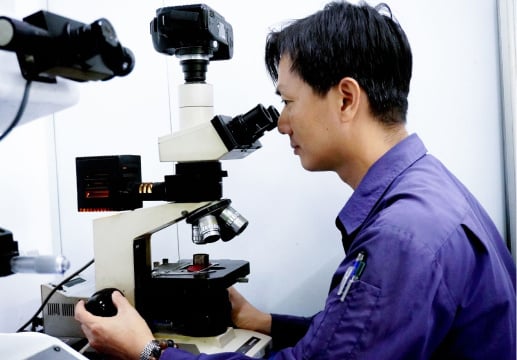
- Strict quality management – ISO 9001-based inspection of every production batch, from raw steel to finished lance.
- Certifications – ISO 9001, ISO 14001, and JIS provide independent verification of quality and environmental management.
Operators should maintain oxygen pressure of 8–11 bar, ensure adequate ventilation, and wear full personal protective equipment. Daiwa Lance International provides safety guidelines and training materials with its products. Only an oxyacetylene torch should be used to ignite the lance tip, heating it until red hot before the oxygen valve is opened.
FAQ About the Thermic Lance in South Africa
What are the main mining applications for a thermic lance in South Africa?
Piercing seized pins and cutting worn crusher jaws during heavy equipment maintenance, plus opening frozen tap holes and clearing slag in downstream platinum, iron, and chromium smelters. It is also used for ore bin dismantling during mine closures.
Can a thermic lance cut reinforced concrete and rock?
Yes. The 3,000–3,600°C flame liquefies concrete aggregate and oxidizes steel rebar at the same time, which is why it is used for breaking natural stone, fire bricks, and reinforced structures that blunt mechanical saws.
What connection types are available?
Four: Plain End (PE), Threaded End (TD) with protective socket, Pressed Quick Coupling (PC), and Quick Coupling (QC). TD, PC, and QC allow fast rod extension and minimize unusable tail-end waste during continuous cutting.
Why does quality control matter in smelting environments?
Uniform wall thickness and defect-free seams prevent pipe buckling and gas leaks under thermal load, while oil-free surfaces eliminate the main cause of flashbacks. ISO 9001, ISO 14001, and JIS certification make these controls verifiable.
How can South African buyers secure stable pricing?
Through volume-based supply agreements with the manufacturer: agreed monthly quantities, custom lengths where needed, confirmed lead times, and safety stock on site. This is more reliable than spot purchases through intermediaries. Free samples let buyers validate consumption rates before committing.
Next Steps
If you are specifying thermic lances for a mine or smelter in South Africa, request a quotation based on your configuration and monthly volume. Include your lance type, dimensions, connection end, and destination port so the first quotation is already actionable.
- Request a Quote – https://www.daiwalance.com.vn/contact
- Download Catalogue – https://www.daiwalance.com.vn/catalogue
- Contact Us – https://www.daiwalance.com.vn/contact
Related Blogs & Pages
-
Daiwa Thermic Lance product page: https://www.daiwalance.com.vn/products/daiwa-thermic-lance
-
Catalogue page: https://www.daiwalance.com.vn/catalogue
-
Company overview: https://www.daiwalance.com.vn/company-overview
-
Thermic Lance glossary: https://www.daiwalance.com.vn/glossary/thermic-lance
-
Contact page: https://www.daiwalance.com.vn/contact
About Daiwa Lance
Established since 1997, Daiwa Lance has positioned ourselves as a pioneer in thermic cutting and oxygen lancing technology. Based in Ho Chi Minh City, Vietnam, we have been providing quality customer service and products with advanced Japanese technology.
We maintain the highest quality standards with ISO 9001:2015, ISO 14001:2015, and JIS G standards certifications. We have also expanded our reach globally, exporting to over 55 countries worldwide.
Visit us through our contact channels today: Email, WhatsApp, Contact Us form, or connect with us on Youtube, LinkedIn and Facebook.