In aluminum and other non-ferrous operations, standard mild steel lance pipes melt quickly under furnace heat, interrupting injection cycles and, as they dissolve, leaching iron into the molten bath and lowering metal purity. The result is unplanned downtime, higher scrap rates, and rising consumable costs.
The Daiwa CA Lance (Daiwa Calorized Lance) addresses these problems with a dual-layer protective structure - a diffused aluminum-iron alloy layer and a refractory ceramic coating - that withstands temperatures up to 1,600°C and typically lasts 3 to 7 times longer than mild steel lance pipe. This article explains how the pipe is built and where it is used in aluminum smelting, degassing, powder injection, temperature measurement, and steelmaking.
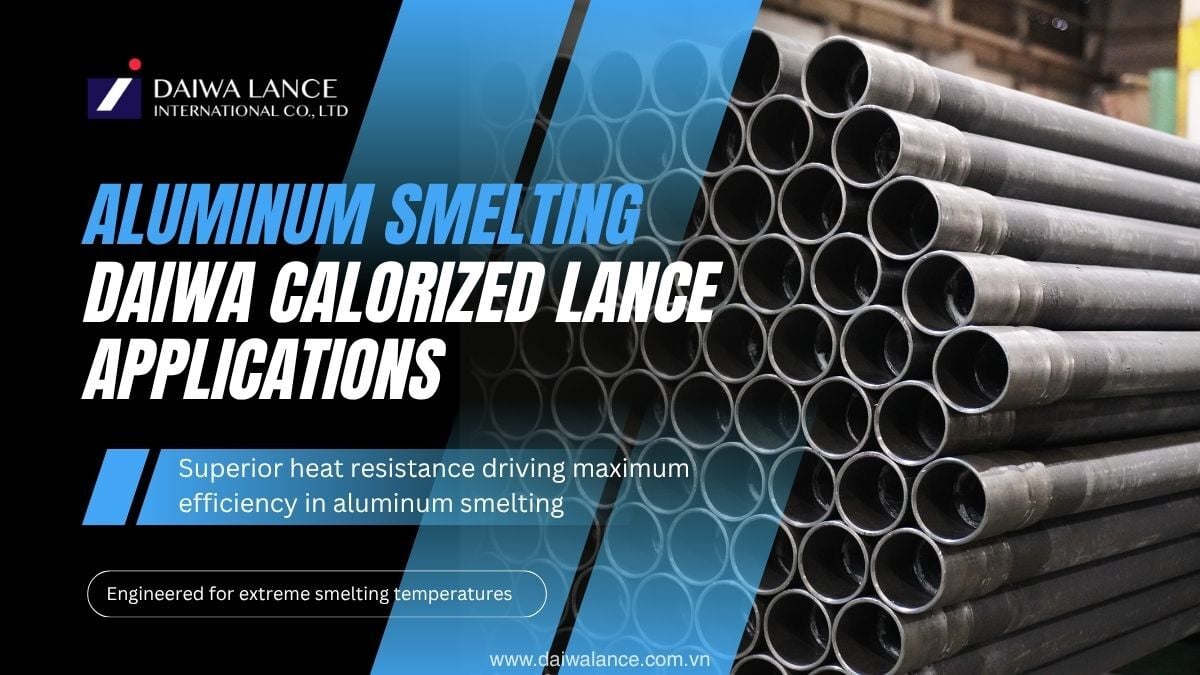
The Role of Lance Injection Technology in Aluminum Smelting
Controlling downtime and material waste is central to protecting margins in modern metallurgy. For decades, standard mild steel pipes have been the default tool for gas and powder injection, but in the extreme heat and corrosive environment of non-ferrous production, untreated steel degrades rapidly.
This limitation is what drives melt shops toward engineered alternatives. Switching to a heat-resistant pipe such as the Daiwa CA Lance lets operators lower pipe consumption and stabilize their injection cycles, which in turn keeps production more predictable and reduces the frequency of pipe changes in front of a hot furnace.
How Daiwa CA Lance Is Built?
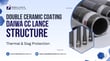
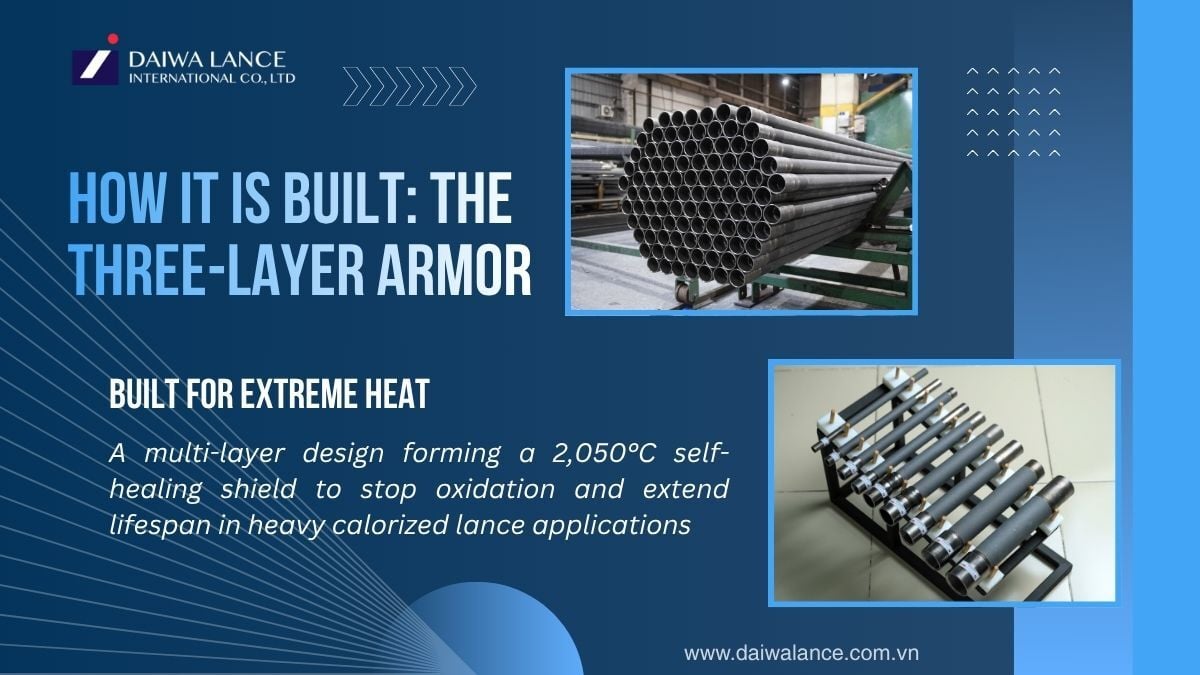
The performance of a calorized pipe comes from its layered structure, which resists thermal and chemical attack far better than bare steel. During manufacturing, aluminum is diffused into both the inner and outer surfaces of a mild steel base pipe to form an aluminum-iron alloy layer. A refractory ceramic coating is then applied over the calorized layers on both surfaces.
When the pipe enters a hot furnace, the aluminum-iron alloy reacts with oxygen to form a tight, self-healing aluminum oxide (alumina) film with a melting point of 2,050°C. This film blocks oxygen from attacking the steel core, slowing consumption and keeping wear rates predictable. The result is a three-layer design - mild steel base pipe, calorized aluminum-iron alloy layer, and refractory ceramic coating - that carries mechanical load while resisting oxidation and slag attack.
Core Applications in Aluminum and Non-Ferrous Processing
Aluminum plants use calorized lances across several stages of production, wherever a pipe must survive prolonged contact with hot metal and reactive gases.
Aluminum Smelting and Melt Handling
In the non-ferrous sector, thermal efficiency and chemical purity determine the value of the final product. Standard pipes oxidize and scale quickly, which can introduce iron oxides into the molten bath. Because the Daiwa CA Lance carries dual-layer protection, it resists high-temperature oxidation and chemical attack, allowing longer immersion times in molten aluminum without rapid structural collapse. The pipe keeps its mechanical strength, so refining stays continuous and free from unexpected failures.
Aluminum Degassing and Dross Skimming
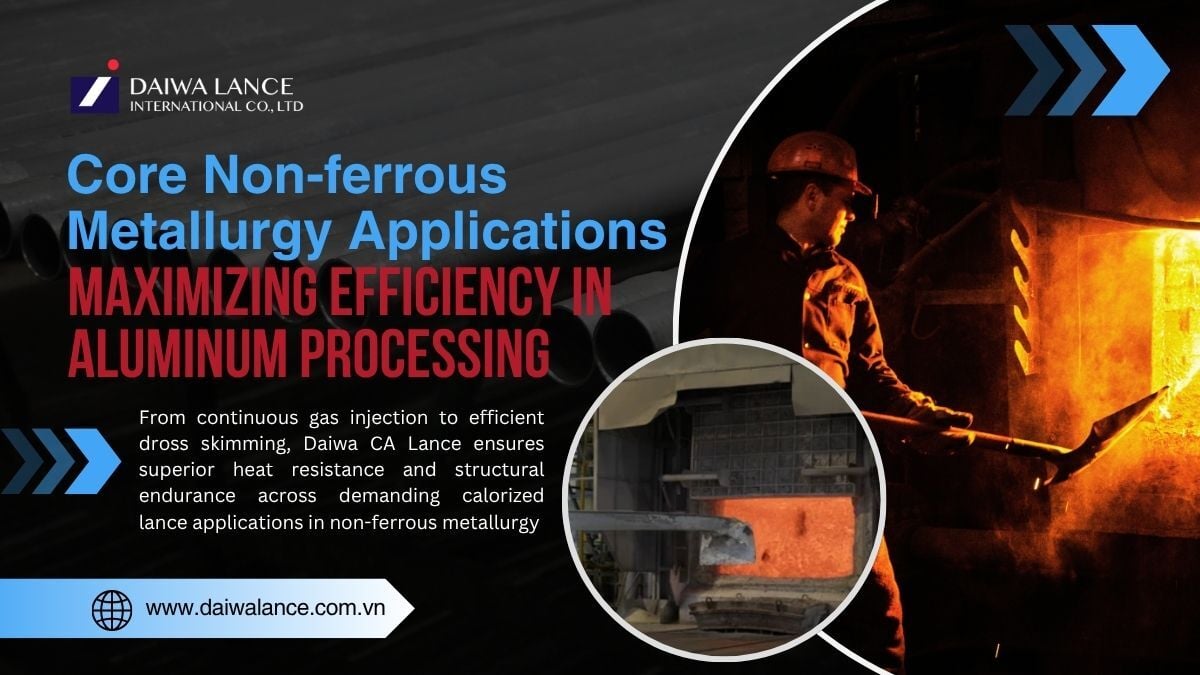
Degassing and dross processing are two of the most demanding stages in aluminum production. Hydrogen dissolves readily in molten aluminum and creates porosity that weakens the final casting. To remove it, operators inject inert gases such as argon or nitrogen deep into the bath, forcing dissolved hydrogen out of the liquid metal.
Managing surface dross calls for targeted agitation. A calorized lance provides the structural endurance needed to inject fluxes or gases that separate clean aluminum from oxidized surface slag. While a standard mild steel pipe melts away quickly under these conditions, the alumina film on a calorized pipe slows thermal degradation, so operators can complete thorough skimming cycles with fewer pipe changeovers.
Gas and Powder Injection
Precise metallurgical adjustments depend on steady injection of additives into the molten metal. Refining processes often introduce chloride or fluoride salt powders (fluxes) to remove alkali impurities, and the abrasive travel of powder combined with radiant furnace heat wears ordinary pipes quickly.
This makes reliable gas and powder delivery one of the most valuable roles for a calorized lance. The interior refractory ceramic coating protects the inner wall against abrasive particle wear, while the outer coating deflects external furnace heat, supporting smooth, clog-free additive delivery.
Thermocouple Protection and Temperature Measurement
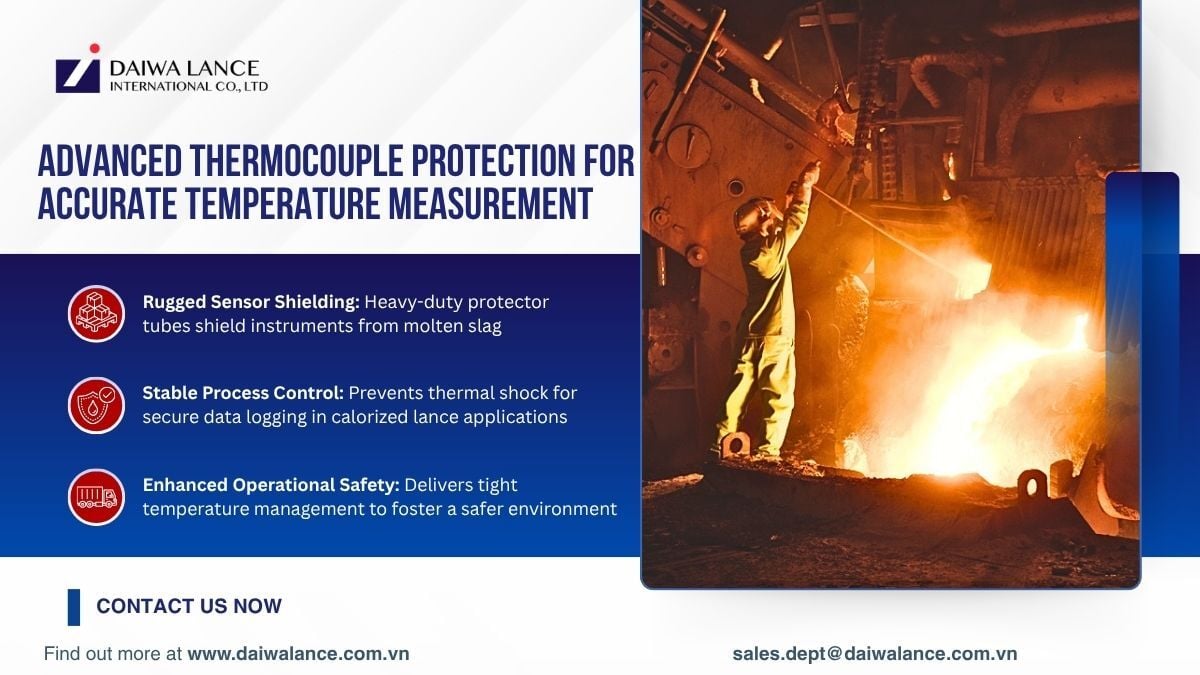
Beyond injection, calorized technology also protects instruments and supports process control. High-temperature operations rely on accurate data to manage chemistry and tapping schedules, and sensitive sensors must be shielded from direct contact with aggressive molten alloys and slag.
For this reason, Daiwa CA Lance pipes are used as protector tubes for thermocouples in aluminum smelters. Without a dual-layer alloy and ceramic shield, measuring devices can fail from thermal shock or chemical dissolution. Using the pipe as a protector tube supports stable data logging, tighter temperature control, and a safer working environment for furnace operators.
Proven in Steelmaking: EAF and Ladle Refining
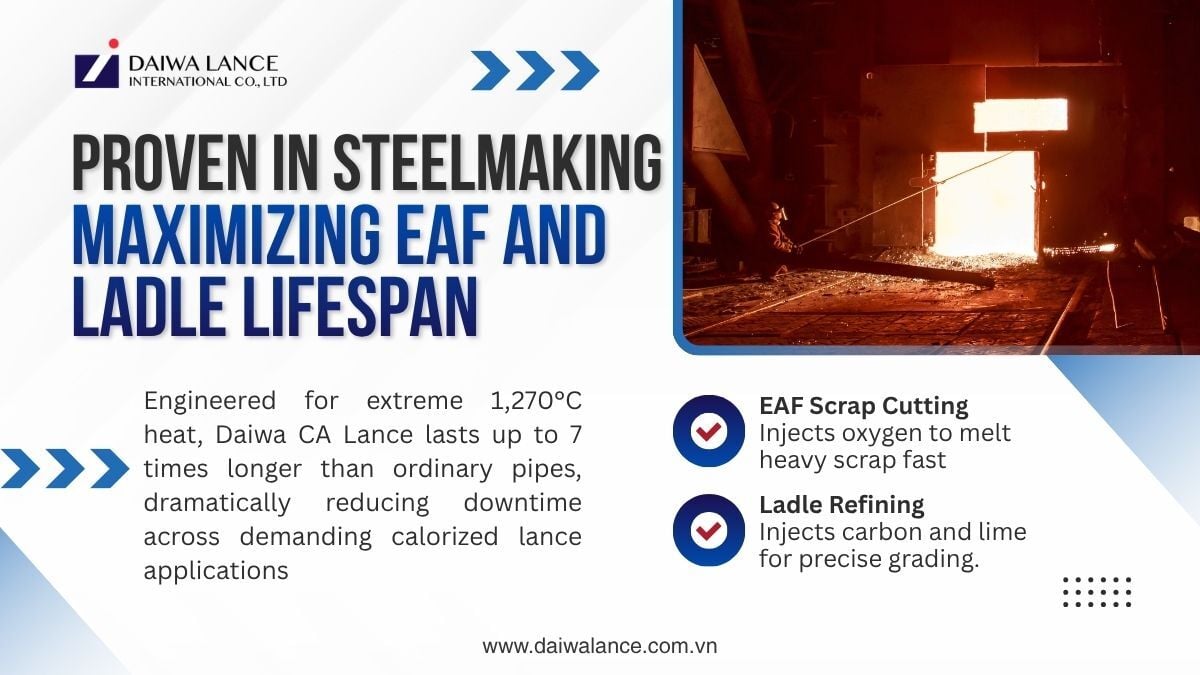
This technology originated in the punishing environment of steel production, which is where its durability was first proven. In an Electric Arc Furnace (EAF), Daiwa CA Lance is used to blow oxygen for cutting heavy scrap and to inject carbon or lime to adjust carbon grades. In a comparison test, a standard mild steel pipe was destroyed after exposure to 1,270°C for 50 hours, while Daiwa CA Lance remained intact under the same conditions.
Whether used in an EAF or in ladle refining, the pipe lasts 3 to 7 times longer than ordinary mild steel lance pipe, although the exact consumption rate varies with furnace conditions. This extended service life is what allows melt shops to reduce material consumption and limit downtime across both ferrous and non-ferrous operations.
Safety and Quality Standards Behind Every Daiwa CA Lance
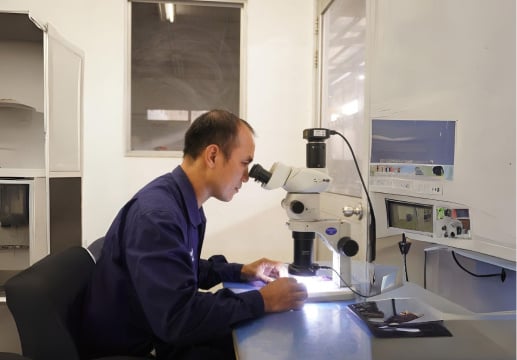
Because a failed pipe puts furnace operators at risk, quality is controlled at every production stage. Daiwa Lance International manufactures Daiwa CA Lance at our factory in Vietnam, using steel pipe manufacturing technology transferred from Japan, and carefully selected steel raw materials. Key quality checkpoints include:
- Sound weld seams that prevent gas leakage or breakage during injection.
- Clean, oil-free surfaces for safe use with oxygen and reactive gases.
- Uniform wall thickness and straight pipes that resist bending and sudden failure in operation.
- Strict quality control at every production stage under an ISO 9001-certified system.
- ISO 14001 environmental certification and JIS-standard manufacturing.
These controls are the reason the pipe behaves predictably inside the furnace, which is what makes reliable application planning possible in the first place.
Choosing Daiwa CA Lance for Your Foundry
Optimizing a melt shop’s material lifecycle means moving away from sacrificial, low-grade consumables toward pipes engineered for the job. A dual-layer, ceramic-coated calorized lance reduces structural waste, limits furnace downtime, and lowers the risk of iron contamination in aluminum baths.
Daiwa CA Lance technology has been in industrial use since 1955, and Daiwa Lance International today supplies steel mills and aluminum foundries in more than 52 countries, with export documentation and shipment planning handled in-house. The minimum order quantity is 50 pipes, and free samples are available so you can evaluate performance in your own furnace before committing to a larger order.
FAQs About Daiwa Calorized Lance (Daiwa CA Lance)
Why does Daiwa CA Lance perform better than ordinary mild steel pipe in aluminum applications?
The difference is the three-layer design. A standard mild steel pipe has no protection against high-heat oxidation and melts quickly, while the Daiwa CA Lance combines a mild steel base pipe, an aluminum-iron alloy layer, and a refractory ceramic coating on both surfaces. This structure lets it withstand temperatures up to 1,600°C and last 3 to 7 times longer than bare steel.
How does the calorized layer protect the pipe against high-temperature oxidation?
Calorizing is a diffusion process that fuses aluminum into the base metal to create an aluminum-iron alloy layer. When the pipe enters a hot furnace, this layer reacts with oxygen to form a stable, heat-resistant aluminum oxide (alumina) film with a melting point of 2,050°C. The film acts as a barrier that seals the steel core away from aggressive furnace gases.
Can Daiwa CA Lance reduce iron contamination in aluminum smelting?
Yes. When ordinary steel pipes dissolve in molten aluminum, they release iron into the bath and lower the purity of the alloy. The outer refractory ceramic coating of the Daiwa CA Lance acts as a physical barrier between the liquid aluminum and the steel base, significantly reducing the risk of iron contamination.
What gases and powders can be injected with Daiwa CA Lance?
The pipe is built for multi-purpose injection. It can be used with oxygen, inert purging gases such as argon and nitrogen, carbon powder, lime powder, and refining fluxes such as chloride or fluoride salt powders used for degassing and purifying molten metal baths.
What standard sizes and end configurations are available?
Daiwa CA Lance is supplied in eight nominal sizes from 1/4 inch to 2 inches, with wall thicknesses from 2.0 mm to 4.0 mm depending on the size, in standard lengths of 2.75 m or 5.5 m. To match different lance holders, it comes in several end configurations, including fully coated threaded ends with screw sockets, plain ends, and a quick press-coupling option.
Next Steps
If you are evaluating calorized lances for aluminum smelting, degassing, or steelmaking, our team can advise on sizes, end configurations, and injection setup. The minimum order quantity is 50 pipes, and free samples are available for evaluation.
Asking for Free Samples?
Check it out here: https://www.daiwalance.com.vn/free-samples
Related Blogs & Pages
-
Daiwa CA Lance product page: https://www.daiwalance.com.vn/en/products/daiwa-ca-lance
-
Catalogue page: https://www.daiwalance.com.vn/en/resource/daiwa-lance-catalogue
-
Contact page: https://www.daiwalance.com.vn/en/contact
-
What Is a Calorized Lance Pipe? Guide for Industrial Buyers: https://www.daiwalance.com.vn/blog/what-is-a-calorized-lance-pipe-uses-structure-and-how-it-works
-
Understand All About Daiwa Calorized Lance Pipes in 5 Minutes: https://www.daiwalance.com.vn/blog/understand-all-about-calorized-lance-pipes-in-5-minutes
-
3 Key Features of Daiwa Calorized Lance Pipe: https://www.daiwalance.com.vn/blog/3-key-features-of-daiwa-calorized-lance-pipe
-
Optimal Steel Pipe Choice for Manufacturing: https://www.daiwalance.com.vn/blog/steel-pipe-for-manufacturing
-
Application of Calorized Lance Pipe 3/4"x1.3m for Electric Arc Furnace: https://www.daiwalance.com.vn/blog/application-of-calorized-lance-pipe-3/4x1.3m-for-electric-arc-furnace
About Daiwa Lance
Established since 1997, Daiwa Lance has positioned ourselves as a pioneer in thermic cutting and oxygen lancing technology. Based in Ho Chi Minh City, Vietnam, we have been providing quality customer service and products with advanced Japanese technology.
We maintain the highest quality standards with ISO 9001:2015, ISO 14001:2015, and JIS G standards certifications. We have also expanded our reach globally, exporting to over 55 countries worldwide.
Visit us through our contact channels today: Email, WhatsApp, Contact Us form, or connect with us on Youtube, LinkedIn and Facebook.