In steelmaking, an oxygen lance pipe is more than a consumable used to deliver oxygen or inject materials into a furnace. It must operate continuously under extreme temperatures, molten metal splash, slag attack, and oxidation. For this reason, Daiwa CC Lance Structure plays a significant role in determining operational stability, safety, and service life.
Unlike a conventional mild steel lance pipe, Daiwa CC Lance is designed with a mild steel base pipe protected by refractory ceramic coatings on both the inner and outer surfaces. This structural design helps reduce direct exposure to heat, oxidation, and slag while maintaining stable oxygen delivery in demanding steelmaking applications.
This article explains Daiwa CC Lance Structure, how each component functions, and why the double ceramic coating is an important part of the overall design.
What Are the Main Components of the Daiwa CC Lance Structure?
Daiwa CC Lance Structure consists of two primary components that work together to support oxygen lancing in high-temperature steelmaking environments.
- Mild steel base pipe
- Refractory ceramic coating on both the inner and outer surfaces
Each component serves a different purpose while contributing to the overall durability and operational performance of the lance pipe.
Mild Steel Base Pipe
The mild steel base pipe forms the core of Daiwa CC Lance Structure. It is responsible for transporting oxygen or other injected materials from the supply system into the furnace while providing the mechanical strength required during operation.
The base pipe performs several important functions:
- Delivers high-pressure oxygen consistently.
- Provides structural rigidity during handling and installation.
- Supports various connection types, including threaded, plain-end, and press-coupling configurations.
- Maintains stability during lance replacement procedures.
Proper material selection also allows the lance pipe to withstand the mechanical loads commonly encountered in steelmaking plants.
Double Refractory Ceramic Coating
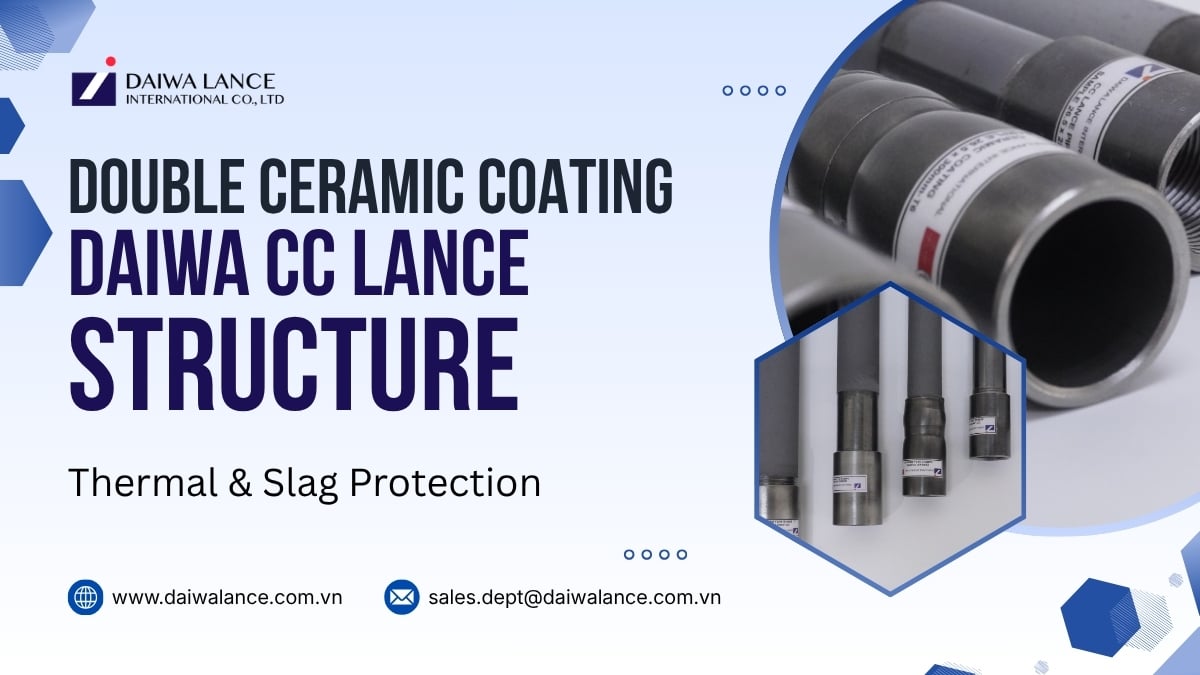
The most distinctive feature of Daiwa CC Lance Structure is the Double Ceramic Coating Daiwa CC Lance applied to both the inside and outside surfaces of the pipe.
Unlike ordinary surface coatings, the refractory ceramic layer is specifically designed for high-temperature environments. Rather than participating in the metallurgical reaction, it functions as a protective barrier between the furnace atmosphere and the mild steel substrate.
This design makes Daiwa CC Ceramic Coated Lance Pipe suitable for applications where the lance is continuously exposed to heat, molten slag, and molten metal splash.
Why Is the Double Ceramic Coating Important?
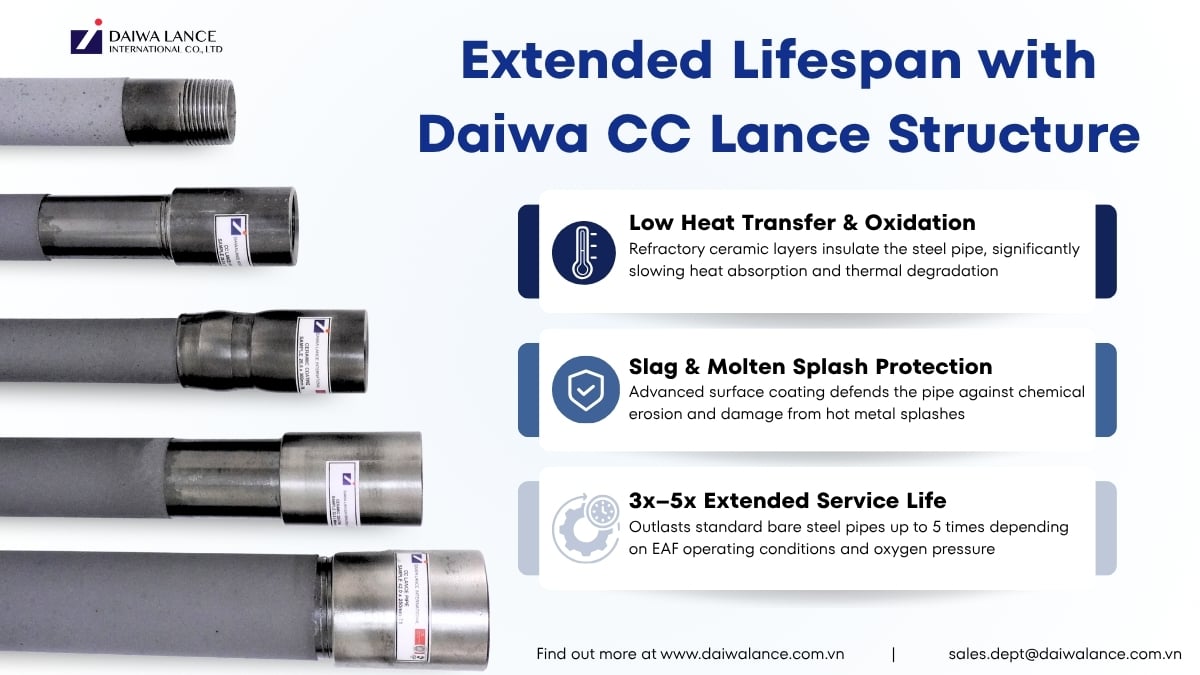
The ceramic coating is the key protective element within the Daiwa CC Lance Structure. It helps reduce the direct effects of severe furnace conditions on the mild steel pipe while supporting more stable operation.
Reducing Heat Transfer
Inside an Electric Arc Furnace, molten steel temperatures may exceed 1,600°C. The ceramic coating helps reduce direct heat transfer from the furnace environment to the steel pipe underneath. By acting as a thermal barrier, the coating contributes to maintaining the structural stability of the lance during operation.
For this reason, Daiwa CC Lance is commonly used in steelmaking processes involving prolonged exposure to extreme temperatures.
Reducing High-Temperature Oxidation
High-temperature oxygen-rich environments accelerate oxidation on conventional mild steel pipes. Within Daiwa CC Lance Structure, the ceramic coating creates an additional protective layer between the steel surface and the surrounding atmosphere. This helps slow oxidation compared with an uncoated mild steel lance pipe operating under similar conditions.
Protecting Against Slag Attack
During steelmaking, molten slag and metal splash repeatedly strike the surface of the lance pipe. The ceramic coating on the Slag Resistant Daiwa CC Lance serves as the first protective layer, helping reduce direct contact between aggressive slag and the mild steel substrate. This protective function supports more stable operation throughout repeated furnace cycles.
Supporting Electrical Insulation
Another important function of the ceramic coating is surface insulation. Because ceramic materials have insulating properties, the double coating also helps create an additional insulation layer around the lance pipe. In operating areas containing high-voltage equipment, this characteristic can help reduce unintended electrical contact during handling.
How Does Daiwa CC Lance Structure Improve Service Life?
The combination of a mild steel base pipe and refractory ceramic coatings enables the Daiwa CC Lance Structure to reduce the overall consumption rate of the lance pipe under high-temperature operating conditions.
The improvement comes from several factors:
- Reduced heat transfer.
- Lower oxidation rate.
- Reduced slag attack.
- Better protection against molten metal splash.
As a result, Daiwa CC Lance Service Life may be extended by approximately 3 to five 5 compared with a standard mild steel lance pipe, depending on furnace conditions, oxygen pressure, coating thickness, and operating practices.
What Applications Is Daiwa CC Lance Structure Designed For?
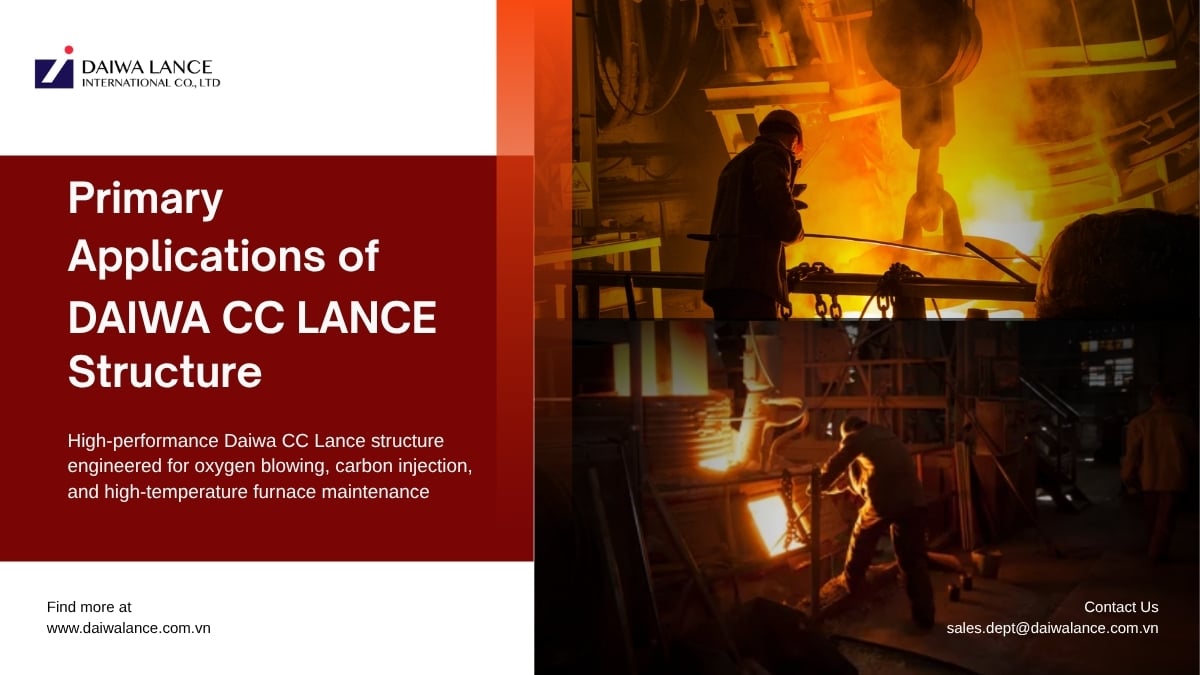
Daiwa CC Lance Structure is engineered to support a wide range of high-temperature steelmaking applications. By combining a mild steel base pipe with refractory ceramic coatings, the lance pipe can be configured to suit different production processes, furnace conditions, and oxygen delivery requirements.
Oxygen Blowing
The most common application of the Daiwa CC Lance Structure is Daiwa CC Lance for Oxygen Blowing. During Electric Arc Furnace (EAF) operations, high-pressure oxygen is delivered into the reaction zone to accelerate scrap cutting, promote oxidation reactions, and refine molten steel.
The stable structural design of the lance pipe helps maintain consistent oxygen delivery while the ceramic coating reduces direct exposure to furnace heat and molten slag.
Carbon Injection
Besides oxygen blowing, Daiwa CC Lance for Carbon Injection is widely used to inject carbon, lime powder, and other additives into the furnace. These materials help adjust steel chemistry, improve slag formation, and support various steel grades.
Depending on operating conditions, coating thickness and pipe dimensions can be customized to meet specific process requirements.
Other High-Temperature Metallurgical Applications
In addition to EAF steelmaking, Daiwa CC Lance Structure can also be applied in tap hole opening, slag removal, oxygen converter cleaning, and certain secondary metallurgy processes.
Its flexible design allows manufacturers to select appropriate pipe dimensions, coating thickness, and connection types based on individual production environments.
Quality and Safety Considerations
For steel plants, selecting a lance pipe is not only about thermal performance. Safety, manufacturing consistency, and quality control are equally important factors.
Welding Quality
Strong and consistent welds contribute to the structural reliability of the lance pipe during repeated heating and cooling cycles. Proper welding quality helps reduce the possibility of cracking or premature failure during operation.
Clean Surface Preparation
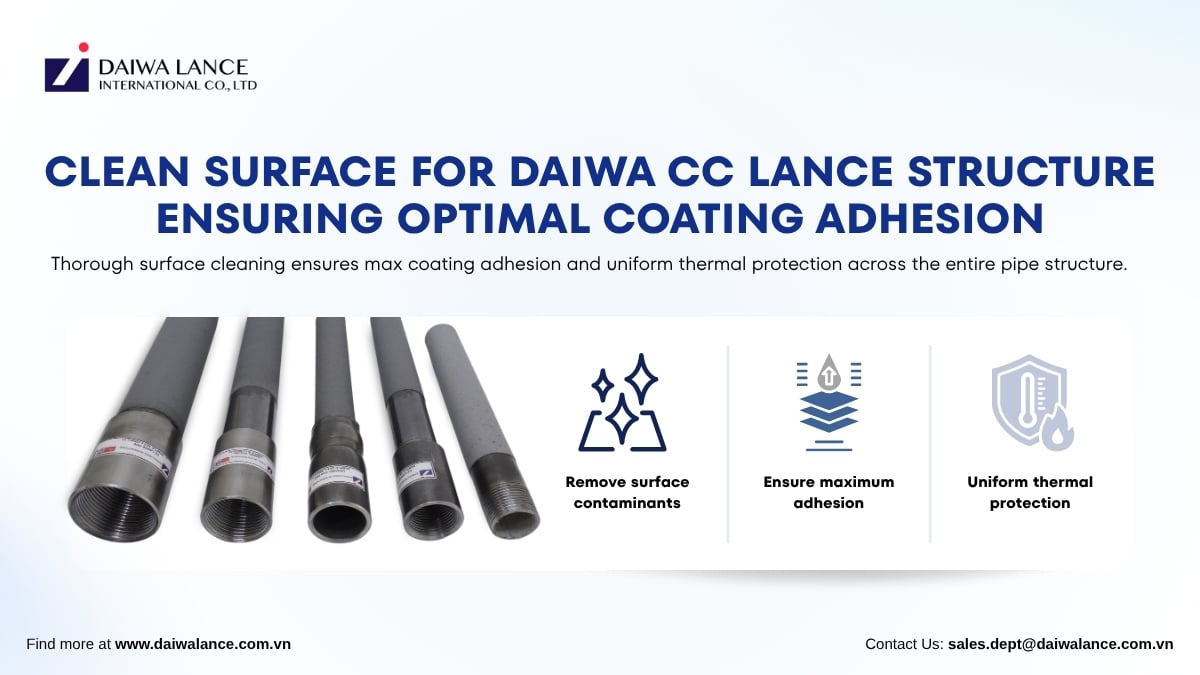
Before applying ceramic coatings, the pipe surface should be thoroughly cleaned to ensure proper coating adhesion. Uniform coating coverage contributes to consistent thermal protection throughout the entire pipe.
Controlled Wall Thickness
Wall thickness directly affects the rigidity and handling performance of a lance pipe. Maintaining consistent wall thickness helps reduce the risk of:
- Pipe bending
- Mechanical deformation
- Premature damage during handling
- Installation difficulties
These factors are important for maintaining the long-term stability of the Daiwa CC Lance Structure.
Electrical Insulation
The refractory ceramic coating also provides an additional insulation layer around the pipe surface. When working near high-voltage equipment, this insulating property helps reduce the possibility of unintended electrical contact during lance handling, contributing to safer operating conditions.

Quality Management
Reliable manufacturing processes are essential for maintaining consistent product quality. Daiwa CC Lance is produced with a focus on Japanese Quality, supported by internationally recognized management systems, including:
- ISO 9001 – Quality Management System
- ISO 14001 – Environmental Management System
- JIS (Japanese Industrial Standards)
In addition, Daiwa's global logistics network supports stable product supply to steel plants across different regions.
Daiwa CC Lance Structure in Electric Arc Furnace Operations
One of the most common applications of Daiwa CC Lance in Electric Arc Furnace is oxygen lancing under severe operating conditions. Inside an Electric Arc Furnace, the lance pipe is continuously exposed to:
- Temperatures exceeding 1,600°C
- Molten slag
- Molten metal splash
- High-pressure oxygen
- Repeated thermal cycling
Daiwa CC Lance Structure is specifically designed to help protect the mild steel base pipe under these demanding conditions while maintaining stable oxygen delivery throughout the steelmaking process.
Conclusion
Understanding the Daiwa CC Lance Structure helps steel producers evaluate how different structural components contribute to furnace performance, operational safety, and equipment durability.
The combination of a mild steel base pipe with double refractory ceramic coatings enables Daiwa CC Lance to support demanding steelmaking applications such as Daiwa CC Oxygen Lance, Daiwa CC Lance for Oxygen Blowing, and Daiwa CC Lance for Carbon Injection. Together, these design features help reduce the effects of heat, oxidation, slag, and molten metal splash while maintaining stable oxygen delivery in high-temperature operations.
When selecting a lance pipe, factors like welding quality, wall thickness, and certifications (ISO/JIS) - combined with Japanese standards and global logistics - ensure a consistent supply for worldwide steel plants; contact us to learn more about Daiwa CC Lance, discuss specs, request a quote, or download our catalogue.
Frequently Asked Questions
What are the main components of Daiwa CC Lance Structure?
Daiwa CC Lance Structure consists of two primary components:
- Mild steel base pipe
- Double refractory ceramic coating on both the inner and outer surfaces
Together, these components support oxygen delivery while protecting the pipe from heat, oxidation, and slag attack.
Why is the double ceramic coating important?
The ceramic coating functions as a thermal and chemical barrier. It helps reduce heat transfer, oxidation, slag attack, and molten metal splash, contributing to more stable operating conditions.
Can the ceramic coating thickness be customized?
Yes. The refractory ceramic coating can be adjusted according to furnace conditions, desired service life, slag exposure, and operating priorities.
Does the ceramic coating affect oxygen flow?
No. The ceramic coating is designed to protect the pipe while maintaining the oxygen delivery function. Appropriate selection of OD, ID, wall thickness, and length helps achieve the required oxygen flow.
How is Daiwa CC Lance different from a conventional mild steel lance pipe?
Unlike a conventional mild steel lance pipe, Daiwa CC Lance incorporates refractory ceramic coatings on both the inner and outer surfaces. This structural difference helps improve resistance to heat, oxidation, and slag under high-temperature steelmaking conditions.
Related Blogs & Pages
-
Daiwa CC Lance product page: https://www.daiwalance.com.vn/products/daiwa-cc-lance
-
Catalogue page: https://www.daiwalance.com.vn/catalogue
-
Contact page: https://www.daiwalance.com.vn/contact
-
A Comprehensive Guide to Understanding CC Lance Pipe: https://www.daiwalance.com.vn/blog/a-comprehensive-guide-to-understanding-cc-lance-pipe
-
More About Structure and Size of CC Lance Pipe: https://www.daiwalance.com.vn/blog/more-about-structure-and-size-of-cc-lance-pipe
-
3 Essential Features of CC Lance: https://www.daiwalance.com.vn/blog/3-essential-features-of-cc-lance
-
Key Applications of Ceramic Coated Lance Pipe (CC Lance): https://www.daiwalance.com.vn/blog/key-applications-of-ceramic-coated-lance-pipe-cc-lance
About Daiwa Lance
Established since 1997, Daiwa Lance has positioned ourselves as a pioneer in thermic cutting and oxygen lancing technology. Based in Ho Chi Minh City, Vietnam, we have been providing quality customer service and products with advanced Japanese technology.
We maintain the highest quality standards with ISO 9001:2015, ISO 14001:2015, and JIS G standards certifications. We have also expanded our reach globally, exporting to over 55 countries worldwide.
Visit us through our contact channels today: Email, WhatsApp, Contact Us form, or connect with us on Youtube, LinkedIn and Facebook.