In modern steelmaking, Electric Arc Furnace (EAF) is one of the most widely used technologies for producing steel from scrap metal. During the steelmaking process, oxygen lancing plays a critical role in accelerating scrap cutting, promoting oxidation reactions, and refining molten steel. However, the extreme operating conditions inside an EAF - including intense heat, molten metal splash, slag, and continuous oxygen flow - can rapidly consume conventional mild steel lance pipes.
Designed for these demanding environments, Daiwa CC Lance combines a mild steel base pipe with refractory ceramic coatings on both the inner and outer surfaces. This double ceramic coating acts as a protective barrier against heat, oxidation, and slag attack while maintaining stable oxygen delivery throughout the steelmaking process.
This article explains How Does Daiwa CC Lance Work in an Electric Arc Furnace (EAF) including its operating principle, the function of its ceramic coating, and the factors that contribute to stable performance in high-temperature steelmaking applications.
How Does the Electric Arc Furnace Environment Affect a Lance Pipe?
To understand How Does Daiwa CC Lance Work in an Electric Arc Furnace (EAF), it is important to first understand the conditions that an oxygen lance pipe experiences inside an EAF.
The Electric Arc Furnace is one of the harshest environments in steel production. During each heat, the lance pipe is continuously exposed to:
- Molten steel temperatures of approximately 1,600°C.
- Intense heat generated by electric arcs.
- Molten slag with abrasive and corrosive characteristics.
- Molten metal splash impacting the pipe surface.
- High-pressure oxygen flowing through the lance.
These combined conditions accelerate oxidation, heat damage, and material wear, making service life a major consideration when selecting an oxygen lance pipe.
This is why Daiwa CC Lance in Electric Arc Furnace applications incorporates a refractory ceramic coating that helps protect the mild steel pipe under severe operating conditions.
How Does Daiwa CC Lance Work in an Electric Arc Furnace (EAF)?
The working principle of Daiwa CC Lance can be divided into five main stages, from oxygen delivery to protecting the lance throughout the steelmaking process.
Delivering Oxygen to the Reaction Zone
The primary function of Daiwa CC Oxygen Lance is to transport high-pressure oxygen from the supply system directly into the target reaction area inside the furnace.
The injected oxygen supports several essential steelmaking operations, including:
- Cutting large scrap steel pieces.
- Promoting oxidation reactions.
- Removing unwanted impurities.
- Improving refining efficiency.
Consistent oxygen flow helps maintain stable furnace operation while supporting efficient steel refining.
Double Ceramic Coating Creates a Thermal Barrier
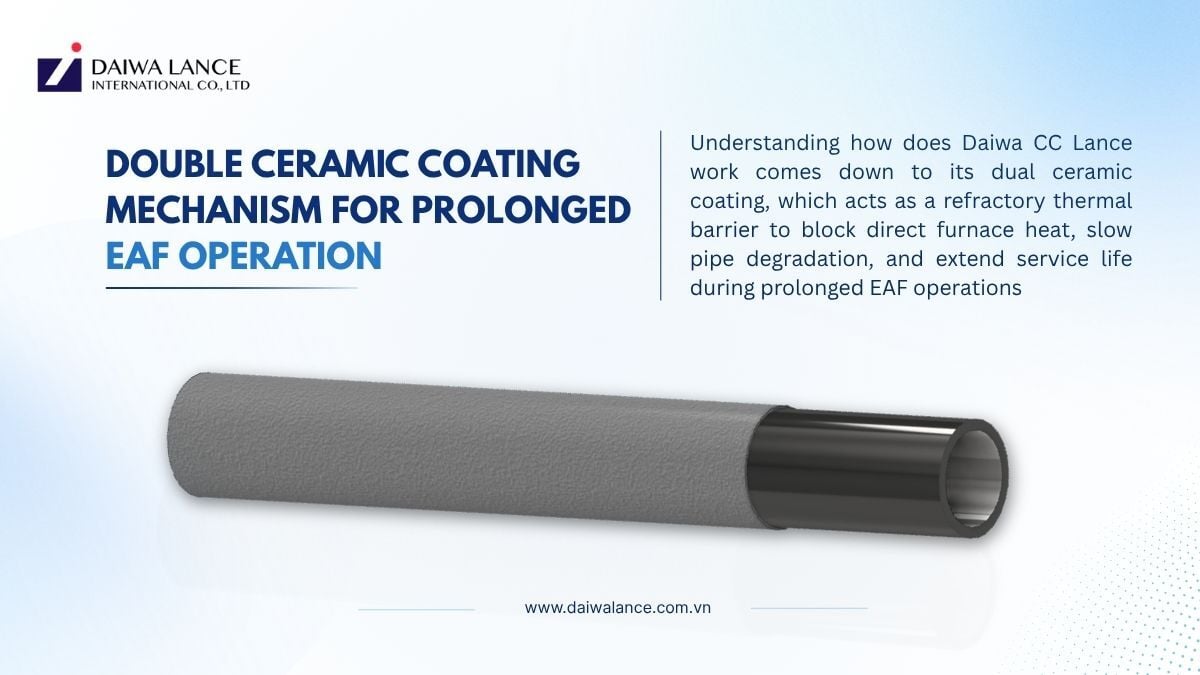
One of the key differences between Daiwa CC Ceramic Coated Lance Pipe and a conventional mild steel lance pipe is its refractory ceramic coating applied to both the inner and outer surfaces.
Rather than participating in the metallurgical reaction, the ceramic coating functions as a thermal barrier. It helps reduce direct heat transfer from the furnace environment to the steel pipe beneath.
In addition to protecting the steel pipe, this thermal and electrical insulation helps reduce operator exposure to heat and electrical hazards during handling in demanding EAF environments.
For this reason, Daiwa CC Lance is commonly selected for applications where the lance pipe is exposed to prolonged high-temperature operation inside an Electric Arc Furnace.
Reducing Slag and Molten Metal Attack
Throughout the steelmaking process, molten slag and metal splash continuously strike the surface of the lance pipe.
The ceramic layer of the Slag Resistant Daiwa CC Lance serves as the first protective barrier between the furnace environment and the mild steel substrate. By reducing direct exposure to slag and molten metal, the coating helps maintain more stable operating conditions throughout repeated furnace cycles.
This protection becomes particularly valuable in high-productivity EAF operations where lance pipes are exposed to continuous thermal and mechanical stress.
Slowing High-Temperature Oxidation
High temperatures combined with oxygen-rich conditions accelerate oxidation of ordinary mild steel pipes.
The ceramic coating on the Ceramic Coated Daiwa CC Lance creates an additional protective layer that helps reduce direct contact between the steel surface and the surrounding atmosphere. As a result, oxidation progresses more slowly than with an uncoated mild steel lance pipe under similar operating conditions.
Supporting Longer Service Life
Because the ceramic coating helps reduce heat transfer, slag attack, and oxidation, the overall consumption rate of the lance pipe can be significantly reduced.
Depending on furnace conditions, oxygen flow, coating thickness, and operating practices, the Daiwa CC Lance Service Life may be extended by approximately three to five times compared with a standard mild steel lance pipe.
A longer service life can also contribute to fewer lance replacements, reduced production interruptions, and improved operational continuity.
Daiwa CC Lance also offers an affordable, cost-effective upgrade for budget-conscious plants transitioning from conventional mild steel pipes to low-consumption lance pipes, especially when premium calorized lance pipes are beyond the available procurement budget.
Applications of Daiwa CC Lance in Electric Arc Furnace (EAF) Operations
Understanding How Does Daiwa CC Lance Work in an Electric Arc Furnace (EAF)? also involves knowing where the lance is used throughout the steelmaking process. Depending on production requirements, Daiwa CC Lance can support several high-temperature applications in EAF operations.
Oxygen Blowing
The primary application of Daiwa CC Lance for EAF is oxygen blowing. High-pressure oxygen is delivered into the furnace to accelerate scrap cutting, enhance oxidation reactions, and support molten steel refining.
Stable oxygen delivery helps maintain process consistency while improving furnace efficiency throughout the melting cycle.
Carbon Injection
Besides oxygen blowing, Daiwa CC Lance for Carbon Injection can be used to inject carbon, lime powder, and other additives into the furnace. These materials help adjust steel chemistry, improve slag formation, and support the production of different grades of carbon steel.
The coating thickness and lance dimensions can be customized according to operating conditions and injection requirements.
Tap Hole Opening and Slag Cleaning
In some steel plants, Daiwa CC Lance is also used for opening tap holes, including EBT (Eccentric Bottom Tapping), by burning through plug materials with a high-temperature oxygen flame.
The lance may also assist in removing residual slag attached to furnace equipment or oxygen converters during maintenance and cleaning operations.
Factors That Influence Daiwa CC Lance Performance
While the design of Daiwa CC Lance plays an important role, its operating performance also depends on several practical factors.
Ceramic Coating Thickness
The refractory ceramic coating can be optimized to match different operating environments. Furnaces exposed to higher temperatures or heavier slag conditions may require a thicker ceramic layer to provide additional thermal and chemical protection.
Pipe Dimensions
Selecting the appropriate pipe dimensions contributes to both handling efficiency and oxygen delivery performance.
The recommended specification sequence is:
- Outside Diameter (OD)
- Inside Diameter (ID)
- Wall Thickness
- Length
- Connection Type
Choosing the correct dimensions helps balance mechanical strength, oxygen flow, and ease of replacement.
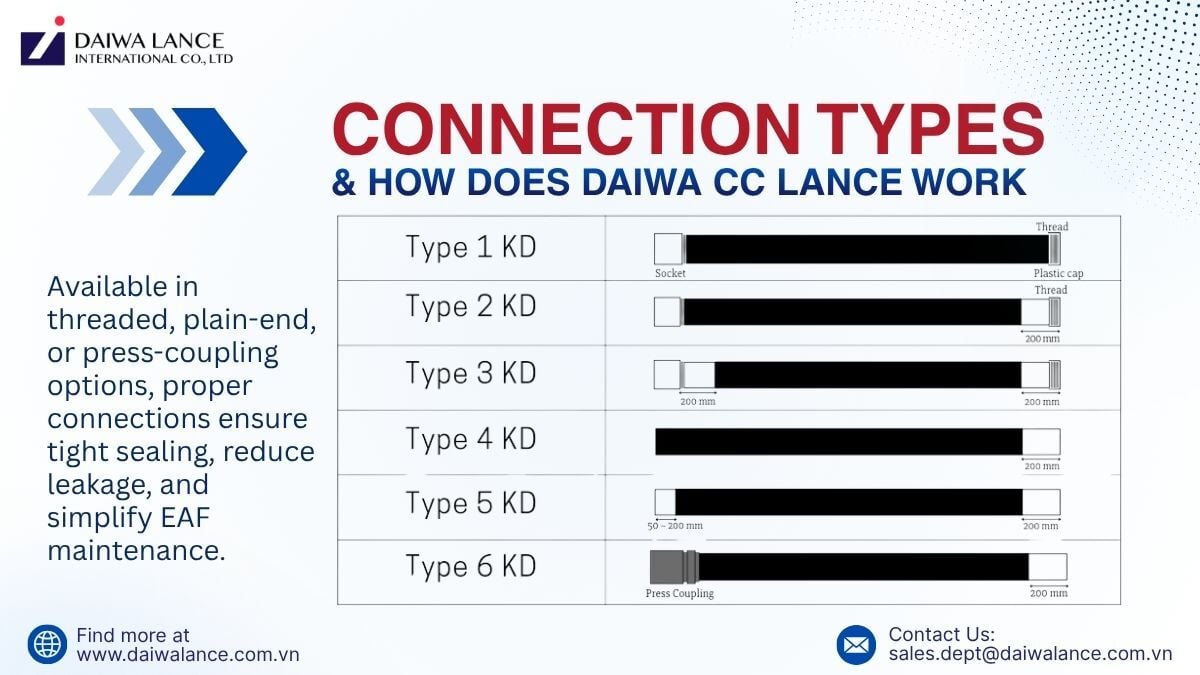
Connection Type
Threaded, plain-end, and press-coupling connections are available for different installation methods.
Selecting the appropriate connection helps improve sealing performance, reduce leakage risk, and simplify maintenance procedures.
Operating Conditions
Actual service life depends on several operational variables, including:
- Furnace temperature
- Oxygen pressure
- Operating cycle
- Slag conditions
- Furnace design
- Replacement practices
For this reason, understanding How Does Daiwa CC Lance Work in an Electric Arc Furnace (EAF) also requires evaluating the specific conditions of each steel plant.
Safety Considerations When Using Daiwa CC Lance
Safety is one of the primary concerns for steel producers when selecting consumable lance pipes. Besides thermal performance, manufacturers typically evaluate product quality, production consistency, and quality management systems before introducing a lance pipe into daily operation.
Welding Quality
Strong and consistent welds help maintain the structural integrity of the lance pipe during repeated exposure to high temperatures and mechanical stress. Proper welding quality can reduce the risk of cracking or failure during operation.
Clean Surface Preparation
A clean pipe surface before ceramic coating helps improve coating adhesion and coating consistency. Uniform coating coverage also contributes to more stable thermal protection throughout the pipe.
Controlled Wall Thickness
Wall thickness directly influences pipe rigidity and handling safety.
Maintaining consistent wall thickness helps reduce the possibility of:
- Pipe bending
- Deformation
- Premature failure
- Difficult installation or replacement
Electrical Insulation
By providing both electrical and thermal insulation through ceramic coatings on the inner and outer pipe surfaces, Daiwa CC Lance helps enhance operator safety during handling and operation in high-temperature environments where high-voltage electrical equipment is present.
Quality Management
Reliable production processes are equally important for maintaining product consistency.
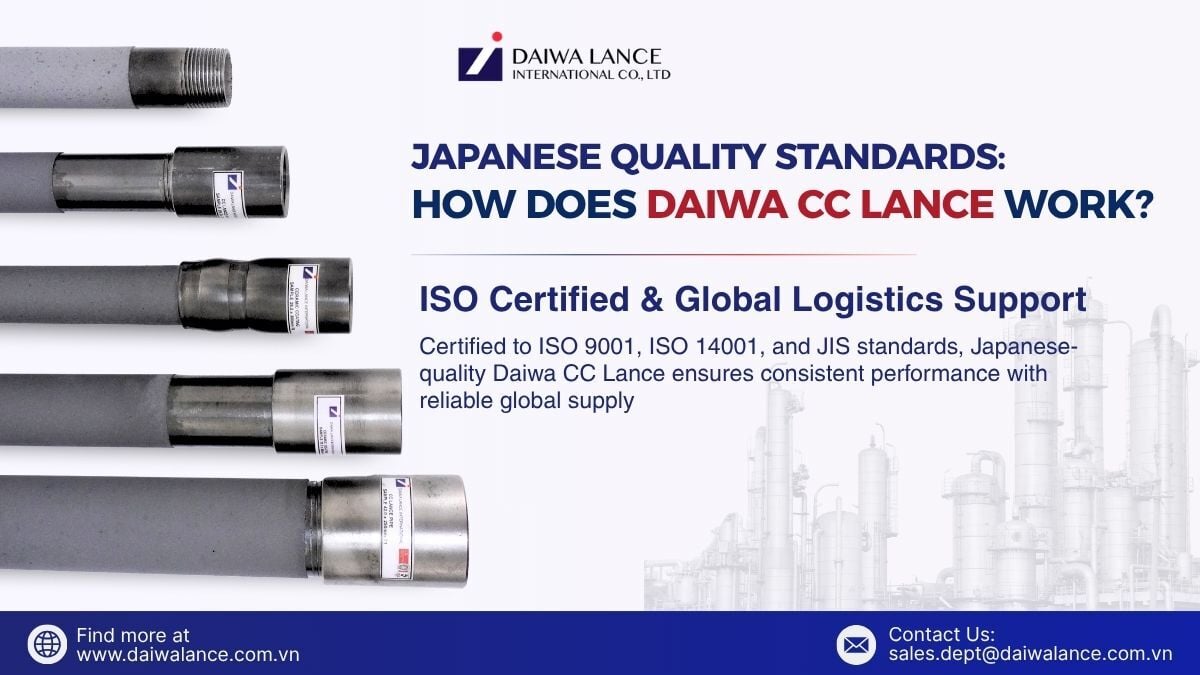
Daiwa CC Lance is manufactured with a focus on Japanese Quality, supported by internationally recognized management systems, including:
- ISO 9001 – Quality Management System
- ISO 14001 – Environmental Management System
- JIS (Japanese Industrial Standards)
In addition, Daiwa's global logistics network supports product supply to steel plants in different regions, helping customers maintain stable procurement planning.
Conclusion
Daiwa CC Lance delivers superior oxygen injection for EAF operations by combining a mild steel core with inner and outer refractory ceramic coatings that resist high temperatures, oxidation, slag attack, and molten metal splash.
To ensure reliable performance and continuous steelmaking, plants should evaluate key specifications, operational practices, and rigorous production and supply standards—such as Japanese Quality, ISO 9001, ISO 14001, and JIS.
With its combination of lower consumption, enhanced operator protection, and accessible pricing, Daiwa CC Lance provides a practical balance between performance, safety, and cost for steel plants upgrading from conventional mild steel lance pipes.
Contact us today to Request a Quote, Download the Catalogue, or get expert assistance in selecting the ideal specifications for your application.
FAQ
How Does Daiwa CC Lance Work in an Electric Arc Furnace (EAF)?
Daiwa CC Lance delivers high-pressure oxygen into the furnace while its double ceramic coating helps protect the mild steel pipe from heat, oxidation, slag attack, and molten metal splash during steelmaking operations.
Can the ceramic coating be customized?
Yes. The refractory ceramic coating thickness can be adjusted according to furnace conditions, expected service life, and operating priorities.
Is Daiwa CC Lance suitable for carbon injection?
Yes. Besides oxygen blowing, Daiwa CC Lance for Carbon Injection can also be used for injecting carbon, lime powder, and other additives, depending on the steelmaking process.
Which furnaces can Daiwa CC Lance be used in?
Although primarily designed for Electric Arc Furnace operations, Daiwa CC Lance may also be used in converters, ladle furnaces, and smelter-related applications depending on the blowing or injection process.
What information is required before selecting a lance pipe?
For an accurate recommendation, users are encouraged to provide:
- Application (oxygen blowing, carbon injection, etc.)
- Furnace type
- Current operating challenges
- Pipe specifications (OD → ID → Wall Thickness → Length → Connection Type)
Providing these details helps determine the most suitable configuration for each application.
Related Blogs & Pages
-
Daiwa CC Lance product page: https://www.daiwalance.com.vn/products/daiwa-cc-lance
-
Catalogue page: https://www.daiwalance.com.vn/products/daiwa-cc-lance
-
Contact page: https://www.daiwalance.com.vn/contact
-
A Comprehensive Guide to Understanding CC Lance Pipe: https://www.daiwalance.com.vn/blog/a-comprehensive-guide-to-understanding-cc-lance-pipe
-
More About Structure and Size of CC Lance Pipe: https://www.daiwalance.com.vn/blog/more-about-structure-and-size-of-cc-lance-pipe
-
3 Essential Features of CC Lance: https://www.daiwalance.com.vn/blog/3-essential-features-of-cc-lance
-
Key Applications of Ceramic Coated Lance Pipe (CC Lance): https://www.daiwalance.com.vn/blog/key-applications-of-ceramic-coated-lance-pipe-cc-lance
About Daiwa Lance
Established since 1997, Daiwa Lance has positioned ourselves as a pioneer in thermic cutting and oxygen lancing technology. Based in Ho Chi Minh City, Vietnam, we have been providing quality customer service and products with advanced Japanese technology.
We maintain the highest quality standards with ISO 9001:2015, ISO 14001:2015, and JIS G standards certifications. We have also expanded our reach globally, exporting to over 55 countries worldwide.
Visit us through our contact channels today: Email, WhatsApp, Contact Us form, or connect with us on Youtube, LinkedIn and Facebook.