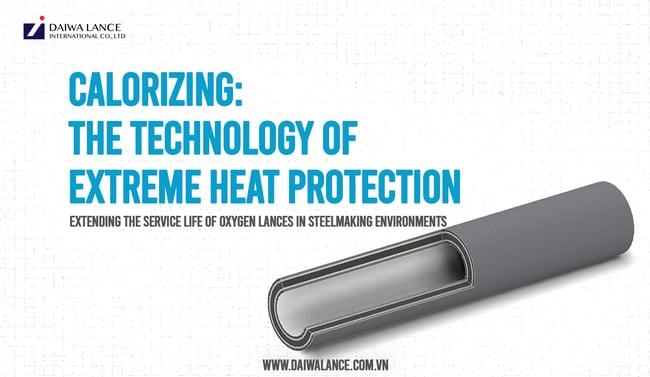
In high-temperature steelmaking environments, oxygen blowing lances are constantly exposed to extreme heat, molten metal, and aggressive oxidation. Without protection, ordinary mild steel can degrade quickly. Calorizing is a surface treatment technology designed to significantly extend the service life of these components.
Why Do Oxygen Lances Need Heat Protection?
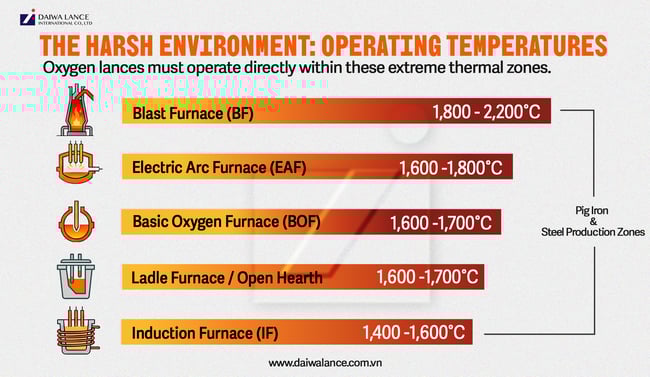
Steelmaking furnaces operate at very high temperatures:
- Blast Furnace (BF)– produces pig iron (~1,800–2,200 °C)
- Basic Oxygen Furnace (BOF) – refines molten iron into steel (~1,600–1,700 °C)
- Ladle Furnace / Open Hearth – secondary refining and heating (~1,000–1,600 °C)
- Induction Furnace (IF) – melts scrap steel (~1,400–1,600 °C)
- Electric Arc Furnace (EAF) – produces steel, often from scrap (~1,600–1,800 °C)
In these furnaces, oxygen lances are directly exposed to heat, oxidation, sulfur, vanadium, and molten metal splash. Without a protective layer, pipes burn out or corrode rapidly, increasing downtime and replacement costs.
What Is Calorizing?
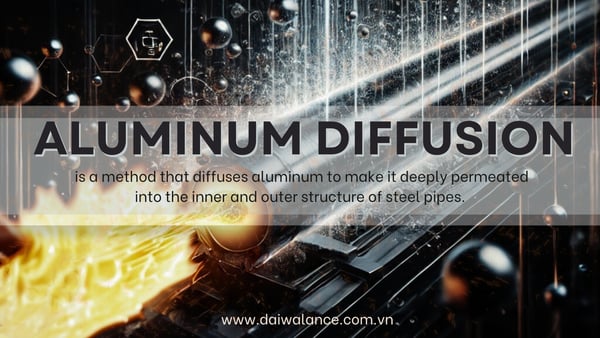
Calorizing, also known as aluminum diffusion technique, is a metallurgical surface treatment process.
Instead of simply coating aluminum onto steel, the steel is heated to temperatures above 1,000 °C, allowing aluminum atoms to diffuse into the steel structure.
This creates a durable iron–aluminum alloy layer that is:
- Strongly bonded (does not peel or flake)
- Heat-resistant
- Chemically stable
- More durable than conventional coatings
How Does Calorizing Protect Steel from Heat?
The protection mechanism is based on natural chemical reactions at high temperature:
1. Formation of an Alumina Shield
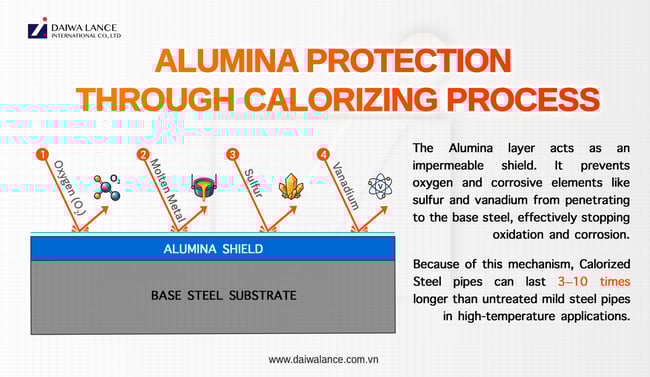
When the calorized steel is heated, the aluminum in the alloy reacts with oxygen and forms aluminum oxide (Al₂O₃), also known as alumina, on the surface.
2. Exceptional Heat Resistance
Alumina has a melting point of approximately 2,050 °C, making it an excellent thermal barrier against furnace conditions.
3. Oxidation and Corrosion Prevention
The alumina layer blocks oxygen, molten metal, sulfur, and vanadium from penetrating the base steel, reducing severe oxidation and chemical attack.
Because of this mechanism, calorized steel pipes can last 3–10 times longer than untreated mild steel pipes in high-temperature applications.
Temperature Performance of the Alumina Layer
- Alumina melting point: ~ 2,050 °C
- Steel melting range: ~ 1,370–1,540 °C
- Typical furnace operation: up to ~ 1,650 °C
This means the protective alumina layer remains stable even in environments where steel itself would normally weaken, helping reduce consumption rates and replacement frequency of oxygen lances.
Can Protection Be Enhanced Further?
Yes. Ceramic coatings can be added on top of the calorized layer to provide additional thermal insulation and abrasion resistance, especially in extremely aggressive furnace zones. For Daiwa Calorized Lance Pipes (CA Lance), an extra ceramic coating layer is also applied to further improve durability and high-temperature performance.
If you would like to learn more about the CA Lance product, please download the document below.

Daiwa Lance is a specialized manufacturer of high-performance oxygen lances, certified to ISO and JIS standards. Established in 1996 in Vietnam, Daiwa Lance has supplied oxygen lances to more than 55 countries worldwide, serving steel plants, foundries, and high-temperature industrial applications.
If you are looking for a reliable oxygen lance manufacturer with proven performance in EAF steelmaking and molten metal environments, contact us today for technical consultation and product selection support.