In steelmaking and high-temperature metallurgical processes, choosing the right oxygen lance type has a direct impact on furnace efficiency, safety, and operating cost. Among the most commonly used options are carbon steel pipe self-consuming (SC) oxygen lance, ceramic coated (CC) lance, and calorized (CA) lance, each designed for different thermal and chemical environments.
Understanding the differences between SC, CC, and CA oxygen lances—in terms of surface treatment, heat resistance, consumption rate, and application—helps steel plants and foundries select the most cost-effective and reliable solution for electric arc furnaces (EAF) and molten metal operations.
This article provides a technical comparison of SC vs CC vs CA oxygen lances, focusing on structure, durability, performance, and real-world applications.
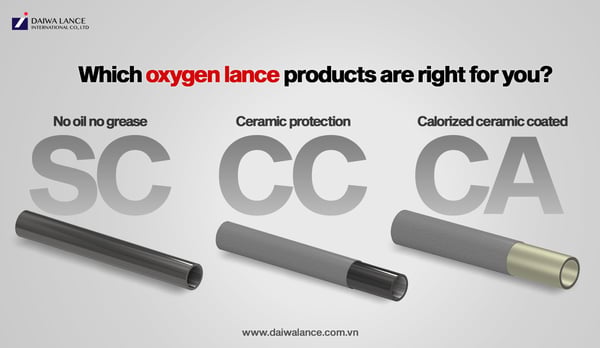
What Are SC, CC, and CA Lance (3 Primary Oxygen Lances)?
Oxygen lances are steel pipes used to inject oxygen, carbon, or flux into furnaces operating at extremely high temperatures. Depending on surface treatment and coating technology, oxygen lances are classified into three main types:
- Daiwa SC Lance – Standard Clean (no oil, no coating)
- Daiwa CC Lance – Ceramic Coated
- Daiwa CA Lance – Calorized (aluminum diffusion) + Ceramic Coated
Each type offers a different balance between heat resistance, service life, and cost.
Structure and Surface Treatment of SC, CC, and CA Lances
Daiwa SC Lance (Clean – No Oil No Grease)
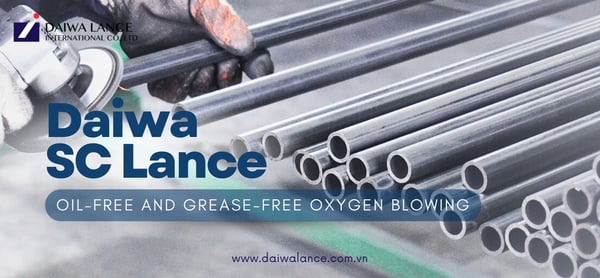
Daiwa SC Lance is manufactured from carbon steel pipe using high-frequency welding technology. It has no ceramic coating and no aluminum diffusion layer.
A key characteristic of Daiwa SC Lance is the oil- and grease-free surface treatment, which eliminates fire and explosion risks during ignition and operation.
Daiwa CC Lance (Ceramic Coated)
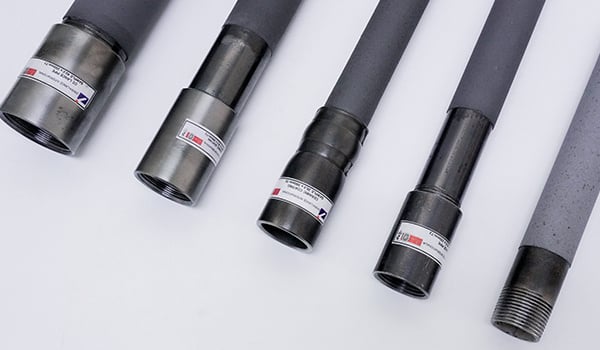
Daiwa CC Lance is made from carbon steel pipe and protected by special heat-resistant ceramic coatings on both inner and outer surfaces.
The ceramic layer acts as a thermal and oxidation barrier, significantly improving resistance to molten metal splash and slag attack.
Daiwa CA Lance (Calorized + Ceramic Coated)
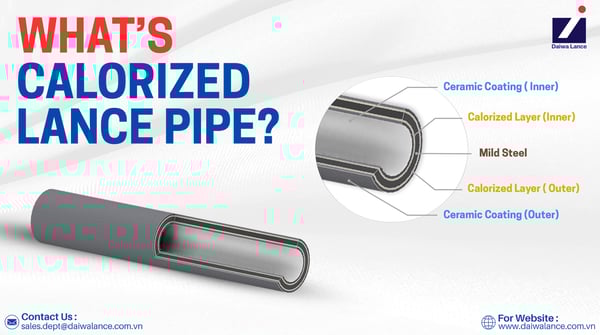
Daiwa CA Lance undergoes an aluminum diffusion (calorizing) process, followed by ceramic coating inside and outside.
At high temperatures, the aluminum layer forms a stable aluminum oxide (alumina) film, offering the highest level of protection against oxidation and chemical attack.
Heat Resistance and Service Life Comparison
Daiwa SC Lance
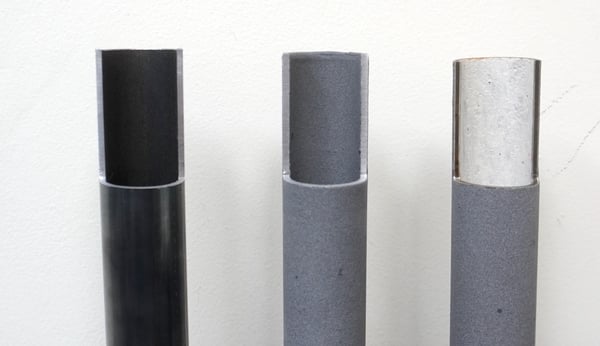
Daiwa SC Lance is classified as a consumable oxygen lance, designed for short-term, high-intensity operations. Although it can generate operating temperatures exceeding 3,000°C and is highly flammable, Daiwa SC Lance exhibits a relatively high consumption rate when used under extremely high-temperature conditions.
Daiwa CC Lance
In contrast, Daiwa CC Lance offers a substantially longer service life—approximately 3 to 5 times longer than standard uncoated lances—thanks to its heat-resistant ceramic coating, which effectively protects the steel pipe from molten metal splash and slag attack in molten steel environments.
Daiwa CA Lance
For the most extreme applications, Daiwa CA Lance provides the highest heat resistance and longest lifespan in molten steel and EAF operations. Utilizing advanced aluminum diffusion (calorizing) technology combined with ceramic coating, Daiwa CA Lance delivers up to 7 times higher performance in oxygen blowing and carbon injection, while achieving the lowest consumption rate among all oxygen lance types.

Key Advantages of Each Oxygen Lance Type
Daiwa SC Lance Advantages
- Oil-free surface improves fire safety
- Strong high-frequency welds reduce oxygen leakage
- Ideal for short-term, high-temperature ignition tasks
Daiwa CC Lance Advantages
- Electrical insulation from ceramic coating reduces shock risk
- Enhanced resistance to heat and oxidation, but at a lower level than Daiwa CA Lance
- Balanced performance and cost
Daiwa CA Lance Advantages
- Superior resistance to heat, oxidation, sulfur, and vanadium
- Minimal consumption leads to significant long-term cost savings.
- Best choice for extreme environments
Applications of SC vs CC vs CA Oxygen Lances
All three types of oxygen lances are used for oxygen blowing, carbon injection, and lime powder injection in EAF), as well as for slag removal. However, each lance type is optimized for specific applications.
Daiwa SC Lance Applications
Due to its high flammability, Daiwa SC Lance is mainly applied in tap hole opening, where flames exceeding 3,000°C are used to burn through plugging materials, and in oxygen supply for trash-burning incinerators. Owing to its relatively high consumption rate, it is seldom selected for oxygen blowing in molten steel.
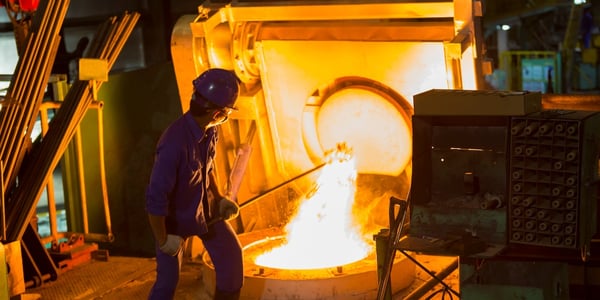
Daiwa CC Lance Applications
Daiwa CC Lance provides effective electrical insulation and reliable heat resistance, making it well suited for tap hole opening operations as well as inert gas injection applications, including nitrogen and argon.
Daiwa CA Lance Applications
Thanks to its superior heat resistance, Daiwa CA Lance is mainly used for oxygen blowing in molten steel during steelmaking and is also employed to protect thermocouples immersed in molten metals such as aluminum, copper, and zinc.

SC vs CC vs CA Oxygen Lance Comparison Table
In summary, the key differences between SC, CC, and CA are their coating structure, heat resistance, and consumption rate.
The table below presents a detailed comparison of product features and performance under actual testing conditions.
|
Feature |
Daiwa SC Lance |
Daiwa CC Lance |
Daiwa CA Lance |
|---|---|---|---|
|
Structure |
Carbon steel pipe, no coating |
Carbon steel pipe + ceramic coating |
Carbon steel pipe + alumincum diffusion + ceramic coating |
|
Heat Resistance |
Normal |
Good |
Excellent |
|
Melting Time (3,000°C) |
20 seconds |
47 seconds |
151 seconds |
|
Consumption (with 25-ton EAF) |
Fast |
Medium |
Very slow |
|
Key Advantage |
Fire safety, clean surface |
Electrical insulation |
Heat resistant and low consumption |
|
Typical Use |
Tapping, cutting |
Gas injection |
Molten steel oxygen blowing |
In short,
- Choose SC Lance if you require a clean, consumable oxygen lance with enhanced fire and explosion safety for basic operations such as tap hole opening.
- Choose CC Lance if your application demands a balanced solution combining cost efficiency, extended service life, and electrical safety.
- Choose CA Lance when maximum durability and performance in the most extreme operating environments are required, particularly for oxygen blowing in molten steel.
Daiwa Lance is a specialized manufacturer of high-performance oxygen lances, certified to ISO and JIS standards. Established in 1996 in Vietnam, Daiwa Lance has supplied oxygen lances to more than 55 countries worldwide, serving steel plants, foundries, and high-temperature industrial applications.
If you are looking for a reliable oxygen lance manufacturer with proven performance in EAF steelmaking and molten metal environments, contact us today for technical consultation and product selection support.