Choosing the right structural steel pipe is important for projects exposed to humidity, rain, heat, and outdoor weather conditions. In agricultural and outdoor construction environments, standard steel materials often experience rust, corrosion, and expensive maintenance problems over time. Because of this, many businesses are now comparing polyester resin coated color pipe vs galvanized pipe to determine which solution offers better long-term performance.
While both options provide corrosion protection, they differ in structure, durability, maintenance requirements, and environmental resistance. Understanding these differences can help greenhouse operators, contractors, and industrial buyers choose the most suitable material for their applications.
Understanding the Difference Between Polyester Resin Coated and Galvanized Steel Pipe
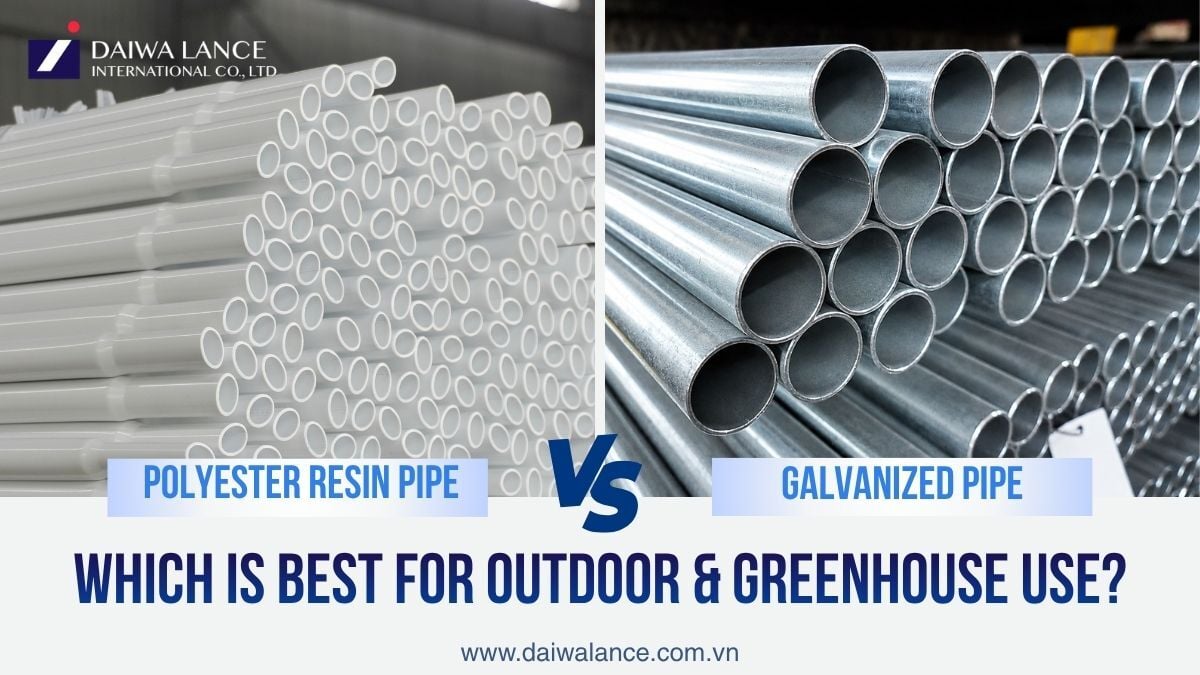
When people compare polyester resin coated color pipe vs galvanized pipe, the key difference is how many layers protect the steel and where those layers are applied.
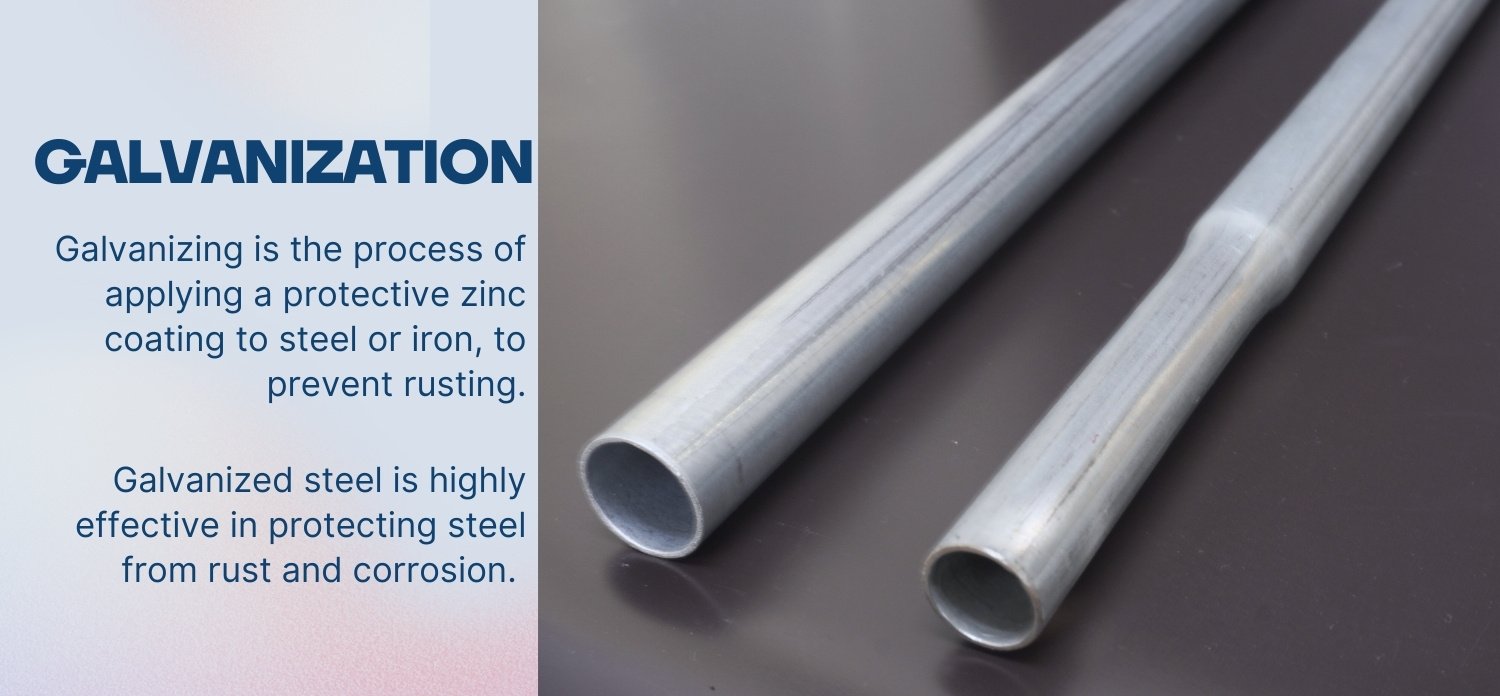
Galvanized steel pipe typically relies on a zinc coating as the main barrier. This helps delay rust, but the protection can gradually weaken under long-term exposure to moisture, chemicals, and outdoor weather.
Polyester resin coated color pipe adds an extra protective layer: polyester resin coating applied to both the inner and outer surfaces on top of the galvanized base. This creates a stronger barrier against water and oxygen, helping improve long-term durability and surface stability in humid environments such as greenhouses and coastal areas. In practice, the coated surface can also be easier to keep clean and maintain a cleaner-looking structure over time.
In short, galvanized pipe is protected mainly by zinc, while polyester resin coated color pipe combines galvanized + resin coating (inside and outside) for enhanced protection in harsh, moisture-prone conditions.

How Protective Polyester Resin Coating Improves Pipe Performance?
The polyester resin coating acts as an additional barrier that protects the steel surface from water, oxygen, and environmental contaminants. This structure allows a coated color pipe to maintain stronger corrosion resistance in difficult operating conditions.
With white coating, light reflection can also help reduce heat absorption and keep surfaces cooler under direct sunlight in outdoor/greenhouse structures.
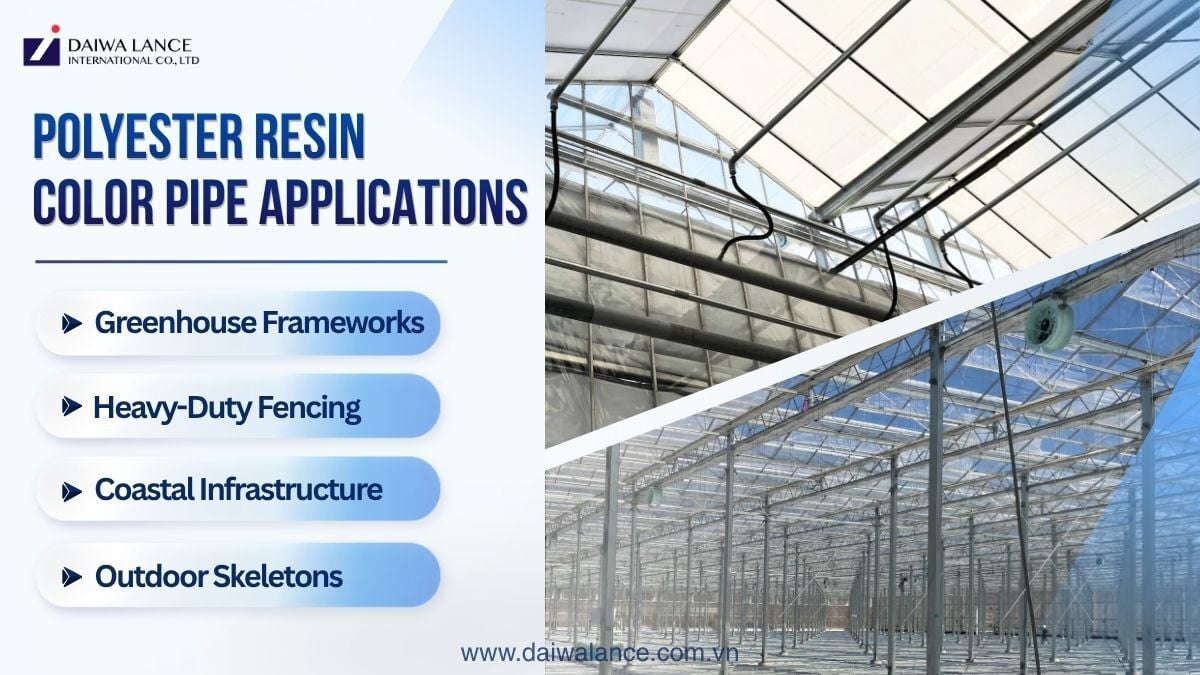
As a highly effective moisture resistant pipe, polyester resin-coated systems perform especially well in greenhouse environments where humidity and condensation are constantly present. The protective surface also helps reduce maintenance frequency and improves the overall lifespan of the piping structure.
Quick Comparison: Polyester Resin Coated Color Pipe vs Galvanized Pipe
Test Method: How We Test Corrosion Resistance
Before you look at the comparison table below, here is a simple explanation of how we check corrosion resistance.
- Purpose: Put different pipe samples in the same conditions and see which one stays rust-free longer.
- How we do it: We run an accelerated lab test first, then we confirm the result with an outdoor exposure test.
- What we test:
| Sample | Material / Surface | What it represents |
| Sample 1 | Color pipe made of galvanized steel (galvanized base + resin coating) | Polyester resin coated color pipe |
| Sample 2 | Bare galvanized steel pipe (no resin coating) | Zinc-only galvanized pipe |
1) Lab Test: Cyclic Neutral Salt Spray Test (JIS H 8502)
In the lab, we use a cycle test that repeats “salt mist + drying + humidity” to speed up corrosion and make differences easier to see.
- Reference standard: JIS H 8502
- Test idea: Salt mist tries to create rust, and the dry/wet steps make the environment harsher—similar to what happens outdoors over time.
- What we look for: how soon rust starts, and where it starts (on the surface or mainly at cut edges).
- Test length: up to 90 cycles
- Cycle conditions (8 hours per cycle):
| Step | Condition | Time |
| 1) Salt spray | 35°C neutral salt spray | 2 hours |
| 2) Dry | 60°C drying | 4 hours |
| 3) Wet | 50°C, ≥95% humidity | 2 hours |
-
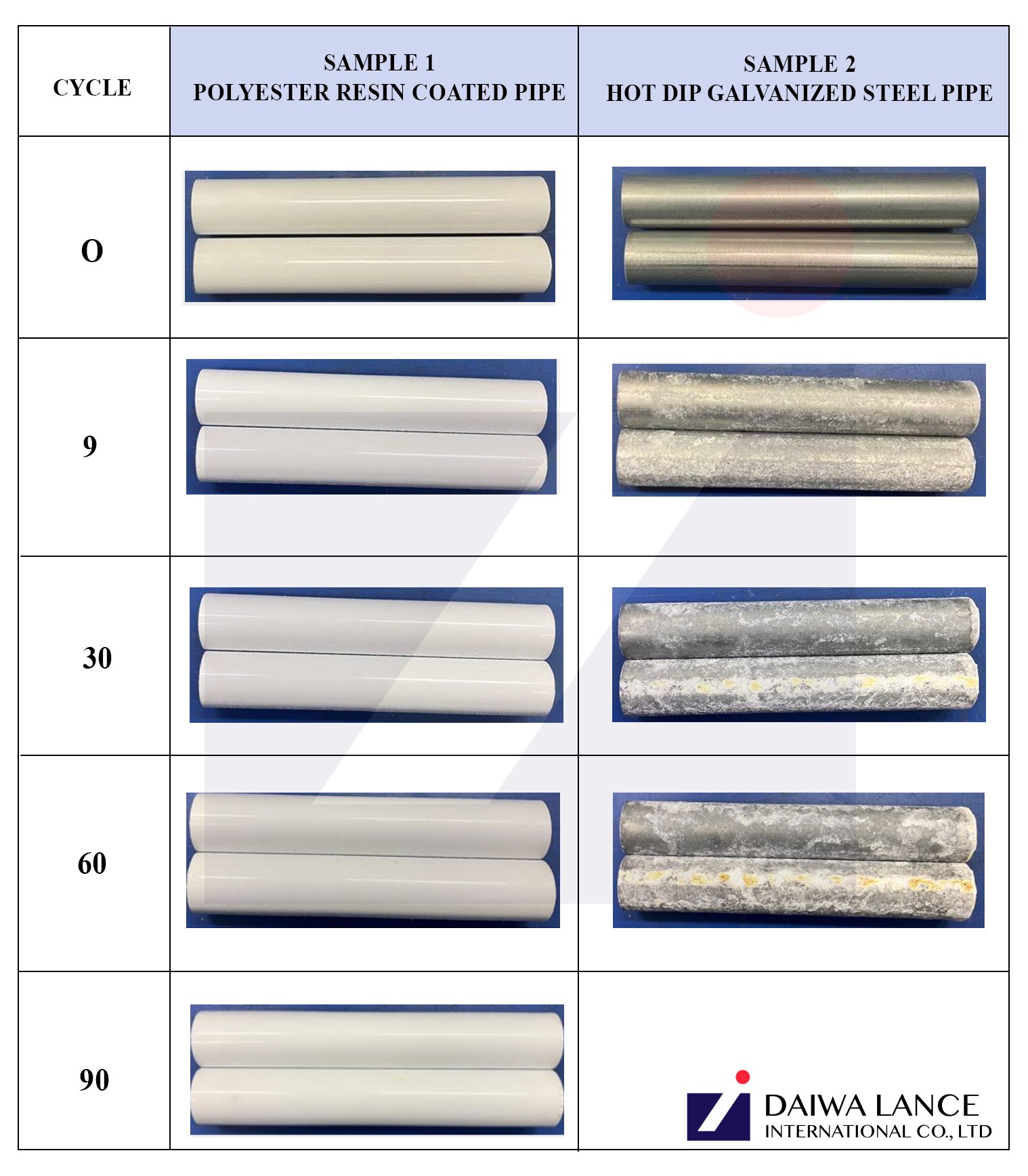
Lab results summary:
| Cycle milestone | Sample 1 | Sample 2 |
| 9 cycles | No visible rust | White rust starts to appear |
| 60 cycles | No visible rust | Yellow rust appears |
| 90 cycles | No visible rust | More severe rust progression |
-
What does this mean? Under the same lab conditions, the resin-coated color pipe stayed rust-free through 90 cycles, while the bare galvanized pipe started showing rust early and continued to worsen over time. This supports why a resin coating layer can provide stronger corrosion protection in humid or salt-prone environments.
Table: Example correlation between cycle tests and estimated outdoor exposure time
Below is one example of how some cyclic corrosion tests are sometimes correlated with outdoor exposure time in different environments.
| Environment | 9 cycles | 30 cycles | 60 cycles | 90 cycles |
| High-salt area | 1 year | 3 years | 7 years | 10 years |
| Heavy industry | 1 year | 3 years | 7 years | 10 years |
| Urban/coastal area | 2 years | 7 years | 13 years | 20 years |
| Rice paddy/farmland | 3 years | 10 years | 20 years | 30 years |
| Mountain/dry area | 6 years | 20 years | 40 years | 60 years |
What does this mean? This table gives a simple way to understand what cycle-test results may mean in real life. In harsher environments (especially coastal/urban areas), the same number of cycles typically represents fewer years of outdoor exposure—so choosing a stronger coating system becomes even more important for long-term durability.
Note: this kind of correlation table is meant for rough comparison only. Actual service life depends heavily on the real installation environment, design details, and maintenance.
2) Real Outdoor Exposure Test
Because lab tests are accelerated, we also place samples outdoors to confirm what happens under real sunlight, rain, and natural humidity.
| Test setup | Example details |
| Location/climate | Ho Chi Minh City, Vietnam (strong sun + hot season + rainy season humidity) |
| Test period | 22 Feb 2024 → 08 Oct 2024 (over 9 months) |
| Samples | Sample 1 and Sample 2 |
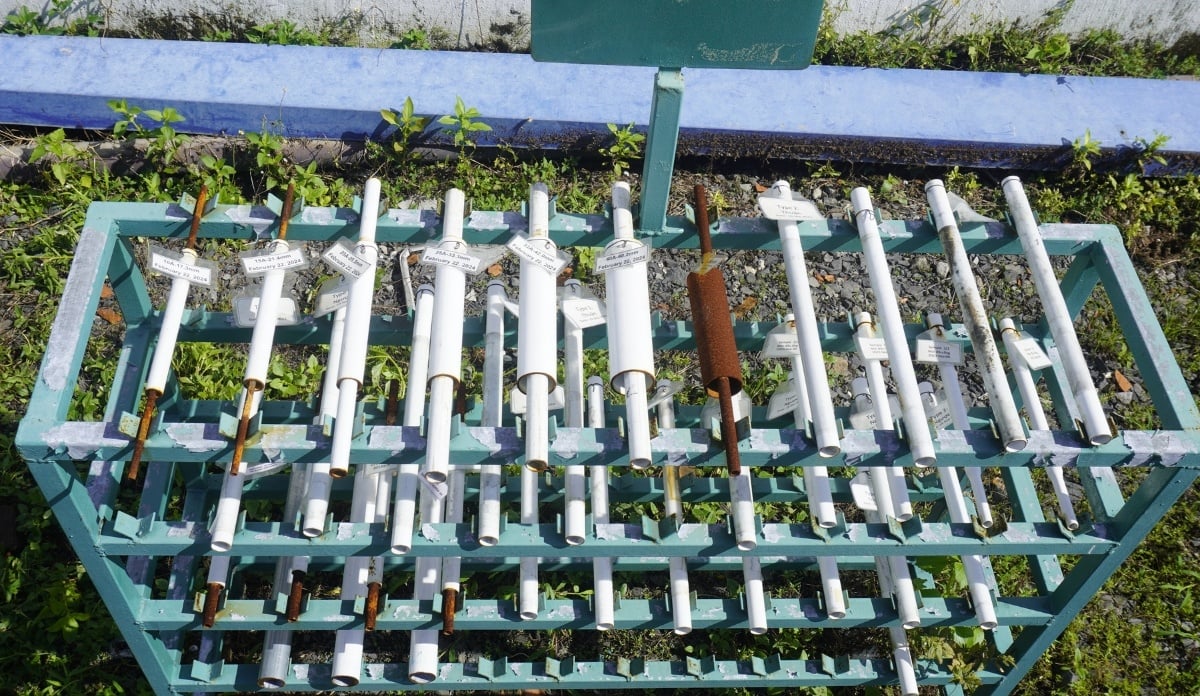
Observed results after 9+ months:
| Sample | Observation |
| Sample 1 | Surface remained clean and shining with no visible rust; only slight rust at cut edges where coating protection is not present |
| Sample 2 | Heavily rusted (red rust visible across the surface) |
What does this mean? Even in real outdoor weather conditions, a protected coating system helps the pipe maintain a cleaner surface and resist rust much longer than bare steel—meaning less maintenance and better long-term reliability for greenhouse and outdoor use.
Lab Test and Outdoor Test Summary
Based on both the lab cycle test and the real outdoor exposure test, we see a clear pattern: a resin-coated pipe system protects the surface for longer, especially in humidity and salt-prone conditions.
At the same time, galvanized pipe still remains a practical and widely used option for many standard applications—such as roof framing and pillars—where conditions are less aggressive and the zinc layer provides reliable, cost-effective protection.
Here is the summarized comparison table (based on lab + outdoor test observations).
| Feature | Polyester Resin Coated Color Pipe |
Galvanized Pipe |
| Surface Protection | Polyester resin coating (inside + outside) + galvanized layer (zinc) | Zinc coating only |
| Appearance | Clean white finish | Metallic finish |
| Moisture Protection | High | Medium |
| Outdoor Durability | Long-lasting | Reliable for general outdoor use |
| Corrosion Resistance | Excellent | Acceptable (best for non-coastal / lower-humidity areas) |
| Maintenance Requirement | Low | Medium to High (depends on environment) |
| Greenhouse Suitability | Highly recommended for humidity-prone parts (especially winding shafts / moving parts) | Suitable for roof framing and pillars in standard greenhouse conditions |
| Coastal Environment Performance | Strong resistance | May rust over time |
| Lifespan in Humid Conditions | Longer | Shorter |
| Long-term Value | Higher | Moderate |
FAQ About Polyester Resin Coated and Galvanized Pipes
1. Which is better: polyester resin coated color pipe or galvanized pipe?
When comparing polyester resin coated color pipe vs galvanized pipe, polyester resin-coated systems generally provide stronger protection against moisture, corrosion, and outdoor weather conditions.
2. Why is galvanized color pipe still commonly used?
A galvanized color pipe offers basic corrosion protection and lower initial cost, making it suitable for some standard industrial applications.
3. Are polyester resin-coated pipes suitable for greenhouse systems?
Yes. Polyester resin-coated pipes are highly suitable for greenhouse environments because they offer excellent moisture resistance and long-term durability.
4. What makes polyester resin-coated pipes last longer?
The additional protective coating layers help block water and oxygen from reaching the steel surface, improving corrosion resistance and extending product lifespan.
Related Blogs & Pages
-
Daiwa Color Pipe product page: https://www.daiwalance.com.vn/products/daiwa-color-pipe
-
Color Pipe catalogue landing page: https://www.daiwalance.com.vn/catalogue
-
Contact page: https://www.daiwalance.com.vn/contact
Conclusion
When comparing polyester resin coated color pipe vs galvanized pipe, polyester resin-coated systems offer better durability, stronger corrosion resistance, and more reliable performance in greenhouse and outdoor environments.
With advanced coating technology and long-term weather protection, Daiwa Color Pipe is a practical solution for agricultural and exterior applications. Download the Daiwa Lance product catalog to explore available specifications and piping solutions for your project.

About Daiwa Lance
Established since 1997, Daiwa Lance has positioned ourselves as a pioneer in thermic cutting and oxygen lancing technology. Based in Ho Chi Minh City, Vietnam, we have been providing quality customer service and products with advanced Japanese technology.
We maintain the highest quality standards with ISO 9001:2015, ISO 14001:2015, and JIS G standards certifications. We have also expanded our reach globally, exporting to over 55 countries worldwide.
Visit us through our contact channels today: Email, WhatsApp, Contact Us form, or connect with us on Youtube, LinkedIn and Facebook.
%20size%20CTA%20theo%20Nh%E1%BA%ADt%20%20(1)-2.png?width=1200&height=510&name=(400%20x%20170%20)%20size%20CTA%20theo%20Nh%E1%BA%ADt%20%20(1)-2.png)