Have you ever wondered how industrial professionals cut through extremely thick steel sections or reinforced concrete? One possible answer is a thermic lance—an exothermic cutting tool designed for heavy-duty applications. In this guide, Daiwa Lance will break down the science, components, and the self-sustaining reaction that makes this possible. We will answer the fundamental question: how does a thermic lance work?
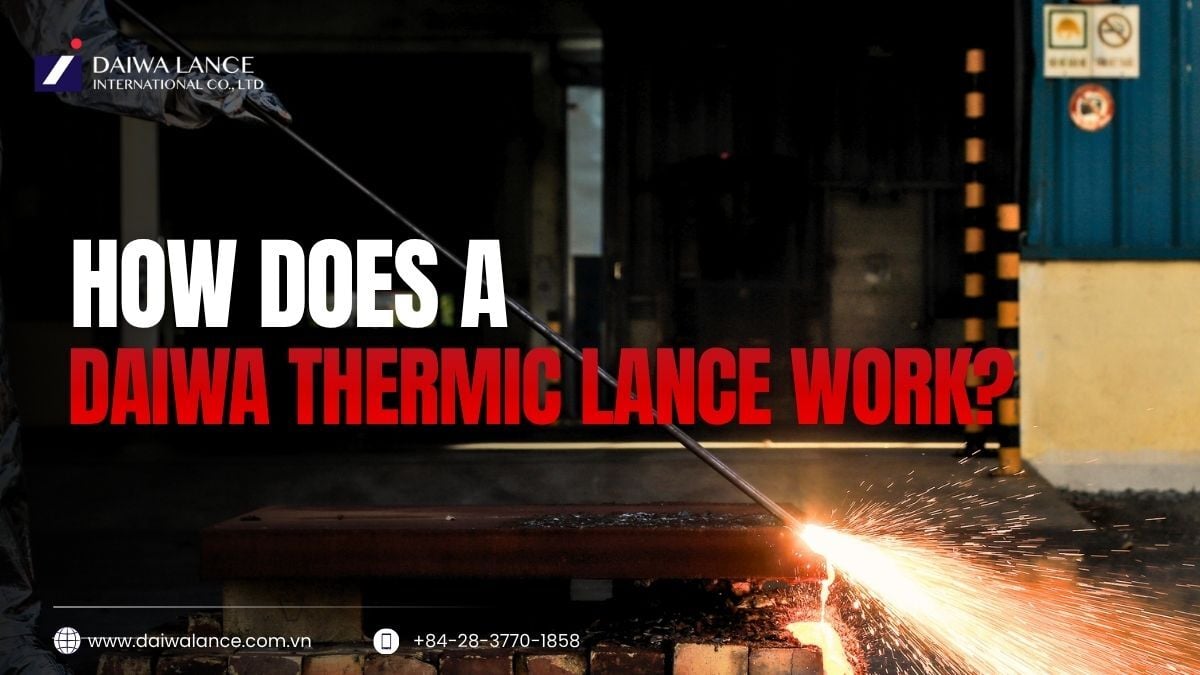
Practical Applications: What Does a Thermic Lance Do?
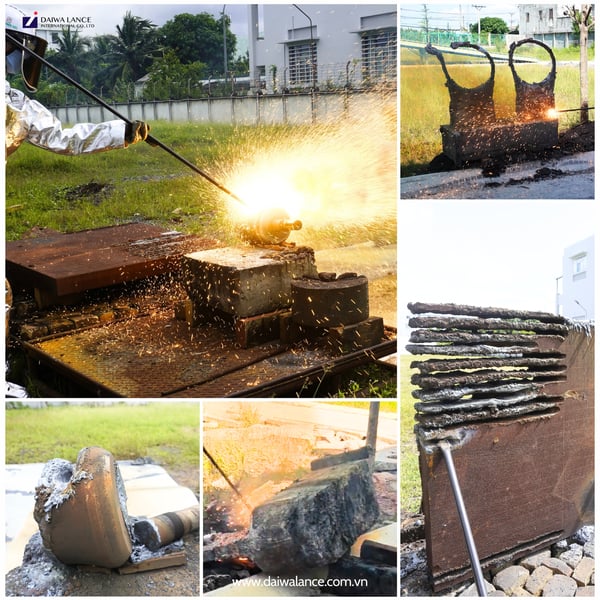
Before diving into the physics, it is important to understand what a thermic lance is used for in real-world scenarios. Because of its intense heat, thermic lances are often used for heavy-duty cutting, demolition, and maintenance work—such as scrap yard processing, furnace/ladle area maintenance, and clearing tough slag buildup.
A thermic lance is often considered for tasks where mechanical saws or standard torches struggle, such as dismantling large-scale industrial machinery or removing stubborn deposits.
The Core Principle: How Does a Thermic Lance Work?
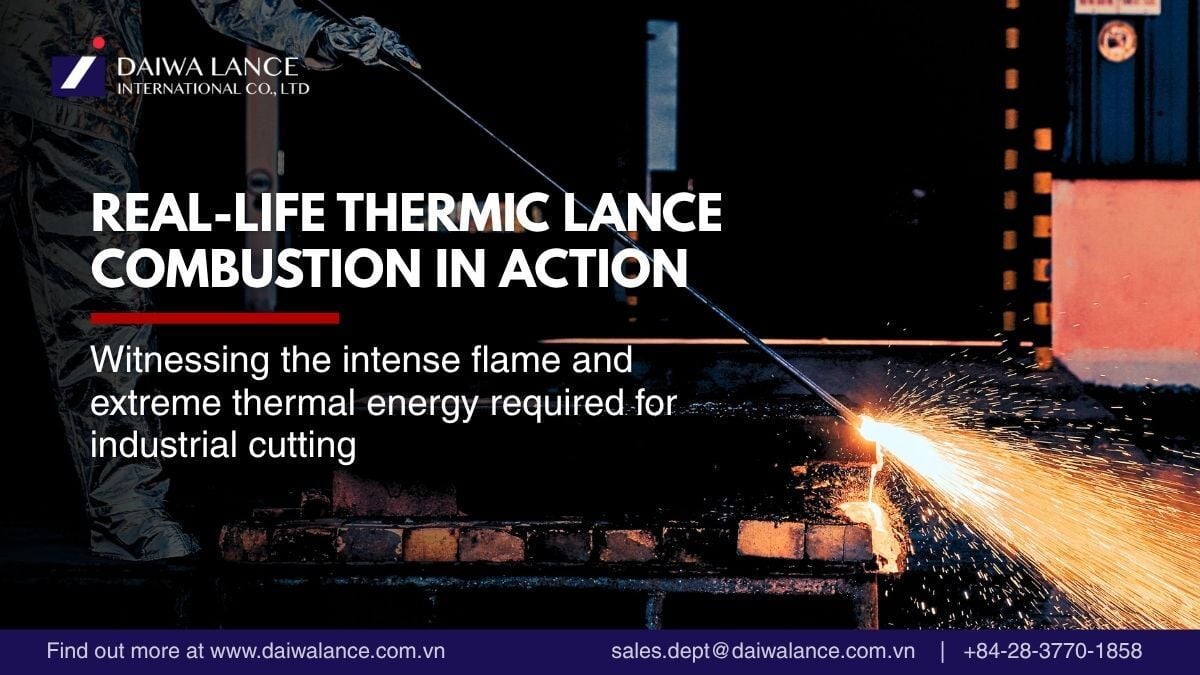
To understand how does a thermic lance work, you must look at the thermic lance mechanism, which is fundamentally different from a standard welding torch. While a typical torch uses a gas flame to melt metal, thermal lance how it works is through a continuous chemical reaction where the tool itself becomes the fuel. Many engineers study the process of how does a thermic lance work to improve efficiency in heavy-duty smelting operations.
The Thermic Lance Exothermic Reaction
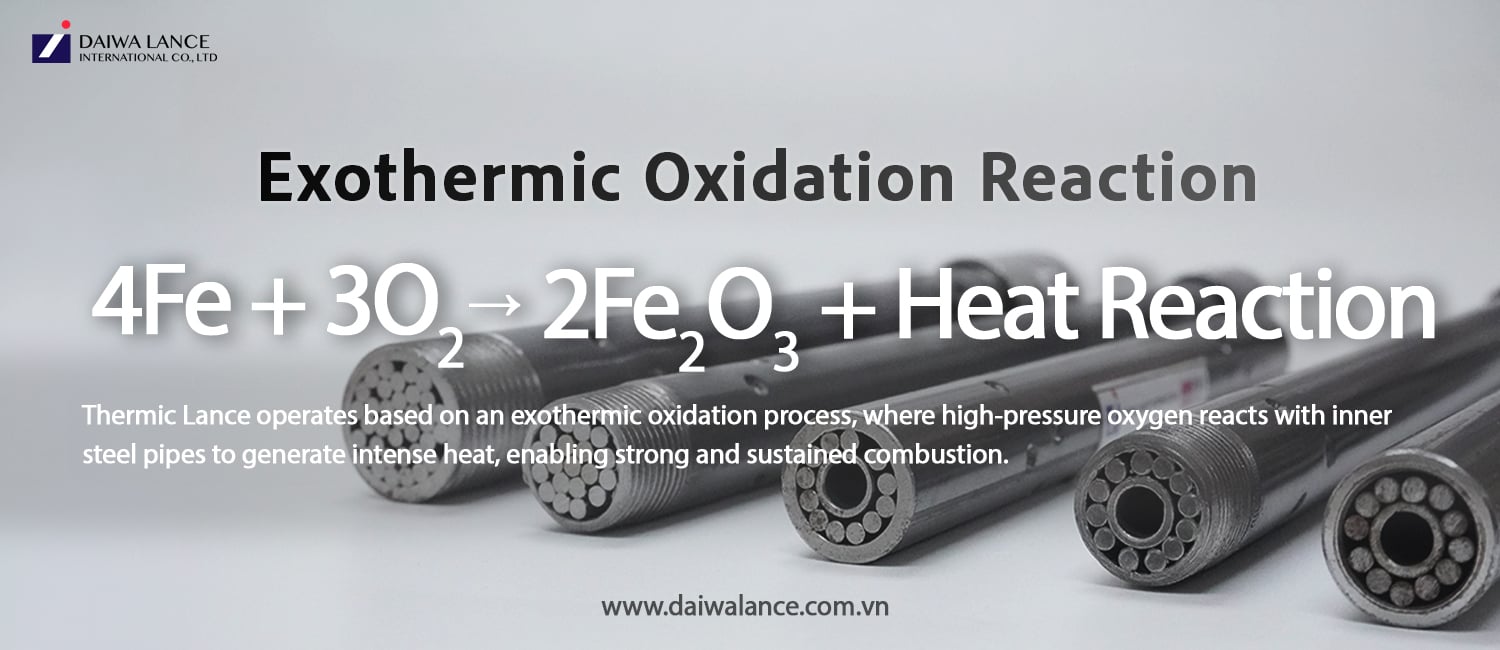
The "magic" happens through a thermic lance exothermic reaction. When high-purity oxygen is fed through the tube and the tip is heated to its ignition point, the iron in the steel pipe and wires reacts with the oxygen. This oxidation process releases a massive amount of energy, creating a self-sustaining burn while oxygen continues to flow (the ignition heat source is still required to start the reaction).
Understanding Thermic Lance Temperature
This reaction produces a very high thermic lance temperature. If you are curious about how hot a thermic lance gets, 3,000~3,600°C is a more common range for Daiwa Thermic Lance (depending on lance size and job conditions). Because of this extreme heat, a thermic lance can cut and melt a wide range of materials, including steel, concrete, and heavy slag.
Anatomy of the Tool: Inside a Thermic Lance
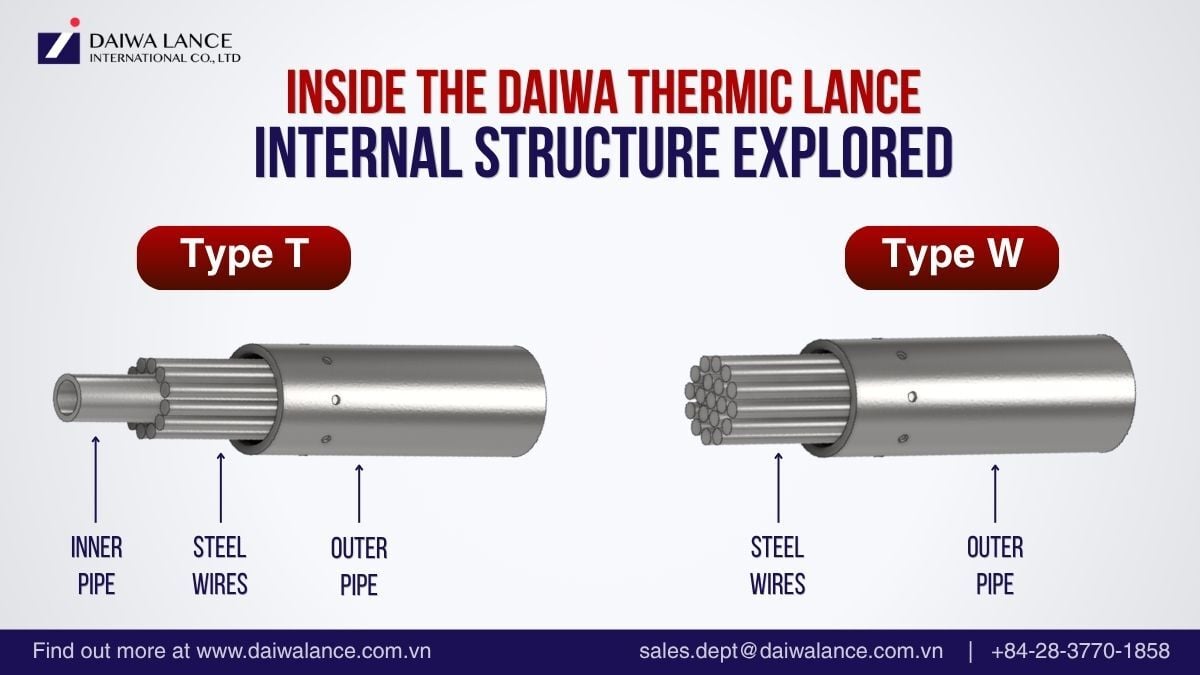
At Daiwa Lance, we emphasize that the efficiency of how does thermal lance work depends on its construction. Looking inside a thermic lance reveals a precision-engineered design. The thermic lance anatomy consists of two primary parts:
- The Outer Thermic Lance Tube: A high-quality carbon steel thermic lance tube that provides the structural housing.
- The Packed Thermic Lance Wires: The interior is filled with specially alloyed thermic lance wires. The specific ratio of these wires to the oxygen flow is the secret to a stable and powerful thermic lance construction.
Step-by-Step: How to Use a Thermic Lance Safely and Effectively
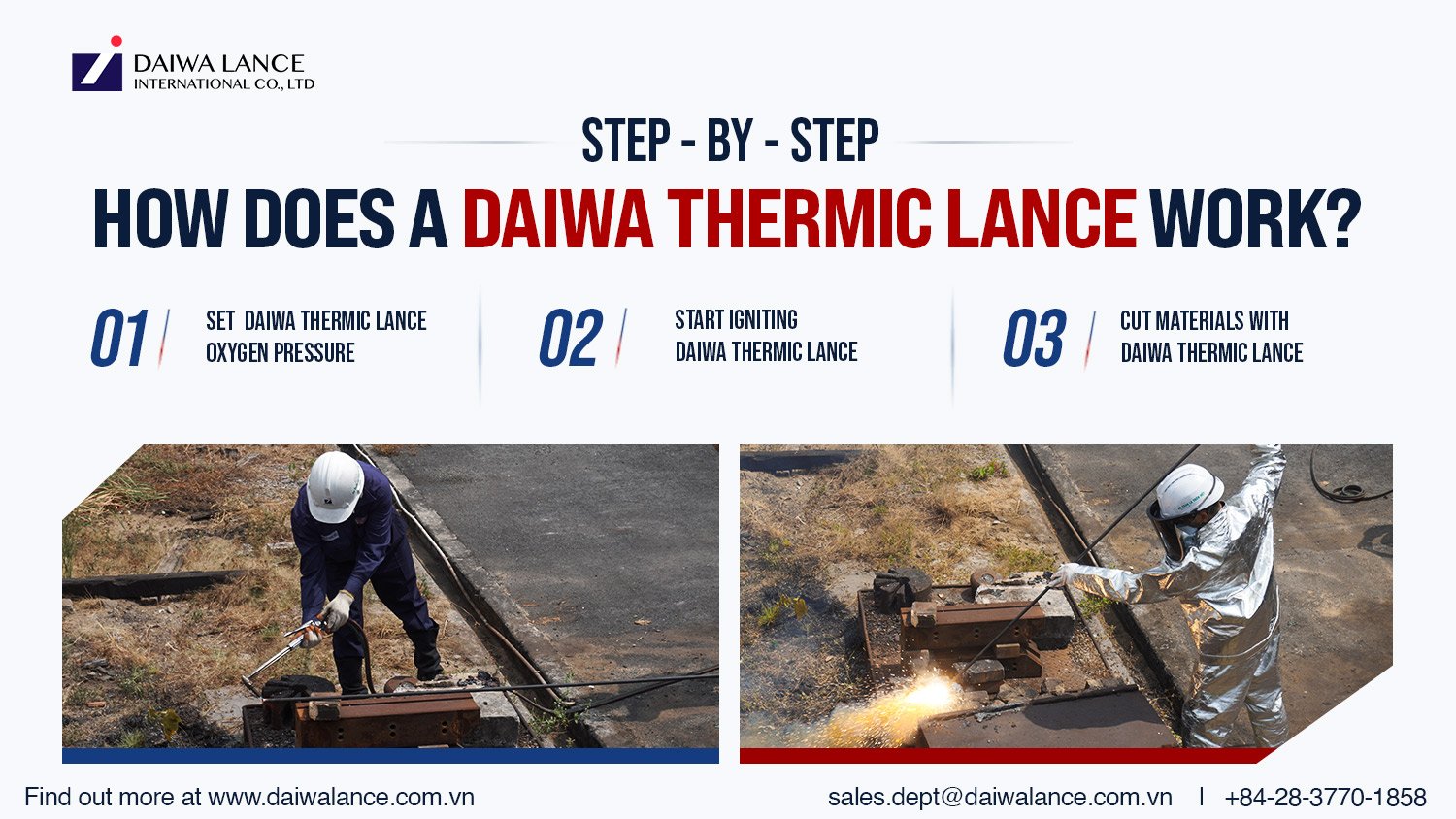
To make the process practical (and safer), here is a simple field sequence that operators can follow from preparation to shutdown:
Step 1: Prepare Personal Protective Equipment (PPE)
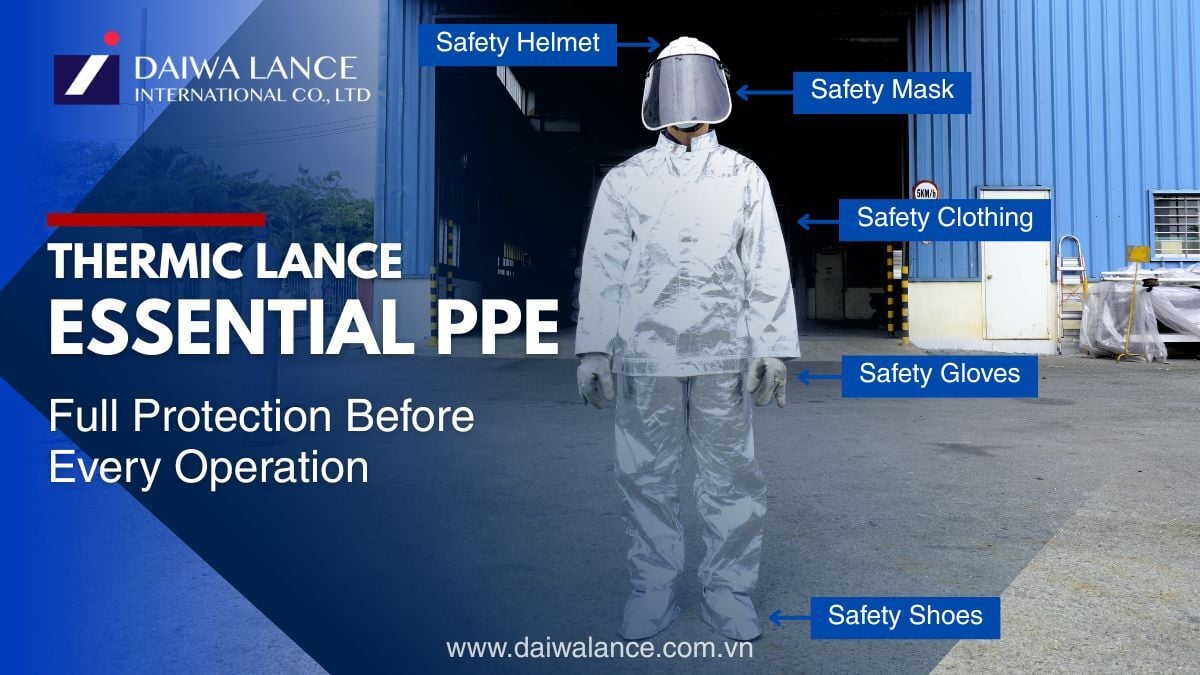
Because a thermic lance produces extreme heat, sparks, and molten byproduct, proper PPE is mandatory:
- Safety helmet
- Safety face shield / safety mask (spark protection + glare reduction)
- Safety gloves (fire-resistant)
- Safety clothing (fire-resistant) (heat/spark resistant)
- Safety shoes (anti-slip, impact protection)
Depending on the work environment, operators may also add earplugs and respiratory protection.
Step 2: Set Up Equipment for Cutting
Before ignition, confirm the jobsite and equipment are ready:
- Prepare fire safety equipment: keep a fire extinguisher within reach.
- Check oxygen cylinder & regulator: confirm sufficient oxygen supply and set oxygen pressure to 8–12 bar (depending on lance size and conditions).
- Connect components securely: connect the oxygen hose to the lance holder, insert the thermic lance, and tighten all joints/valves to prevent leakage. Verify there are no leaks at the hose, coupling, or joints.
- Ignite the thermic lance: use an oxyacetylene torch to heat the lance tip until it turns red hot, then slowly open the oxygen valve to start the burning reaction.
Step 3: Start Cutting (Control Distance, Angle, and Slag)
With the lance burning steadily:
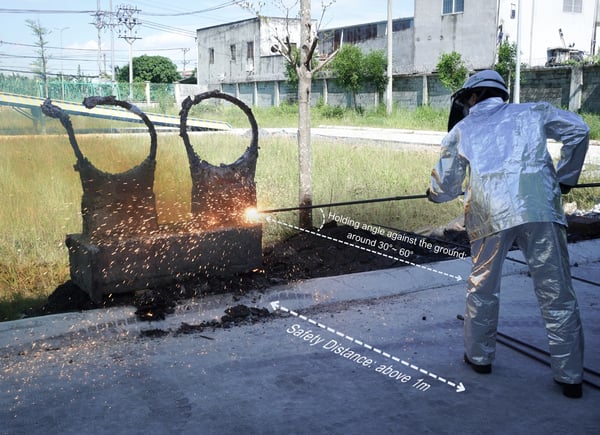
- Maintain a safe distance: keep at least 1 meter from the cutting area when possible to reduce risk from flying sparks and molten material.
- Work at the right angle: hold the lance at roughly 30°–60° depending on the base material position for better penetration and cut quality.
- Manage slag and keep the cut path clear: use the oxygen jet to blow molten byproduct away so the reaction can continue cutting efficiently.
- Replace the lance when nearly consumed: swap to a new lance rod when the current one is close to burning out.
Step 4: Complete the Job and Shut Down Safely
After finishing the cut:
- Shut off the oxygen valve to stop the reaction.
- Allow material to cool completely before handling to avoid burns.
- Isolate hot cut pieces away from active work areas and place warning signs if needed.
Maximizing Thermic Lance Performance
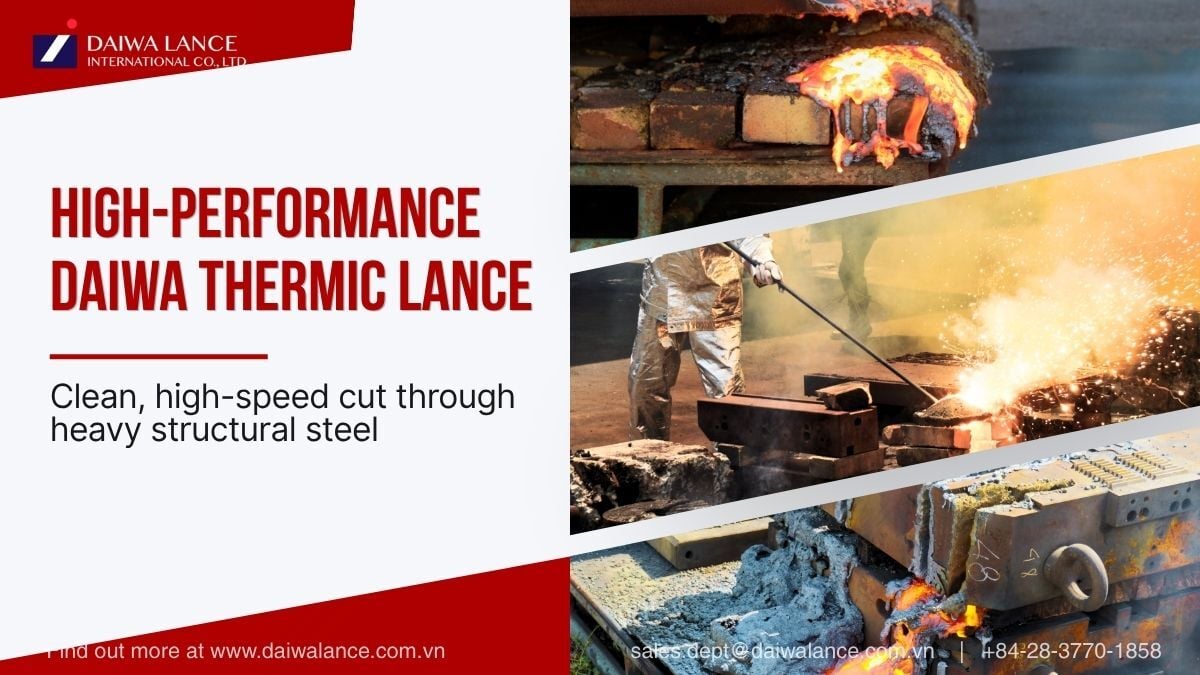
To get the most out of your tool, thermic lance performance must be a priority. Factors such as wire density, oxygen purity, and tube quality all dictate how long the rod lasts and how clean the cut is. How does a thermal lance work most efficiently? By using rods engineered for the specific material you are cutting. Additionally, understanding exactly how does a thermic lance work helps operators minimize waste and oxygen consumption.
Conclusion: Master Cutting with Daiwa Thermic Lance
Understanding the thermic lance mechanism is the first step toward mastering heavy-duty industrial cutting. Whether you are dismantling a ship or clearing a furnace, Daiwa thermic lance is designed to provide the highest heat output and most stable burn on the market.
Ready to upgrade your industrial cutting capabilities? Buy thermic lance solutions directly from Daiwa Lance to ensure you are getting a product backed by decades of engineering expertise. Contact us today for a technical consultation!
Related Blogs & Pages
-
Daiwa Thermic Lance product page: https://www.daiwalance.com.vn/products/daiwa-thermic-lance
-
Thermic Lance glossary page: https://www.daiwalance.com.vn/glossary/thermic-lance
-
Burning Bar glossary page: https://www.daiwalance.com.vn/glossary/burning-bar
-
Catalogue page: https://www.daiwalance.com.vn/catalogue
-
Contact page: https://www.daiwalance.com.vn/contact
About Daiwa Lance
Established since 1997, Daiwa Lance has positioned ourselves as a pioneer in thermic cutting and oxygen lancing technology. Based in Ho Chi Minh City, Vietnam, we have been providing quality customer service and products with advanced Japanese technology.
We maintain the highest quality standards with ISO 9001:2015, ISO 14001:2015, and JIS G standards certifications. We have also expanded our reach globally, exporting to over 55 countries worldwide.
Visit us through our contact channels today: Email, WhatsApp, Contact Us form, or connect with us on Youtube, LinkedIn and Facebook.