When you place a steel pipe inside a furnace, you’re exposing it to an intensely hot environment where heat, molten metal, and oxygen constantly attack its surface.
Extreme heat. Molten metal. Oxygen attacking from every direction. Corrosive elements like sulfur and vanadium floating around. In that environment, ordinary mild steel doesn’t just “wear out” — it burns, oxidizes, erodes, and eventually fails.
So how does Daiwa CA Lance still last up to 3~7 times longer?
The answer lies in something called Alumina protection (or Calorizing) — and it’s not just a coating. It’s smart science working from the inside out.
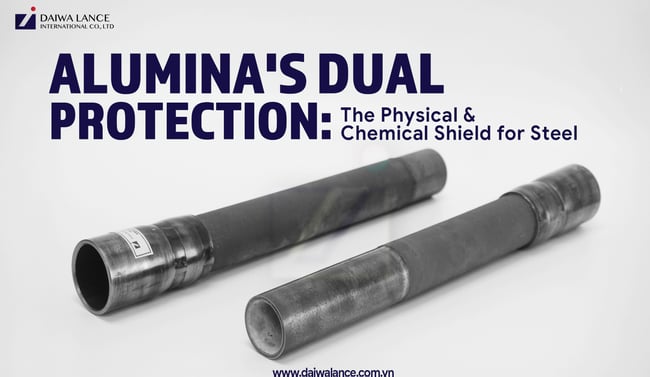
How the Alumina Protective Layer Forms
Let’s clear up a common misunderstanding first.
Alumina protective layer in this case is not created by being plated.
It’s created through a metallurgical process called Calorizing (Aluminum Diffusion).
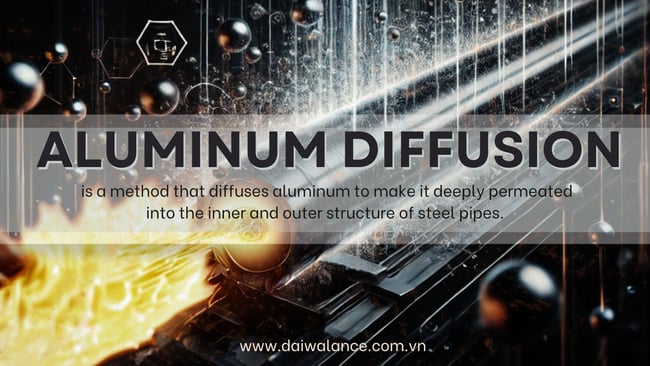
Step 1: Aluminum Becomes Part of the Steel
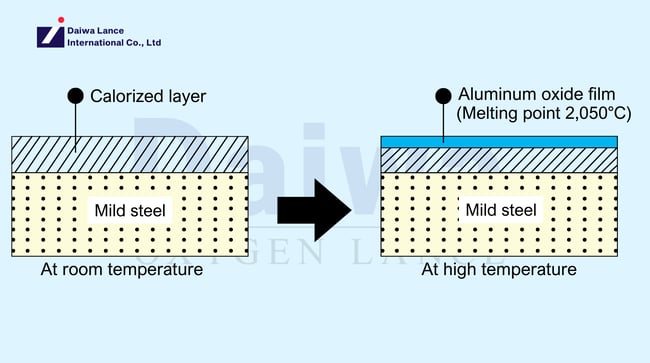
During calorizing, aluminum is diffused deep into the surface of mild steel. Instead of sitting on top, it penetrates and forms a durable iron–aluminum alloy layer.
.jpg?width=650&height=302&name=Aluminum%20Diffusion%20Method%20(Daiwa%20CA%20Lance).jpg)
Think of it like marinating meat.
The flavor doesn’t stay on the surface — it soaks into the material.
The aluminum becomes part of the steel itself.
Step 2: Heat Triggers a Smart Chemical Reaction
When the lance pipe enters a high-temperature furnace, something powerful happens.
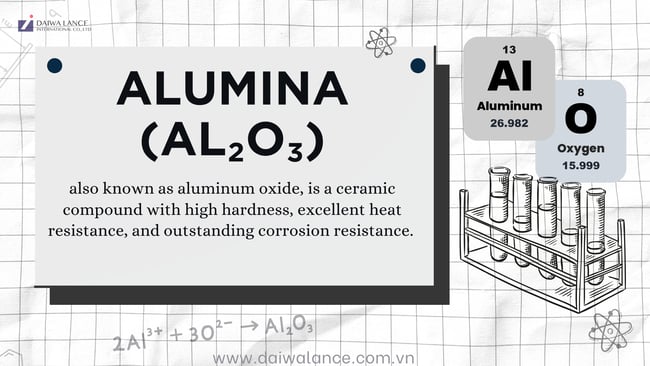
The aluminum in the alloy reacts with oxygen. Instead of the iron oxidizing (which would damage the pipe), the aluminum reacts first and forms Aluminum Oxide (Al₂O₃) — also known as Alumina.
It’s like having a bodyguard step in before the main target gets hit.
This reaction creates a dense, tightly bonded protective layer right on the surface.
And because it forms naturally during operation, it continuously protects the pipe in real working conditions.
Alumina’s Dual Protection: Physical and Chemical Shielding
You can think of Alumina protection as a two-level defense system:
- A physical shield
- A chemical shield
Let’s break it down.
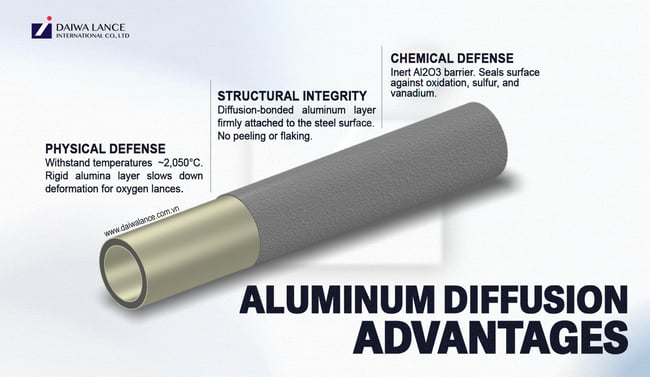
1. Alumina's Physical Barrier: Like Heat Armor
Extreme Heat Resistance
Here’s where the numbers get interesting:
- Mild steel begins losing structural strength around 1,370°C – 1,540°C
- Alumina melts at approximately 2,050°C
That’s a massive difference.
Imagine wearing a jacket that doesn’t burn even when the air around you is already melting metal. That’s what Alumina does for the steel core.
When furnace temperatures rise beyond steel’s comfort zone, the Alumina layer remains solid. It acts like a rigid shell, delaying deformation and preventing rapid structural failure.
Protection Against Molten Metal Erosion
Molten steel and slag don’t just sit quietly — they flow, splash, and erode surfaces.
Because the Alumina layer forms through diffusion, it’s dense and tightly bonded. There are no weak gaps like in ordinary coatings.
It blocks direct contact between molten metal and the steel underneath.
Less contact means less erosion.
Less erosion means longer service life.
High Hardness and Adhesion
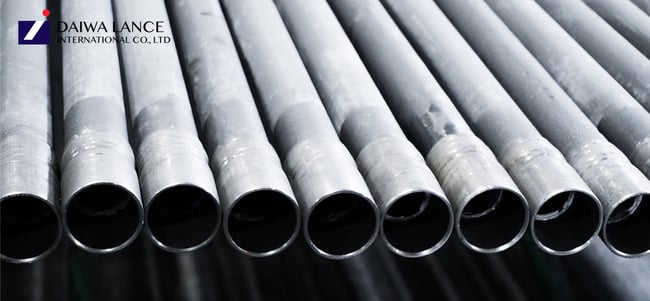
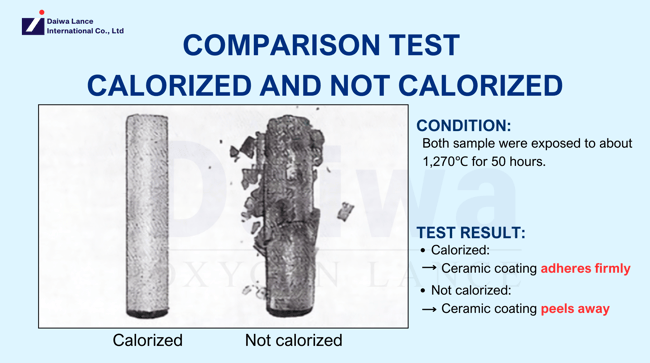
Since the alumina protective layer grows from within the alloy structure, it doesn’t peel or flake like traditional coatings.
It’s not a sticker on the surface.
It’s part of the material.
That makes it extremely durable under thermal cycling and mechanical stress.
2. Alumina's Chemical Barrier: Stopping Damage Before It Starts
Heat isn’t the only enemy in a furnace. Chemistry is just as aggressive.
Oxidation Resistance
Oxygen is one of the biggest threats to steel pipe at high temperatures. When iron reacts with oxygen, oxidation accelerates rapidly — leading to burning and rapid material loss.
Here’s the clever part:
Aluminum reacts with oxygen before iron does.
It forms Alumina (Al₂O₃), which is:
- Chemically stable
- Dense
- Inert
- Non-reactive
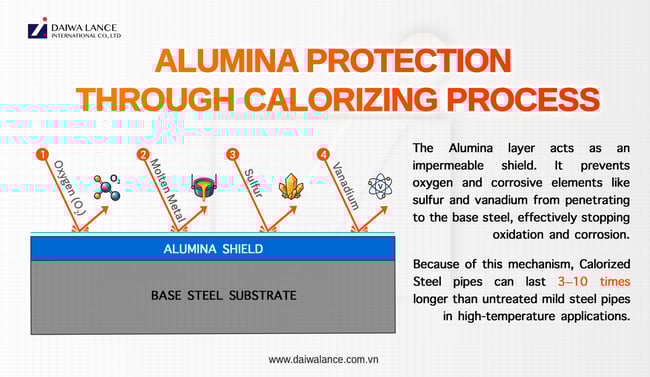
Once this layer forms, it seals the surface and prevents oxygen from reaching the steel core.
No oxygen access = No deep oxidation.
Resistance to Corrosive Elements
Furnace environments often contain:
- Sulfur
- Vanadium
- Molten steel
- Reactive slag
Ordinary steel pipe reacts with these substances and deteriorates quickly.
Alumina, however, is chemically stable and resistant. It acts like an airtight skin that shields the steel from chemical attack.
Think of it as sunscreen — but instead of blocking UV rays, it blocks corrosive reactions.
Real-World Performance: Numbers That Matter
All of this science would mean nothing without results.
And the results are significant.
Up to 3–10 Times Longer Service Life
Compared to conventional mild steel pipes, Daiwa Calorized Lance Pipes with Alumina protection last dramatically longer under the same conditions.
That means:
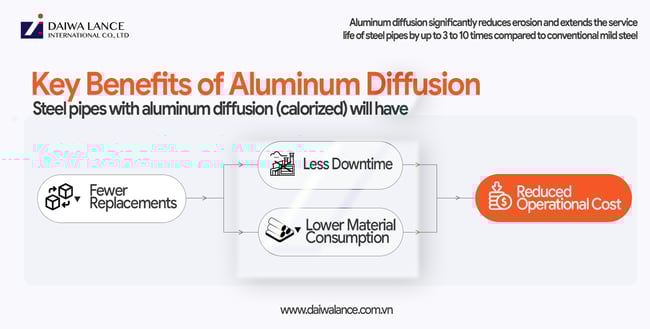
- Fewer replacements
- Less downtime
- Lower material consumption
- Reduced operational cost
Extreme Flame Testing
In burning tests (approximately 3,000°C flame exposure):
- Standard mild steel pipe failed after about 20 seconds
- Calorized Lance Pipe with Alumina protection lasted 151 seconds
That difference isn’t small — it’s transformational.
| Feature | Mild Steel | Daiwa Calorized Lance |
|
Melting Time (3,000°C) |
20 seconds | 151 seconds |
(Table: Performance Comparison Under Real Melting Conditions at Daiwa Lance)
Double Protection with Refractory Ceramic Coating
For even greater durability, Daiwa Calorized Lance Pipe, in addition to Alumina protection, is often combined with an internal and external refractory ceramic coating.
Here’s how they work together:
- Alumina layer: Protects at the molecular and chemical level
- Ceramic coating: Adds thermal insulation and extra physical shielding
It’s like wearing armor under a fire-resistant suit.
This dual-layer system gives Daiwa CA Lance exceptional performance in extreme metallurgical applications.
Final Takeaway
Alumina protection works like:
- A heat-resistant armor that stays solid up to 2,050°C
- A chemical shield that blocks oxygen and corrosive agents
- A built-in defense system formed through intelligent metallurgy
That’s the science behind Daiwa CA Lance’s ability to last up to 3~7 times longer than ordinary steel pipes.
Now, Are You Ready to Experience the Difference that Aluminum Diffusion Brings to Your Steel Pipe Products?
Just take your time to consider upgrading to smarter protection by discover more through the link below.

Daiwa Lance is a specialized manufacturer of high-performance oxygen lances, certified to ISO and JIS standards. Established in 1996 in Vietnam, Daiwa Lance has supplied oxygen lances to more than 55 countries worldwide, serving steel plants, foundries, and high-temperature industrial applications.
If you are looking for a reliable oxygen lance manufacturer with proven performance in EAF steelmaking and molten metal environments, contact us today for technical consultation and product selection support.