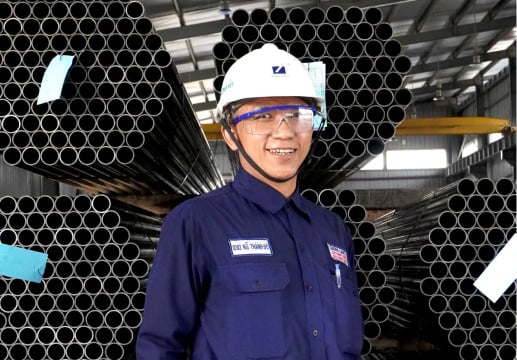
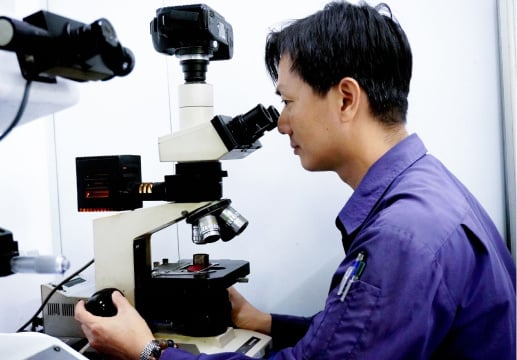
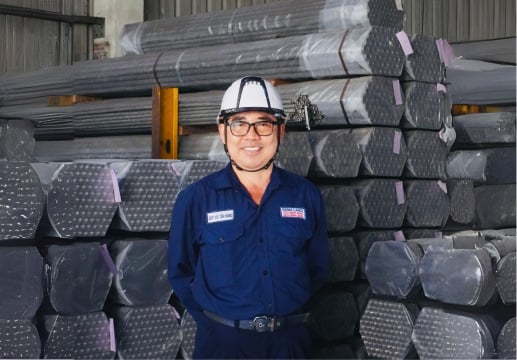
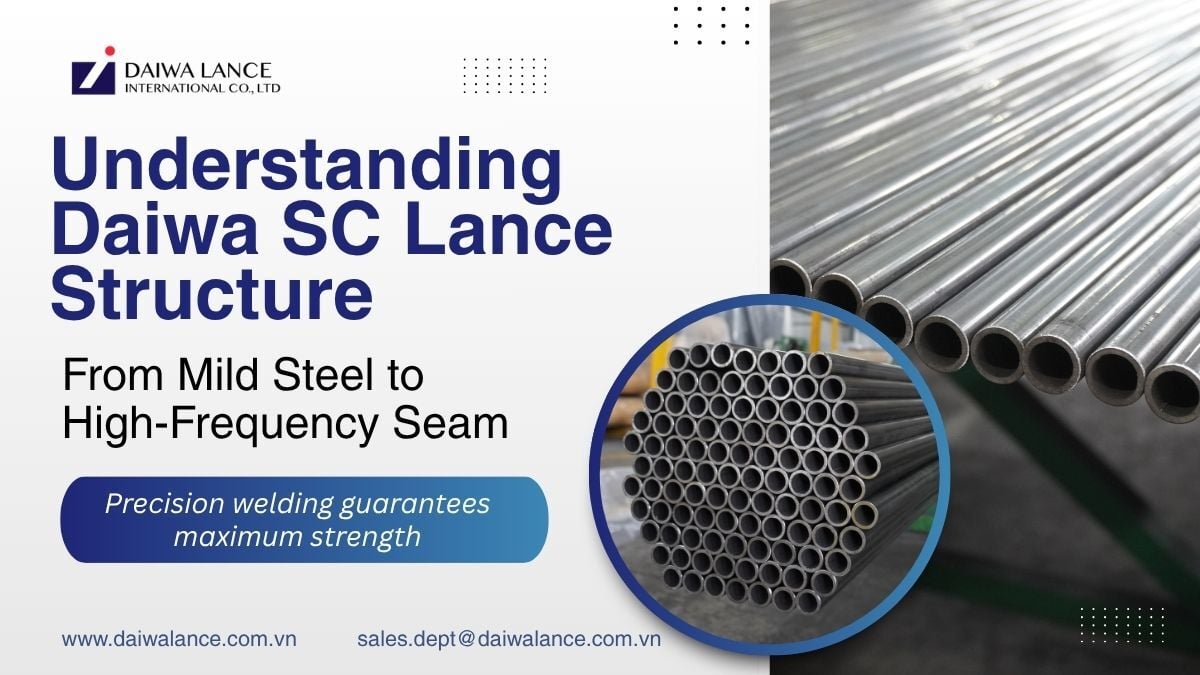
Daiwa SC Lance structure is designed to support stable oxygen flow, mechanical strength, and operational safety in oxygen lancing applications. Daiwa SC Lance features a mild steel base pipe, a hollow design, a high-frequency welded seam, and an oil-free, grease-free surface. Each component contributes to the overall performance and reliability of the lance pipe in demanding steelmaking environments.
This article explains the Daiwa SC Lance structure, from its materials and manufacturing process to quality inspection procedures and key design considerations.
What Are the Main Components of Daiwa SC Lance Structure?
To understand how an oxygen lance pipe performs in steelmaking operations, it is important to first understand Daiwa SC Lance structure. Daiwa SC Lance structure is designed to provide stable oxygen delivery, mechanical integrity, and operational safety for furnace-side applications. Its main components include:
- A mild steel oxygen lance pipe as the base material.
- A hollow pipe design for continuous oxygen flow.
- A Daiwa SC Lance high-frequency welded seam along the pipe body.
- An oil-free and grease-free finished surface.
- Quality inspection before shipment.
Together, these elements form the complete Daiwa SC Lance oxygen lance structure, supporting various oxygen lancing applications in steel mills, foundries, and smelting plants.
Mild Steel Base Pipe
One of the key features of Daiwa SC Lance structure is the use of a mild steel oxygen lance pipe as its base material. Mild steel is selected because it offers good formability and is well suited for manufacturing consumable oxygen lance pipes. It also provides the mechanical characteristics required for furnace-side operations.
For Daiwa SC Lance, the mild steel base pipe is manufactured under controlled production and quality management processes to help maintain consistency between production batches.
Why Is Mild Steel Used?
Material selection directly influences the overall oxygen lance pipe construction and long-term performance of an oxygen lance pipe. A mild steel oxygen lance pipe provides several practical advantages:
- Good formability during manufacturing.
- Compatibility with high-frequency welding technology.
- Consistent production quality.
- Suitability for oxygen lancing under high-temperature conditions.
These characteristics explain why mild steel is commonly used in the manufacturing of consumable oxygen lance pipes throughout the metallurgical industry.
Hollow Design for Stable Oxygen Flow
Another important part of Daiwa SC Lance structure is its oxygen lance pipe construction, which features a hollow internal cross-section. This design allows oxygen to flow continuously through the pipe, creating stable oxygen flow during oxygen lancing operations.
Depending on furnace requirements, the outside diameter (OD), inside diameter (ID), wall thickness, and overall pipe length can be selected to match specific operating conditions and lance holder configurations. The carefully designed oxygen lance pipe design also helps improve handling and installation efficiency during furnace-side work.
High-Frequency Welded Seam in Daiwa SC Lance Structure
A defining feature of Daiwa SC Lance structure is Daiwa SC Lance high-frequency welded seam. The welded seam is produced using high-frequency welding technology, which joins the steel strip into a continuous pipe body. After welding, the seam undergoes inspection before the product moves to the next manufacturing stage.
How Does High-Frequency Welding Work?
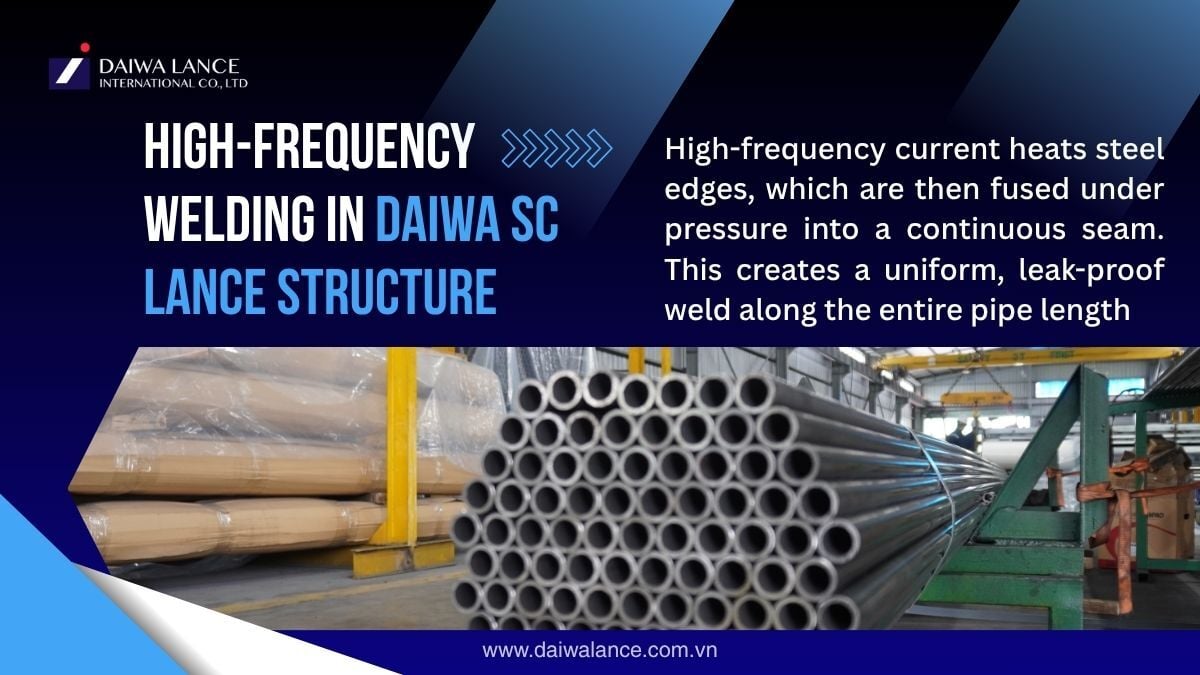
During the production of a high-frequency welded oxygen lance pipe, high-frequency electrical current heats the edges of the steel strip. When the required temperature is reached, pressure joins both edges together to create a continuous welded seam. This manufacturing method helps provide:
- Consistent weld formation.
- Reliable pipe sealing.
- Uniform weld continuity throughout the entire pipe length.
For Daiwa SC Lance structure, this welding process forms an essential part of the overall pipe construction.
Why Is the Welded Seam Important?
Within Daiwa SC Lance structure, the welded seam contributes to several important characteristics:
- Mechanical strength.
- Structural integrity.
- Oxygen containment during operation.
- Stable performance under high-temperature conditions.
After welding, the seam is inspected using an eddy current tested weld procedure. This non-destructive inspection method helps identify near-surface discontinuities without affecting the structure of the pipe itself. Combining high-frequency welding with Eddy Current Test (ECT) supports greater manufacturing consistency and weld quality verification.
Structure of a Self-Consuming Oxygen Lance Pipe
Besides its material and welded seam, Daiwa SC Lance structure also reflects the characteristics of a self-consuming oxygen lance pipe structure. Unlike reusable pipes, this type of oxygen lance pipe is designed to be gradually consumed during oxygen lancing operations, producing a high-temperature flame for applications such as tap hole opening, slag removal, and metal cutting.
Proper material selection, pipe geometry, and manufacturing processes all contribute to the overall Daiwa SC Lance oxygen lance structure, helping meet the operational requirements of modern metallurgical facilities.
Surface Finish in Daiwa SC Lance Structure
In addition to the base material and welded seam, the finished surface is another essential part of Daiwa SC Lance structure. After manufacturing, the pipe undergoes a surface treatment process to create an oil-free grease-free surface. This clean surface condition is intended for oxygen service applications commonly found in steel mills, foundries, and smelting plants.
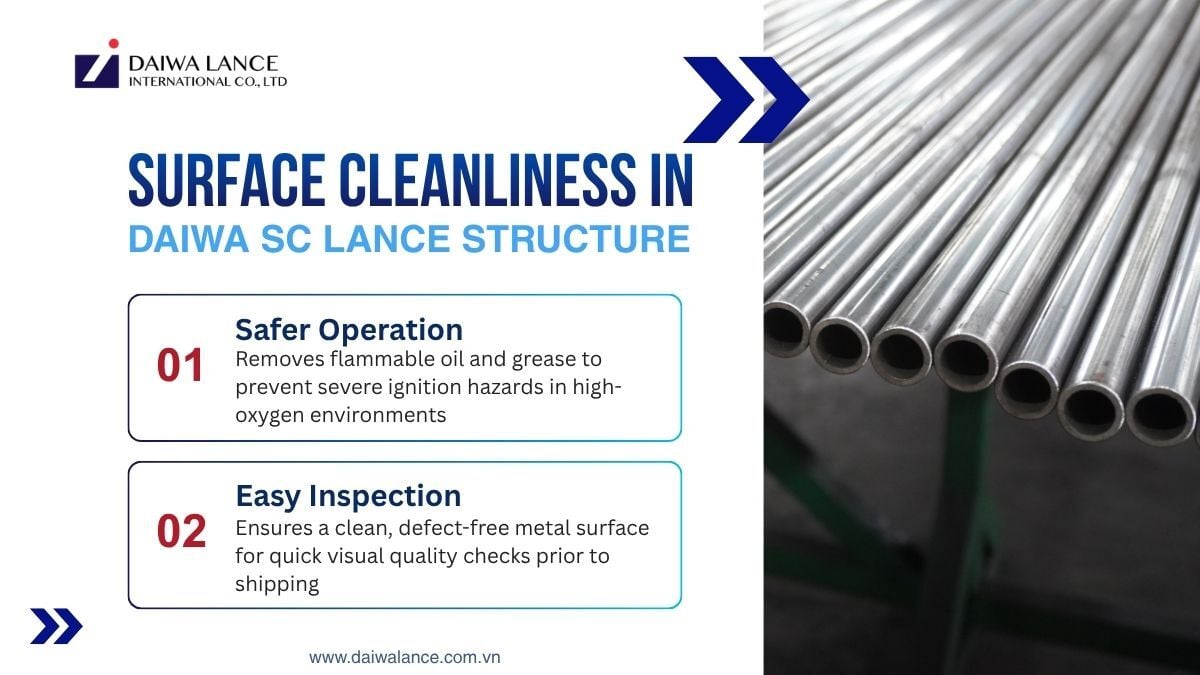
Removing residual oil and grease from the pipe surface helps reduce potential risks when the lance pipe is exposed to high-purity oxygen and high-temperature operating conditions. A clean surface also supports easier storage, transportation, and preparation before use.
Why Is a Clean Surface Part of the Pipe Structure?
In oxygen-rich environments, oil and grease residues may increase safety risks during operation. Therefore, surface treatment is not only a finishing process but also an important element of Daiwa SC Lance structure. An oil-free grease-free surface provides several practical benefits:
- Supports safer oxygen service applications.
- Helps reduce risks associated with residual oil or grease.
- Makes visual surface inspection easier.
- Improves product consistency before shipment.
For industrial users, surface cleanliness is one of the key considerations when selecting an oxygen lance pipe.
Quality Inspection After Manufacturing
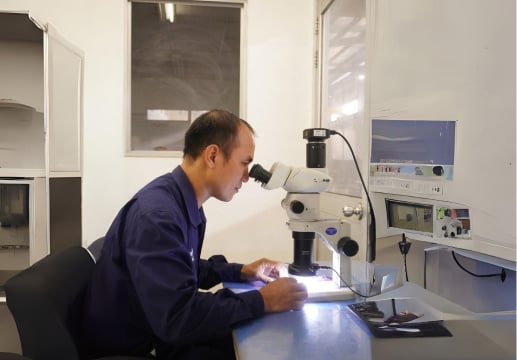
Once Daiwa SC Lance structure has been completed, every pipe proceeds through quality inspection before delivery. These inspection processes help verify manufacturing consistency and support quality control throughout production.
Eddy Current Test (ECT) for Weld Inspection
The welded seam is one of the most critical areas of Daiwa SC Lance structure. Following the high-frequency welding process, the seam is inspected using an eddy current tested weld procedure. Eddy Current Test (ECT) is a non-destructive inspection method that helps detect near-surface discontinuities without damaging the finished pipe.
Combining high-frequency welded oxygen lance pipe manufacturing with Eddy Current Test contributes to better weld verification and supports production consistency.

Inspection of Pipe Dimensions and Wall Thickness
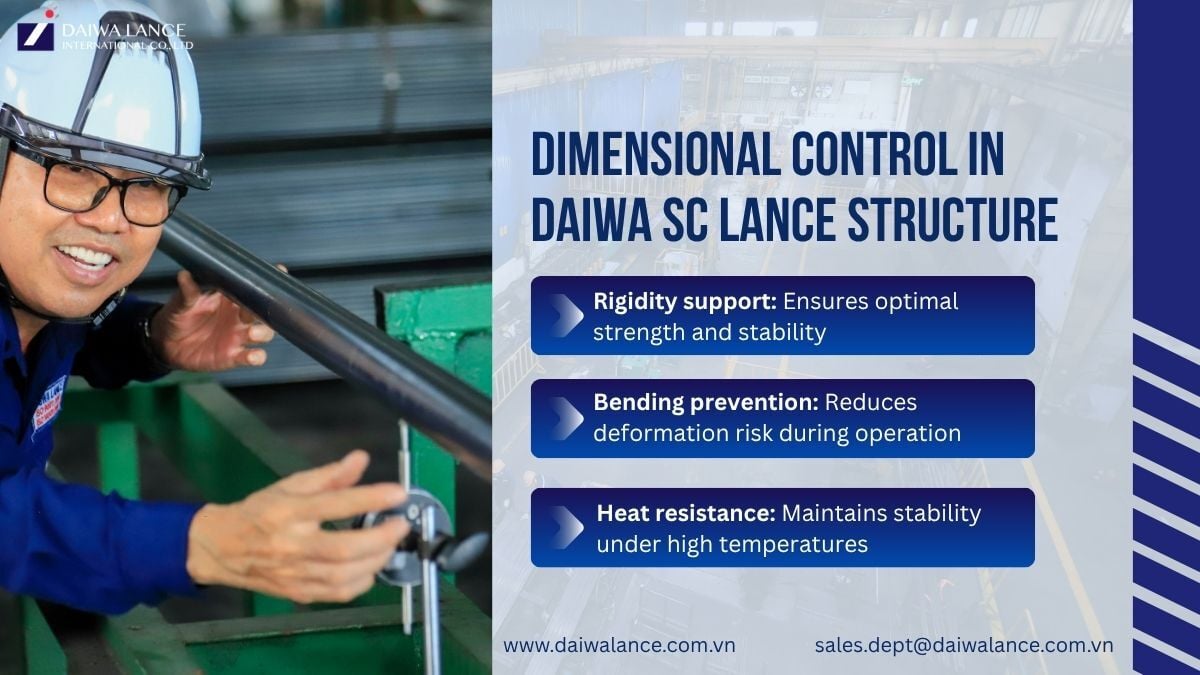
Besides weld inspection, dimensional verification is another important part of manufacturing Daiwa SC Lance structure. Particular attention is given to Daiwa SC Lance wall thickness, as wall thickness influences handling characteristics and structural rigidity.
Proper wall thickness helps:
- Improve pipe rigidity.
- Reduce the possibility of bending during operation.
- Support stable performance under high-temperature conditions.
Outside diameter (OD), inside diameter (ID), wall thickness, and overall length can also be selected according to specific furnace requirements.
Finished Surface Inspection
The finished oxygen lance pipe body is visually inspected before packaging. Typical inspection items include:
- Surface cleanliness.
- Overall surface condition.
- Product consistency.
- Compliance with oxygen service requirements.
This inspection represents the final manufacturing stage before shipment.
Structural Factors That Influence Product Quality and Safety
For steel manufacturers, selecting an oxygen lance pipe involves more than choosing the correct dimensions. The overall Daiwa SC Lance structure also plays an important role in operational reliability and safety. Several structural factors should be considered.
- Mild Steel Material - A mild steel oxygen lance pipe provides the foundation of the entire pipe structure while supporting efficient forming and welding during manufacturing.
- High-Frequency Welded Seam - Daiwa SC Lance high-frequency welded seam is manufactured using high-frequency welding technology and verified through Eddy Current Test to support weld integrity.
- Wall Thickness - Appropriate Daiwa SC Lance wall thickness helps improve rigidity, supports stable handling, and reduces the possibility of deformation during furnace-side work.
- Oil-Free and Grease-Free Surface - A clean oil-free grease-free surface helps reduce potential safety risks during oxygen service applications.
- Quality Management - Daiwa SC Lance is manufactured under Japanese Quality principles with strict production controls to ensure consistent performance and reliability. The product complies with internationally recognized standards, including ISO 9001, ISO 14001, and JIS (Japanese Industrial Standards). Backed by a global logistics network, Daiwa SC Lance also helps customers maintain a stable and reliable supply for continuous industrial operations.
Conclusion
Daiwa SC Lance structure combines a mild steel oxygen lance pipe, optimized oxygen lance pipe construction, a Daiwa SC Lance high-frequency welded seam, an oil-free grease-free surface, and comprehensive quality inspection to support oxygen lancing applications in the metallurgical industry.
Beyond its structural design, Daiwa SC Lance is manufactured following Japanese Quality principles and supported by ISO 9001, ISO 14001, and JIS management systems. Together with global logistics capability, these processes help provide consistent product quality and reliable international supply.
If you require further information about the Daiwa SC Lance, specifications, size options, or solutions tailored to your business's production process, please:
- Request a Quote – Get a quote on demand.
- Download Catalogue – Download the catalogue to view full specifications.
- Contact Us – Contact our technical team for advice on solutions and applications.
Frequently Asked Questions (FAQ)
What is Daiwa SC Lance structure?
Daiwa SC Lance structure consists of a mild steel oxygen lance pipe, a hollow internal design, a Daiwa SC Lance high-frequency welded seam, an oil-free grease-free surface, and quality inspection using Eddy Current Test (ECT).
Why is mild steel used?
A mild steel oxygen lance pipe offers good formability, compatibility with high-frequency welding, and suitability for manufacturing consumable oxygen lance pipes.
Why is the high-frequency welded seam important?
Daiwa SC Lance high-frequency welded seam joins the pipe body into a complete structure while supporting mechanical integrity and oxygen containment during operation.
Why is an oil-free surface important?
An oil-free grease-free surface helps reduce potential risks associated with residual oil or grease during oxygen service and contributes to safer furnace-side operation.
Why is Eddy Current Test used?
ECT helps inspect Daiwa SC Lance high-frequency welded seam by identifying near-surface discontinuities without damaging the finished product.
Related Blogs & Pages
-
Daiwa SC Lance product page: https://www.daiwalance.com.vn/products/daiwa-sc-lance
-
Catalogue page: https://www.daiwalance.com.vn/resource/daiwa-lance-catalogue
-
Contact page: https://www.daiwalance.com.vn/contact
-
What is Daiwa SC Lance? Metallurgical Self-Consuming Pipe Overview: https://www.daiwalance.com.vn/blog/what-is-daiwa-sc-lance
-
Key Benefits of Oil-Free Oxygen Lance Pipe: Why Daiwa SC Lance Matters in Metallurgical Operations: https://www.daiwalance.com.vn/blog/key-benefits-of-oil-free-oxygen-lance-pipe
-
Introduction about Oil-free and Grease-free Daiwa SC Lance: https://www.daiwalance.com.vn/blog/introduction-about-oil-free-and-grease-free-daiwa-sc-lance
-
Daiwa SC Lance | A Self-consuming Lancing Solution For Steel Manufacturing: https://www.daiwalance.com.vn/blog/self-consuming-sc-lance-for-steel-manufacturing
-
General Information about SC Lance: https://www.daiwalance.com.vn/blog/general-information-about-sc-lance
About Daiwa Lance
Established since 1997, Daiwa Lance has positioned ourselves as a pioneer in thermic cutting and oxygen lancing technology. Based in Ho Chi Minh City, Vietnam, we have been providing quality customer service and products with advanced Japanese technology.
We maintain the highest quality standards with ISO 9001:2015, ISO 14001:2015, and JIS G standards certifications. We have also expanded our reach globally, exporting to over 55 countries worldwide.
Visit us through our contact channels today: Email, WhatsApp, Contact Us form, or connect with us on Youtube, LinkedIn and Facebook.