Steel consumable supply chain risk is the exposure a mill carries when the items consumed on every heat - lance pipes, injection consumables, refractory components - depend on a single source, a single route or incomplete documentation.
It is managed by assessing supplier resilience, holding appropriate stock, and qualifying a second source before it is needed.
This article is written for procurement and purchasing managers, plant maintenance leads and operations teams responsible for keeping furnaces running. It sets out where consumable supply chains break, and how to evaluate a supplier against that risk.

The Challenge - A Stopped Lance Supply Stops the Furnace
Consumables are easy to underestimate because their unit value is small. Their operational value is not small at all.
A lance pipe costs a fraction of what a furnace campaign is worth. But a furnace cannot tap without a way to open the tap hole, and it cannot refine to grade without a way to inject oxygen and carbon.
The consequence of running out is disproportionate to the purchase value. That is exactly why consumables become a governance blind spot.
Capital equipment gets redundancy planning. Consumables often get a reorder point set years ago, against a demand pattern that no longer applies.
Where Does Steel Consumable Supply Chain Risk Come From?
Three failure modes account for most disruption, and they compound.
Single-source Dependency
A single qualified supplier is efficient until it is not. If that supplier faces a production interruption, an export restriction or a logistics failure, the mill has no alternative already approved.
Qualification takes time - trial quantities, dimensional verification, operator familiarisation - and that time is not available during a disruption.
Shipping Route Disruption
Consumables imported by sea depend on specific corridors. When a corridor is disrupted, vessels reroute, transit times extend and schedules become unreliable.
The cargo is not lost; it simply arrives after the campaign that needed it. When sourcing steel plant consumables against a fixed production plan, an unpredictable transit time is functionally similar to no supply at all.
Documentation and Customs Delays
The least visible failure mode is paperwork.
A consignment held at customs for an incomplete certificate of origin, a missing test certificate or a mismatched commercial invoice is stationary for reasons that have nothing to do with manufacturing or shipping.
For import-dependent buyers, documentation completeness can matter as much as transit time in determining whether goods clear on schedule.
How to Assess a Consumable Supplier's Resilience
Resilience is assessable before a disruption, if the right questions are asked at qualification stage rather than after an incident.
|
Assessment area |
What to request |
Why it matters |
|
Manufacturing location |
Named production site and country of origin |
Determines which trade rules, routes and corridors apply |
|
Export experience |
Number of export destinations served |
Indicates whether documentation processes are routine or exceptional |
|
Documentation |
Full export documentation set, certificates of origin, test certificates |
Incomplete paperwork stops goods at the border regardless of shipping performance |
|
Quality system |
ISO 9001 quality management certification |
Evidence that consistency is systematic, not incidental |
|
Environmental system |
ISO 14001 environmental management certification |
Increasingly required in tender prequalification |
|
Product standard |
JIS inspection |
Independent reference point for dimensional and material conformity |
|
Specification stability |
Published dimensional ranges |
Allows a second source to be qualified against the same specification |
Manufacturing Location and Export Experience
Country of origin determines which trade measures, tariff schedules and shipping corridors apply to a consignment - in other words, your supplier country risk.
Export experience is a practical proxy for documentation capability. A manufacturer that ships routinely to many destinations has already built the processes that a first-time exporter is still learning.
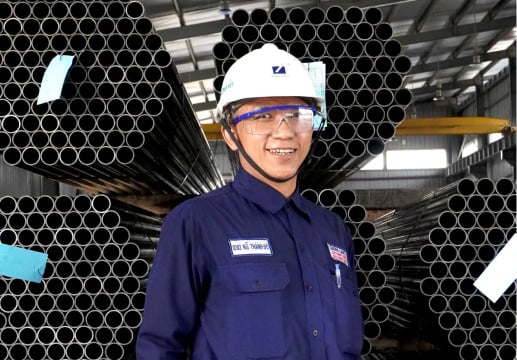
Daiwa lance products are manufactured in Tan Thuan Export Processing Zone, District 7, Ho Chi Minh City, Vietnam, and exported to more than 52 countries with full export documentation.

Certification and Documentation Completeness
Certification serves two functions in supply chain risk management:
- It provides assurance that quality is managed systematically.
- It provides the documentary evidence that tender processes and customs authorities require.
Daiwa lance products are manufactured under ISO 9001 quality management and ISO 14001 environmental management, and inspected to JIS.
Request the certificates at enquiry stage, not after award. A supplier who cannot produce them quickly at enquiry stage will not produce them quickly when a consignment is held.

Order Lead Time and Stocking Policy
Lead time is a planning input, not a promise.
Ask how it is calculated, what it assumes about production scheduling and shipping, and what happens when those assumptions fail. Then build a stocking policy that does not depend on the optimistic case.
A Practical Dual-sourcing Checklist
A dual sourcing strategy is only useful if the second source is qualified in advance. The following sequence is workable without disrupting current supply.
- Define the specification independently of the supplier. Record required outside diameter, wall thickness, length and connection type as your specification, not as a part number.
- Identify candidates whose published ranges cover it. For example, the Daiwa SC Lance covers 6A (1/8") to 20A (3/4"), OD 10.5-27.2 mm, wall 1.6-2.8 mm and length 1,000-6,000 mm.
- Request documentation before samples. Certificates, test evidence and export documentation reveal supplier maturity faster than a sample does.
- Trial on non-critical duty first. Prove handling, ignition behaviour and consumption on routine work before critical operations.
- Record operator feedback formally. Lance pipe supplier reliability includes how the product behaves in the operator's hands, not only whether it arrives.
- Keep the second source warm. A qualified supplier who has not received an order in three years is not a second source.

Safety In Use
Supply pressure is where safety standards quietly erode. When stock runs short, the temptation is to accept material that would normally be rejected.
Four requirements should never be traded against availability.
- Sound weld quality. The weld line on a Daiwa SC Lance is checked with eddy current testing equipment. A defective seam carrying oxygen pressure is a burst hazard in the operator's hands, regardless of how urgently the pipe was needed.
- Clean, oil-free and grease-free surface. Oil or grease in contact with oxygen is a fire and explosion hazard. Extended storage during a supply interruption makes clean, dry warehousing more important, not less.
- Uniform wall thickness. Even wall thickness is what allows a lance to resist bending and breaking while extended into a furnace.
- Rigorous quality control under ISO 9001. Certification is what makes consistency verifiable rather than assumed.
Product-specific safety continues to apply under all supply conditions:
- A Daiwa SC Lance is ignited only with an oxyacetylene torch, never a striker, and the lit tip is red hot.
- A Daiwa SC Lance cannot cut every material and cannot be used underwater.
- The ceramic coating on a Daiwa CC Lance provides an insulating barrier against electric shock, but supplements rather than replaces electrical isolation procedure.
- Personal protective equipment and adequate ventilation are required for heat and fumes.

Common Mistakes to Avoid
- Treating consumables as a low-value category exempt from supply risk governance.
- Holding a reorder point set against an outdated production pattern.
- Qualifying a second source only after the first has failed.
- Accepting product with visible weld or surface defects because stock is short.
- Recording a supplier as approved without holding their current certificates on file.
- Writing specifications as supplier part numbers, which makes substitution impossible.
Manufacturing Standards Behind the Quality
Daiwa lance products are manufactured in Tan Thuan Export Processing Zone, District 7, Ho Chi Minh City, Vietnam, using Japanese steel-tube manufacturing technology and engineering discipline, backed by JIS.
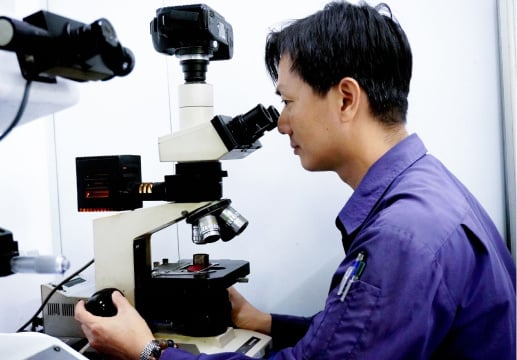
Raw material is quality carbon steel. Quality management follows ISO 9001 and environmental management follows ISO 14001. Daiwa CC Lance products are inspected under JIS together with ISO 9001.
Exports reach more than 52 countries with full export documentation - relevant to any buyer whose primary exposure is documentation-related rather than manufacturing-related.
Conclusion
Steel consumable supply chain risk is manageable, but only in advance:
- Define specifications independently of any supplier.
- Qualify a second source while the first is performing.
- Request certification and export documentation at enquiry stage.
- Hold stock against the pessimistic transit case rather than the optimistic one.
None of these steps are expensive. All of them are difficult to complete once a disruption has already started.
If your plant needs a supply of lance pipes with clear published specifications and full certification, Daiwa Lance can advise on solutions suited to your operating conditions and contingency plans.
FAQs
Why are consumables a supply chain blind spot?
Because unit value is low and operational dependency is high. Capital equipment attracts redundancy planning and formal risk review; consumables are often governed by a reorder point set years earlier. The mismatch only becomes visible during a disruption, when the cost of a stockout is measured in furnace downtime rather than in purchase value.
What documentation should be requested at enquiry stage?
Certificates of origin, quality and environmental management certificates, product inspection evidence, and a description of the full export documentation set provided with shipments. Requesting these at enquiry rather than after award reveals how quickly a supplier can produce paperwork under pressure - the same capability needed when a consignment is held at customs.
How many countries does Daiwa Lance export lance products to?
Daiwa exports to more than 52 countries with full export documentation. The products are manufactured in Tan Thuan Export Processing Zone, District 7, Ho Chi Minh City, Vietnam. For buyers whose main exposure is customs and documentation rather than manufacturing capacity, export experience across many destinations is a meaningful indicator.
What certifications apply to Daiwa lance products?
Daiwa lance products are manufactured under ISO 9001 quality management and ISO 14001 environmental management, and inspected to JIS. Daiwa CC Lance products are inspected under JIS together with ISO 9001. Buyers requiring certification evidence for tender prequalification should request current copies at enquiry stage.
How should a specification be written to allow dual sourcing?
Write it as engineering requirements, not as a supplier part number. State outside diameter, wall thickness, length, connection type and any inspection requirement such as eddy current testing of the weld line. A specification written this way can be quoted by more than one manufacturer and compared on a common basis.
Related Blogs & Pages
- Website: https://www.daiwalance.com.vn/
- Catalogue page: https://www.daiwalance.com.vn/catalogue
- Contact page: https://www.daiwalance.com.vn/contact
- Daiwa SC Lance product page: https://www.daiwalance.com.vn/products/daiwa-sc-lance
- Daiwa CC Lance product page: https://www.daiwalance.com.vn/products/daiwa-cc-lance
- 4 Benefits You Could Expect in Daiwa SC Lance: https://www.daiwalance.com.vn/blog/4-benefits-you-could-expect-in-daiwa-sc-lance
- Daiwa SC Lance | A Self-consuming Lancing Solution For Steel Manufacturing: https://www.daiwalance.com.vn/blog/self-consuming-sc-lance-for-steel-manufacturing
- A Comprehensive Guide to Understanding CC Lance Pipe: https://www.daiwalance.com.vn/blog/a-comprehensive-guide-to-understanding-cc-lance-pipe
- More About Structure and Size of CC Lance Pipe: https://www.daiwalance.com.vn/blog/more-about-structure-and-size-of-cc-lance-pipe
- Key Applications of Ceramic Coated Lance Pipe (CC Lance): https://www.daiwalance.com.vn/blog/key-applications-of-ceramic-coated-lance-pipe-cc-lance
About Daiwa Lance
Established since 1997, Daiwa Lance has positioned ourselves as a pioneer in thermic cutting and oxygen lancing technology. Based in Ho Chi Minh City, Vietnam, we have been providing quality customer service and products with advanced Japanese technology.
We maintain the highest quality standards with ISO 9001:2015, ISO 14001:2015, and JIS G standards certifications. We have also expanded our reach globally, exporting to over 55 countries worldwide.
Visit us through our contact channels today: Email, WhatsApp, Contact Us form, or connect with us on Youtube, LinkedIn and Facebook.