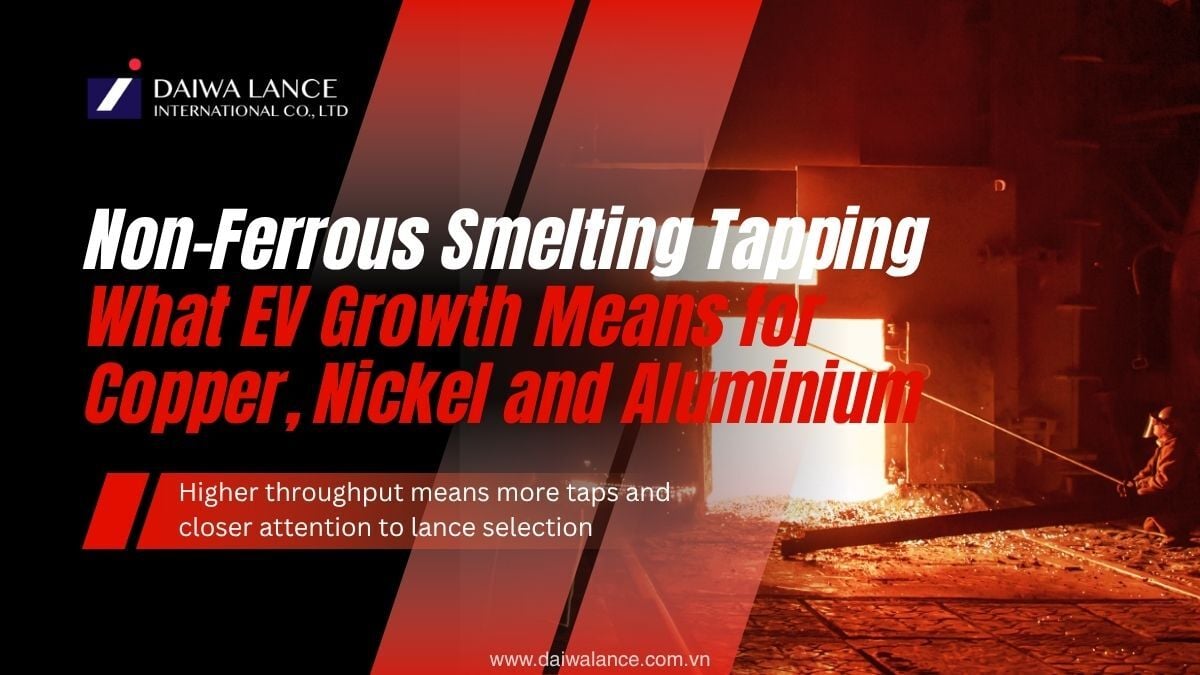
Non-ferrous smelting tapping is the operation of opening a furnace tap hole to release molten matte or metal in a copper, nickel or aluminium plant.
As electric vehicle production lifts demand for these metals, smelters run more campaigns per year. Every additional tap is an additional tap hole that has to be opened reliably and safely.
In non-ferrous smelting, opening a matte tap hole calls for an oxygen lance suited to the job. Read on to explore what a matte tap hole is, how an oxygen lance opens it, and what to consider when sizing a lance for the duty.
Why EV Demand Reaches Back to the Smelter?
An electric vehicle carries substantially more copper than a comparable combustion vehicle, and its battery and structure draw on nickel and aluminium. Charging infrastructure adds further copper demand in cabling and distribution equipment.
EV battery metals demand therefore lands not on car plants, but on mines and smelters several steps upstream.
Copper, Nickel and Aluminium in the EV Supply Chain
- Copper - motor windings, wiring harnesses, busbars and charging equipment.
- Nickel - several battery cathode chemistries.
- Aluminium - body structures, battery enclosures and heat management components.
None of these arrive as finished metal. All of them pass through smelting and refining operations that have to run to schedule.

What Rising Throughput Does to Furnace Scheduling?
When a smelter is asked to increase output, the usual answer is more campaigns and shorter turnarounds rather than a new furnace.
That compresses the time available for every routine operation, including tapping. A tap hole that takes twenty minutes longer than planned is no longer a nuisance; it is a scheduling problem that propagates through the shift.
The Challenge - Higher Throughput, The Same Tap Hole Problem
A tap hole is deliberately closed between taps. It is plugged with clay or refractory material that hardens in the heat.
When the furnace is ready to tap, that plug has to be removed - and by then it has hardened into exactly the material it was designed to become.
Mechanical drilling is common, but drills bind, break and struggle where the plug has partially fused with solidified metal. That is where a thermal method is used instead.
How Does Non-ferrous Smelting Tapping Actually Work?
What a Matte Tap Hole Is?
In copper smelting and nickel smelting, the furnace produces matte - a molten mixture of metal sulphides that separates from the slag and is drawn off for further processing.
The opening through which it is drawn is the matte tap hole. Opening a matte tap hole in copper and non-ferrous smelting furnaces is a listed application for Daiwa SC Lance.
Aluminium smelter operations work differently, producing molten aluminium by electrolysis rather than matte by smelting.

Where an Oxygen Lance is Used?
Daiwa SC Lance is a self-consuming oxygen lance. It has a hollow cross-section that carries oxygen to the working tip, and the pipe consumes itself as it burns, generating temperatures up to 3,000 °C.
No external fuel gas is supplied during operation - oxygen only.
That temperature is what allows the lance to burn through a hardened plug, through solidified matte and through accumulated deposits, rather than trying to cut them mechanically.

Selecting Lance Size and Length for Non-ferrous Duty
Daiwa SC Lance is supplied across a defined size range. Selection is driven by three things: the depth of the tap hole passage, the access available at the furnace, and the working distance the operator must maintain.
|
Parameter |
Published range |
|
Nominal size |
6A (1/8") to 20A (3/4") |
|
Outside diameter |
10.5-27.2 mm |
|
Wall thickness |
1.6-2.8 mm |
|
Length |
1,000-6,000 mm |
|
Working temperature at tip |
up to 3,000 °C |
|
Connection types |
Type-2, Type-2ST, Type-6, SE, PE, QC |
For confined access, a smaller-diameter option exists. Daiwa Mini Lance is cold-drawn at an outside diameter of 6–10 mm with customisable wall thickness, supplied either stiff or bendable depending on the work.
Other sizes can be produced on request.

Matching Length to Standoff Distance
Length is a safety parameter before it is a process parameter. The operator has to stand far enough from the tap hole to be clear of the stream once it runs.
Two decisions follow from that, and both belong in the risk assessment rather than in an afterthought:
- Select a lance long enough to maintain the required standoff.
- Specify a connection type that allows pipes to be joined where a single length is insufficient.
How Non-ferrous Duty Differs from Steel Tapping
The mechanics are similar; the surrounding conditions are not.
Sulphide-bearing materials introduce fume considerations that differ from a steel shop, and the physical layout of a smelter tapping bay often gives less room than an EAF tapping floor.
Ventilation planning and standoff distance therefore deserve specific attention in non-ferrous smelting tapping practice, rather than being carried over from steel practice.
Safety In Use
Operator safety is the first specification. Five points apply whenever a lance enters service.
- Sound weld quality. The weld line on a Daiwa SC Lance is checked with eddy current testing equipment. A defective seam carrying oxygen pressure is a burst hazard in the operator's hands.
- Clean, oil-free and grease-free surface. Oil or grease in contact with oxygen is a fire and explosion hazard. Lances must arrive clean and be stored so they stay clean and dry.
- Uniform wall thickness. Even wall thickness across the 1.6-2.8 mm range is what allows a lance extended toward a tap hole to resist bending and breaking.
- Correct ignition. A Daiwa SC Lance is ignited only with an oxyacetylene torch. A striker must never be used. Once lit, the tip is red hot and must be treated as an active heat source at all times.
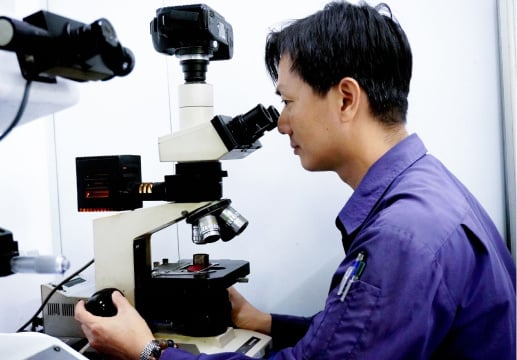
- Rigorous quality control. Daiwa Lance products are manufactured under ISO 9001 quality management and ISO 14001 environmental management, and inspected to JIS.
Personal protective equipment rated for radiant heat and molten splash is required, together with ventilation adequate for the fume generated by the material being cut.
Common Mistakes to Avoid
- Selecting lance length from stock availability rather than from required standoff distance.
- Carrying steel-shop ventilation assumptions into a sulphide-bearing environment.
- Using a striker, or any ignition method other than an oxyacetylene torch.
- Storing lance pipes where oil, grease or moisture can reach them.
- Assuming a thermal lance will cut materials outside its documented range.
- Ordering without confirming the connection type against the lance holder already in use.
Manufacturing standards behind the quality
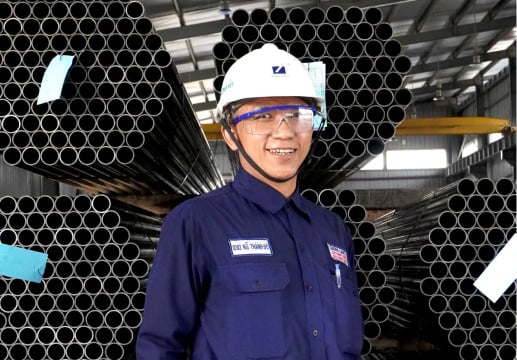
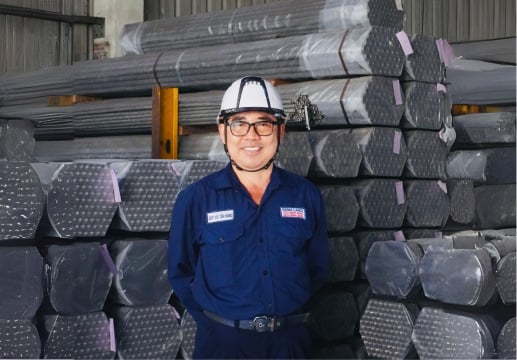
Daiwa Lance products are manufactured in Tan Thuan Export Processing Zone, District 7, Ho Chi Minh City, Vietnam, using Japanese steel-tube manufacturing technology and engineering discipline, backed by JIS.
Raw material is quality carbon steel. Finished pipe is produced under ISO 9001 quality management with ISO 14001 environmental management.
The company exports to more than 52 countries with full export documentation. For smelters that import consumables against a campaign schedule, complete documentation is frequently the difference between arriving on time and arriving after the furnace needed it.
Conclusion
EV growth is felt at the smelter as schedule pressure long before it is felt as capital investment.
Non-ferrous smelting tapping is one of the routine operations that absorbs that pressure, and the reliability of the lance used to open the tap hole affects whether a campaign holds its schedule.
Three practical takeaways:
- Specify size against tap hole depth.
- Specify length against standoff distance.
- Treat weld integrity and surface cleanliness as purchase requirements, not assumptions.
Looking for an oxygen lance for tap hole opening at a copper or nickel smelter? Daiwa Lance can help you confirm the right size, length and connection type for your tap hole depth, workspace constraints and operating conditions.
FAQs
What is a matte tap hole?
A matte tap hole is the opening through which molten matte - a mixture of metal sulphides produced in copper and nickel smelting - is drawn from the furnace. It is plugged between taps and must be reopened for each tap. Opening matte tap holes is a listed application for the Daiwa SC Lance.
What temperature does a Daiwa SC Lance reach?
A Daiwa SC Lance generates temperatures up to 3,000 °C at the working tip. It is self-consuming: the pipe burns itself using oxygen only, with no external fuel gas supplied during operation. That temperature is what allows it to burn through hardened tap hole plugs and solidified material.
How is a self-consuming oxygen lance ignited?
Only with an oxyacetylene torch. Do not use ignition devices. Once ignition is established, the tip is red hot and remains an active heat source until the oxygen supply is closed and the lance is fully consumed or extinguished under controlled conditions.
What sizes are available for tap hole work?
The Daiwa SC Lance is supplied from 6A (1/8") to 20A (3/4"), with outside diameters of 10.5-27.2 mm, wall thickness 1.6-2.8 mm and lengths of 1,000-6,000 mm. For confined access, the Daiwa Mini Lance is cold-drawn at an outside diameter of 6-10 mm with customisable wall thickness, stiff or bendable. Other sizes can be produced on request.
Can an oxygen lance be used on any furnace material?
No. A self-consuming oxygen lance cannot cut every material, and it cannot be used underwater. Its documented applications include: tap holes on electric furnaces (including EBT tapping), blast furnace iron and slag notches, matte tap holes in copper and non-ferrous smelting, deposit metal removal from converters and electric furnaces, ladle nozzle and tundish cleaning, removal of metal and slag stuck to mixer cars, slag removal from ingot walls, and cutting ferrous materials.
Related Blogs & Pages
- Website: https://www.daiwalance.com.vn/
- Catalogue page: https://www.daiwalance.com.vn/resource/daiwa-sc-lance
- Contact page: https://www.daiwalance.com.vn/contact
- Daiwa SC Lance product page: https://www.daiwalance.com.vn/products/daiwa-sc-lance
- 4 Benefits You Could Expect in Daiwa SC Lance: https://www.daiwalance.com.vn/blog/4-benefits-you-could-expect-in-daiwa-sc-lance
- Daiwa SC Lance | A Self-consuming Lancing Solution For Steel Manufacturing: https://www.daiwalance.com.vn/blog/self-consuming-sc-lance-for-steel-manufacturing
- How to Quickly Connect Oxygen Lance Pipes? | Daiwa SC Lance: https://www.daiwalance.com.vn/blog/how-to-quickly-connect-oxygen-lance-pipes-daiwa-sc-lance
- Expert Handling Techniques to Protect SC Lance from Devanning Mishaps: https://www.daiwalance.com.vn/blog/expert-handling-techniques-to-protect-sc-lance-from-devanning-mishaps
- Prevent Fire Accidents When Blowing Oxygen with Daiwa SC Lance: https://www.daiwalance.com.vn/blog/prevent-fire-accidents-when-blowing-oxygen-with-daiwa-sc-lance
About Daiwa Lance
Established since 1997, Daiwa Lance has positioned ourselves as a pioneer in thermic cutting and oxygen lancing technology. Based in Ho Chi Minh City, Vietnam, we have been providing quality customer service and products with advanced Japanese technology.
We maintain the highest quality standards with ISO 9001:2015, ISO 14001:2015, and JIS G standards certifications. We have also expanded our reach globally, exporting to over 55 countries worldwide.
Visit us through our contact channels today: Email, WhatsApp, Contact Us form, or connect with us on Youtube, LinkedIn and Facebook.