The green steel EAF transition is the shift from blast furnace routes to scrap-based electric arc furnace steelmaking in order to lower carbon intensity. For plant teams it changes consumable demand: more frequent tap hole opening, more carbon and lime injection, and closer attention to lance quality and operator safety.
When a mill commits to an EAF-led production plan, the change reaches the purchase orders, the furnace settings and the daily work at the tap hole at the same time. This article explains what actually changes at the furnace, which consumable duties grow in volume, and how to specify lance pipes for the new load.
The Challenge: A Decarbonisation Decision Lands on The Shop Floor
Decarbonisation is usually announced as a corporate commitment. It arrives at the furnace as something far more concrete - a different melting route, a different scrap mix, and a different rhythm of work.
Where a blast furnace supplies a steady stream of hot metal, an electric arc furnace works in discrete heats. Each heat has its own charge, its own melt-in, its own refining window and its own tap. The consumables that support those steps are therefore consumed on a per-heat basis, and the number of heats per week is what drives demand.
Procurement teams that budgeted lance pipes against a blast furnace–based tonnage figure often find their consumption forecast is simply the wrong shape. Maintenance leads find that tasks which used to be occasional - clearing a blocked tap hole, removing deposit metal - are now part of a routine cycle.
What Does the Green Steel EAF Transition Actually Mean?
In practice, "green steel" is used to describe steel produced with lower carbon intensity than the conventional blast furnace–basic oxygen route. The most widely deployed path today is scrap-based steelmaking in an electric arc furnace, because the furnace melts material that has already been reduced once.
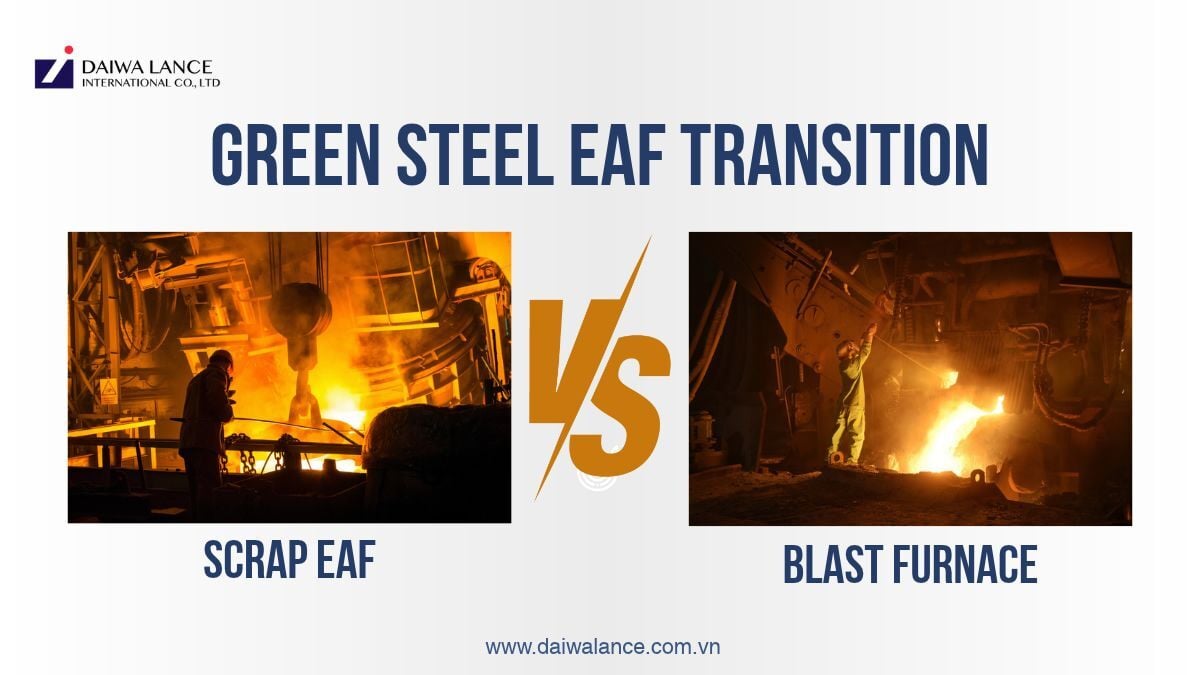
Scrap-based EAF versus Blast Furnace Route
The two routes differ in where the energy and the chemistry come from. A blast furnace reduces iron ore using coke. An electric arc furnace melts scrap using electrical energy delivered through graphite electrodes, then adjusts chemistry through injection and slag practice during the refining window.
That difference matters for consumables because injection work moves from a supporting role to a central one. Oxygen, carbon and lime are the levers an EAF operator uses to reach grade, and they are all delivered through lance pipes.
How Does Injection Practice Change in an EAF-led mill?
Three duties grow in both frequency and importance during electric arc furnace decarbonisation.
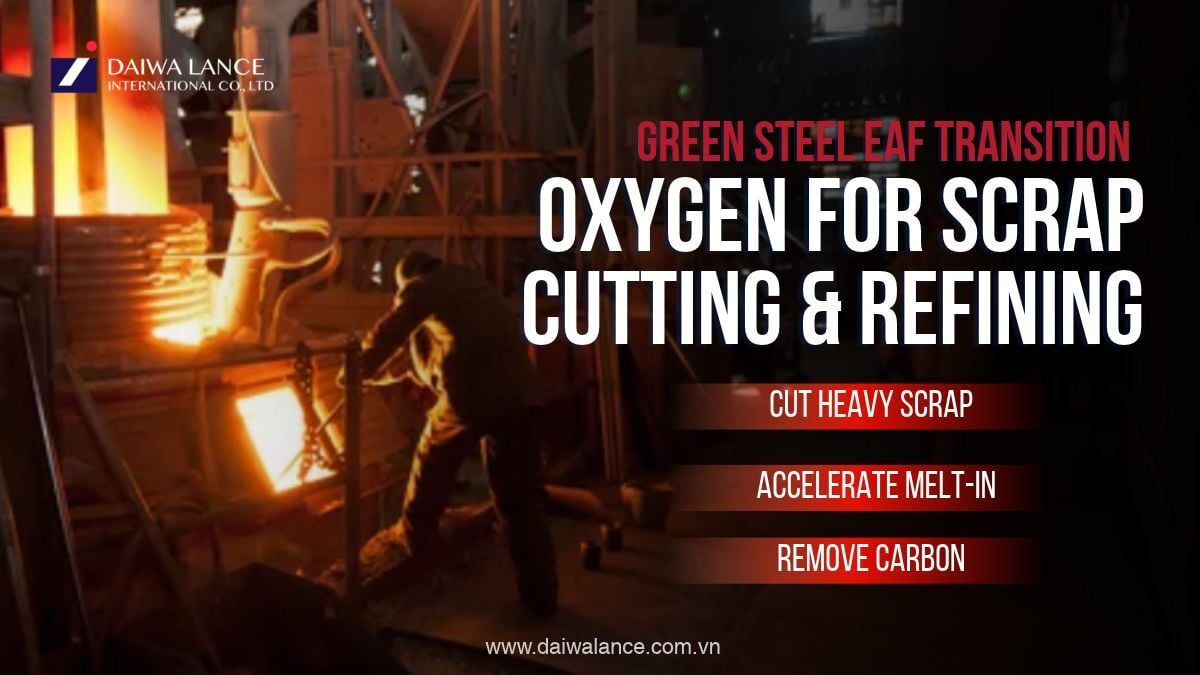
Oxygen for scrap cutting and refining
Oxygen is blown into the bath to cut heavy scrap, accelerate melt-in and remove carbon during refining. In an EAF-led plant, this duty is repeated across most heats, making lance durability an important factor in consumable efficiency.
Daiwa CA Lance (Daiwa Calorized Lance Pipe) is the high-performance choice for this demanding application. It combines a calorized aluminium-iron layer with refractory ceramic coatings on both the inside and outside surfaces. This layered protection supports a stated service life of 3–10 times that of mild steel lance pipe, compared with 3–5 times for Daiwa CC Lance (Daiwa Ceramic Coated Lance Pipe). CA Lance’s greater service-life potential can help reduce lance consumption and replacement frequency during repeated oxygen-blowing operations, with actual performance depending on operating conditions.
Daiwa CC Lance uses a mild steel core with ceramic coatings inside and out to resist heat, corrosion and oxidation. It remains a lower-cost alternative, while the Daiwa CA Lance is the preferred option when longer service life and reduced replacement frequency are the priorities.
Carbon injection and slag chemistry
Carbon powder and lime are injected to adjust chemistry and to condition the slag. This is how an operator moves a heat onto grade. Because grade adjustment is chemistry-driven rather than charge-driven, EAF plants tend to run more injection cycles than a comparable blast furnace-converter shop.
Both Daiwa CA Lance and Daiwa CC Lance are used for carbon and lime injection. Plants that run long injection cycles on every heat get more from Daiwa CA Lance, because fewer pipe changes mean fewer interruptions at the slag door.
More frequent tap hole opening
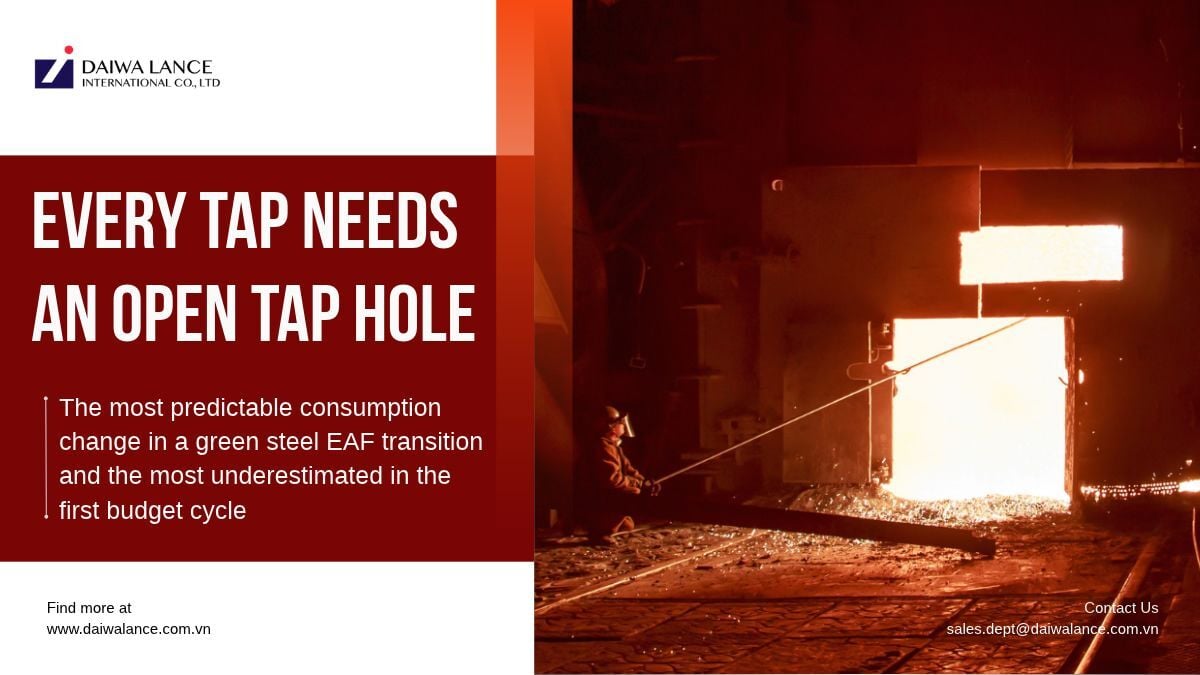
Every heat ends with a tap, and every tap needs an open tap hole. Filler sand sinters in the heat and blocks the passage, so the hole is opened with a self-consuming oxygen lance. The Daiwa SC Lance (Oxygen Lance Pipe) burns itself using oxygen only, reaching up to 3,000 °C at the working tip, which is what allows it to burn through sintered filler and solidified metal.
More heats means more taps, and more taps means more lance pipe consumed. This is the single most predictable consumption change in a green steel EAF transition, and it is the one most often underestimated in the first budget cycle.
What This Means for Consumable Selection?
The table below maps the duties that grow under an EAF-led plan to the Daiwa product built for each one.
|
Duty in an EAF-led plant |
Daiwa Lance Product |
Specifications |
|
Opening tap holes, EBT tapping |
Daiwa SC Lance |
・Standard & Mini sizes, OD 6.0-27.2 mm, wall 1.0-2.8 mm, length 1,000-6,000 mm |
|
Carbon and lime injection |
Daiwa CC Lance |
・Sizes 1/4" to 2", wall thickness 2.0-4.0 mm, OD 13.8-60.5 mm, length 2.75-5.5 m (2.0-6.0 m for 2" size) |
|
Oxygen injection for scrap cutting and refining |
Daiwa CA Lance |
・Sizes 1/4" to 2", wall thickness 2.0-4.0 mm, OD 13.8-60.5 mm, length 2.75-5.5 m (2.0-6.0 m for 2" size) |
|
Ladle stirring during secondary refining |
Daiwa Argon Stirring Lance |
・Core pipe OD 48.6-60.5 mm (wall 3.6-14.2 mm), total outer diameter 200-250 mm; total lance length 5,500-7,550 mm |
Where a Calorized Lance fits?
Daiwa CA Lance is a lance pipe for oxygen blowing and injection in the EAF. The mild steel pipe is calorized on both the inner and outer surfaces, forming an aluminium-iron alloy layer, and then receives a refractory ceramic coating inside and out.
At high temperature the calorized layer forms an alumina film that resists heat, severe oxidation, sulfuration and vanadium attack. Daiwa Lance's test data for the calorized pipe cover three temperature points: 2,050 °C, the melting time of the alumina oxide film layer; 1,270 °C, the coating adhesion test (disintegration); and 3,000 °C, the melting time test (perforation).
What Daiwa CA Lance Offers That Daiwa CC Lance Does Not
- Protection in the steel itself. The calorized aluminium-iron layer sits under the ceramic coating, so the pipe keeps resisting oxidation where the coating has worn or chipped.
- Longer service life. Up to 3-10 times that of mild steel lance pipe, against 3-5 times for the Daiwa CC Lance.
- Resistance to sulfuration and vanadium attack. The alumina film formed at high temperature adds chemical resistance that a ceramic coating alone does not provide.
- Fewer lance changes per heat. Longer life means less furnace time lost to change-outs, which often outweighs the higher price per pipe when cost is counted per heat.
Where a ceramic-coated lance fits?
The ceramic coating on a Daiwa CC Lance serves two purposes at once. It shields the steel core from heat, corrosion and oxidation, which supports service life. It also acts as an insulating barrier, which matters when an operator is working within reach of energised electrodes. Its price per pipe is lower than that of the Daiwa CA Lance, which makes it the practical alternative where budget is the deciding factor and blowing cycles are moderate.
Where a self-consuming oxygen lance fits?
Daiwa SC Lance is consumed as it works. Its hollow cross-section carries oxygen to the tip, where the pipe itself burns. Beyond tap hole opening it is used on blast furnace iron and slag notches, on matte tap holes in copper and non-ferrous smelting, and for clearing ladle nozzles, tundish build-up and deposit metal.
Common Mistakes to Avoid
- Budgeting lance consumption against tonnage instead of heat count.
- Assuming a lance specified for one duty suits another; oxygen injection and tap hole opening call for different products.
- Storing lance pipes where oil, grease or moisture can reach them.
- Treating a coating as a substitute for electrical isolation procedure.
- Comparing lance pipes on price per pipe alone. For long oxygen blowing and injection cycles, compare cost per heat: a Daiwa CA Lance that lasts longer can need fewer pipes and fewer changes than a lower-priced option.
Conclusion
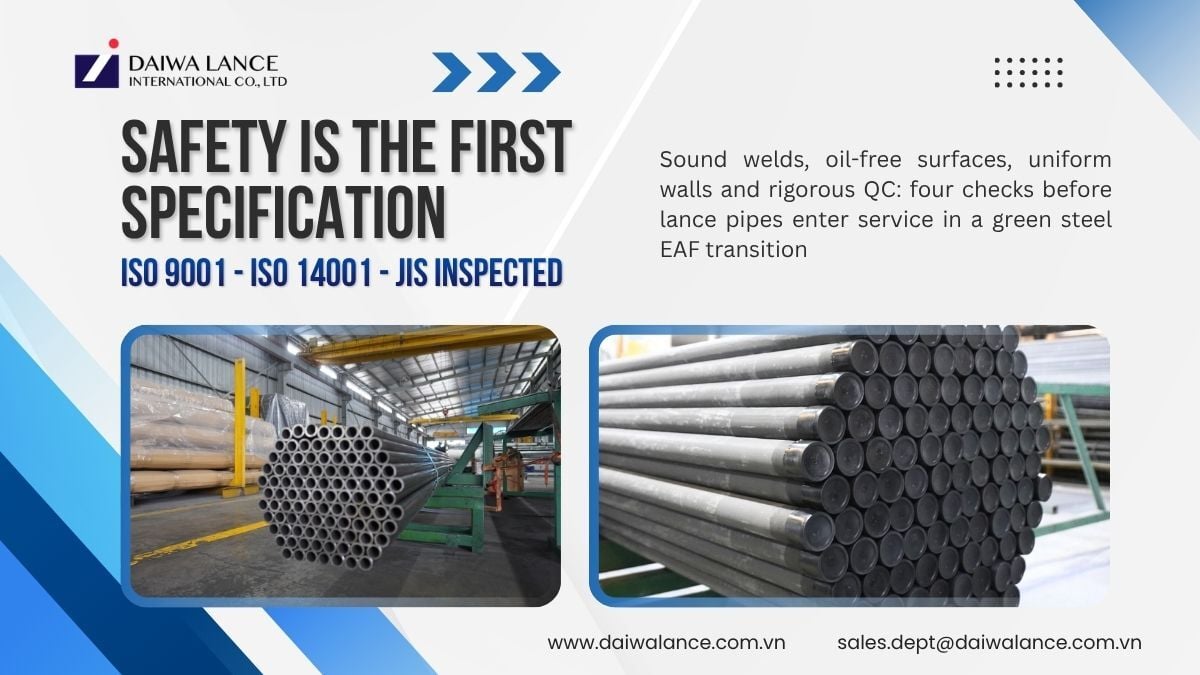
An EAF-led production plan changes the shape of consumable demand before it changes anything else. Plan lance consumption against heat count, specify against furnace configuration, and make weld integrity, surface cleanliness and wall uniformity part of the purchase specification.
If your plant is transitioning to an electric arc furnace (EAF) process, do not wait for production volumes to rise before reviewing your consumables. Start by analyzing heat cycles, furnace configurations, and specific blowing stages to accurately determine the correct type, size, and consumption rates for blowing pipes.
Contact Daiwa Lance to discuss specifications for oxygen blowing pipes and consumable pipes, as well as solutions tailored to your plant's actual operating conditions. Our technical team can assist in comparing current parameters, establishing procurement specifications, and helping your purchasing department standardize requirements right from the initial documentation stage. For oxygen blowing and injection duty, ask for a quotation on Daiwa CA Lance alongside the Daiwa CC Lance, so the two can be compared on cost per heat rather than price per pipe.
FAQs
Does An Electric Arc Furnace Consume More Lance Pipe Than A Blast Furnace Route?
It consumes lance pipe on a different basis. An EAF works in discrete heats, and each heat requires a tap hole to be opened plus injection work during refining. Consumption therefore tracks heat count rather than annual tonnage. Plants moving to an EAF-led plan should rebuild their consumption forecast around the number of heats scheduled per week.
What Temperature Does A Daiwa SC Lance Reach?
A Daiwa SC Lance reaches temperatures up to 3,000 °C at the working tip. It is self-consuming: it burns itself using oxygen only, with no external fuel gas supplied during operation. That temperature range is what allows it to burn through sintered tap hole filler, solidified metal and slag deposits.
Should A Plant Choose Daiwa CA Lance Or Daiwa CC Lance For Oxygen Injection?
For most EAF oxygen blowing and injection duty, start with Daiwa CA Lance. It adds a calorized layer under the ceramic coating and lasts up to 3-10 times as long as mild steel lance pipe, against 3-5 times for Daiwa CC Lance. Daiwa CC Lance costs less per pipe and remains a sound alternative where budget is the deciding factor. Both come in sizes 1/4" to 2" with the same end types, so a plant can trial one against the other in the same holder.
Can A Self-Consuming Oxygen Lance Cut Any Material?
No. A self-consuming oxygen lance cannot cut every material, and it cannot be used underwater. It is applied to ferrous materials, slag, deposit metal and tap hole plugs. Specifying it for materials outside that range produces poor results and introduces avoidable risk for the operator.
Which Certifications Apply To Daiwa Lance Products?
Daiwa Lance products are covered by ISO 9001 quality management and ISO 14001 environmental management, and are inspected to JIS. Daiwa CC Lance products are inspected under JIS together with ISO 9001. Buyers who require certification evidence in a tender file should request it at enquiry stage.
How Should Scrap-Based Steelmaking Affect A Lance Purchase Specification?
Specify against process rather than terminology. State furnace type, heat size, tap hole configuration, required lance outside diameter, wall thickness, length and connection type.
Related Blogs & Pages
- Website: https://www.daiwalance.com.vn/
- Catalogue page: https://www.daiwalance.com.vn/catalogue
- Contact page: https://www.daiwalance.com.vn/contact
- Daiwa CA Lance product page: https://www.daiwalance.com.vn/products/daiwa-ca-lance
- Daiwa SC Lance product page: https://www.daiwalance.com.vn/products/daiwa-sc-lance
- Daiwa CC Lance product page: https://www.daiwalance.com.vn/products/daiwa-cc-lance
- 4 Benefits You Could Expect in Daiwa SC Lance: https://www.daiwalance.com.vn/blog/4-benefits-you-could-expect-in-daiwa-sc-lance
- Daiwa SC Lance | A Self-consuming Lancing Solution For Steel Manufacturing: https://www.daiwalance.com.vn/blog/self-consuming-sc-lance-for-steel-manufacturing
About Daiwa Lance
Established since 1997, Daiwa Lance has positioned ourselves as a pioneer in thermic cutting and oxygen lancing technology. Based in Ho Chi Minh City, Vietnam, we have been providing quality customer service and products with advanced Japanese technology.
We maintain the highest quality standards with ISO 9001:2015, ISO 14001:2015, and JIS G standards certifications. We have also expanded our reach globally, exporting to over 55 countries worldwide.
Visit us through our contact channels today: Email, WhatsApp, Contact Us form, or connect with us on Youtube, LinkedIn and Facebook.